The Union government is preparing to introduce a ₹3,000 crore incentive scheme to boost domestic processing and refining of lithium and nickel, two key minerals that play a crucial role in electric vehicle (EV) battery production. The proposed initiative is expected to be an important part of India's long-term strategy to build a robust electric mobility ecosystem and reduce dependence on imported battery materials.
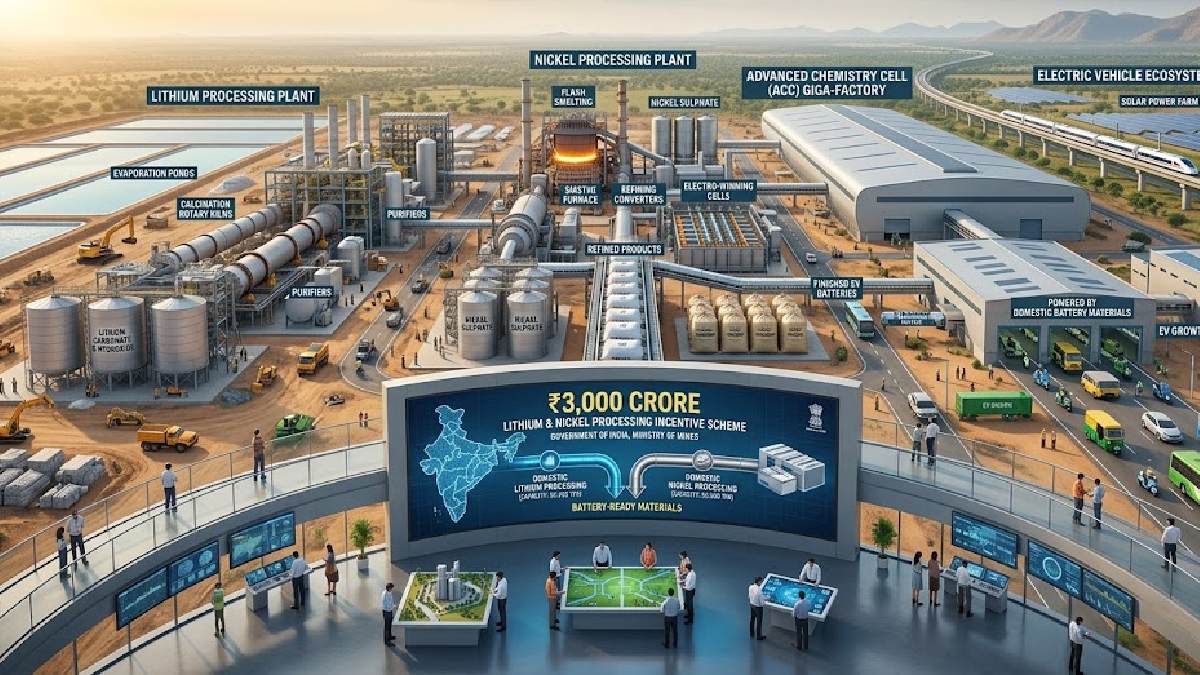
Based on the report, the Ministry of Mines is in the process of developing the scheme and will be spending about ₹3,000 crore of the total cost, or about $313 million. The policy is essentially to encourage companies to build large-scale lithium and nickel processing plants in India and that in turn will enhance India's position in the global supply chain for EVs.
The move comes at a time when India is aggressively pushing for greater adoption of electric vehicles. By 2030, the government has promised 30 percent electric car penetration and 80 percent electric two-wheeler penetration. EVs have been on the increase since that time but penetration is still far below these targets, as electric cars make up only 6 percent of the market, and electric two-wheelers make up 9 percent.
As such, the availability of key battery materials is key for these goals, industry experts say. Lithium and nickel are among the most important components of advanced battery technology that power electric vehicles. But we are currently importing these minerals and their finished products, and so India's EV sector is at risk of global supply chain disruption, price volatility, and geopolitical uncertainty.
The proposed incentive scheme will alleviate these issues by supporting the development of local refining and processing capacity. This is the way the government will ensure that India’s manufacturing industry gets better and reliable battery-grade materials by encouraging home production.
Even those companies that would be given incentives under the scheme will need to meet the minimum processing capacity thresholds. Lithium processing plants are likely to have an annual capacity of at least 30,000 metric tonnes, but nickel processing plants may have to have a capacity of 50,000 metric tonnes to be able to run. These conditions are to ensure that supported projects are large enough to make a real contribution to India's industrial and EV development plan.
The initiative is also in line with the government’s overall focus on critical minerals. Last year, officials said a policy framework was being developed to allow for the processing of minerals that are essential for clean energy technologies and for electric mobility. At that time, the minerals were not publicly identified, but lithium and nickel have been widely recognized for their importance in battery production.
Besides supporting EV production, the scheme would attract large investments in India's mineral processing sector for employment and technological progress in advanced materials. It would also help to boost the participation of both domestic and international companies that would like to enter into India's rapidly expanding clean energy industry.
As the worldwide electric vehicle demand expands, it is an important necessity for countries to have access to the necessary battery materials. The proposed ₹3,000 crore incentive scheme is part of the government's efforts to develop a self-reliant EV ecosystem in India by overcoming supply chain risks and thereby enhancing the clean mobility future.