
The Karnataka government has made it mandatory for all taxis in the state to have digital fare meters and app-based cab aggregators Ola, Uber and Rapido are now under this requirement too.
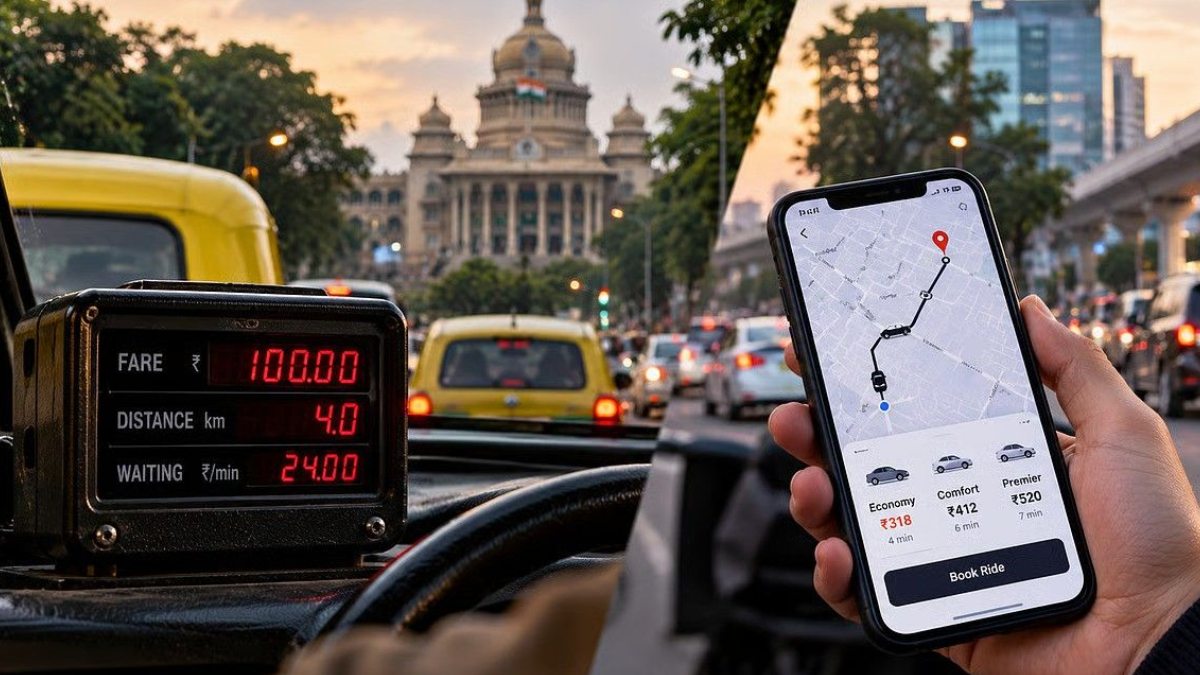
This will make taxi fares more transparent, prevent passengers from being charged extra and create a uniform fare calculation system across the state’s taxi industry. It could change how app-based taxi services operate in Bengaluru where thousands of commuters rely on online cabs every day.
Under this mandate taxis in Karnataka will have to follow the state’s digital fare meter regulations. It doesn’t only apply to traditional taxis that take passengers on the road but also vehicles registered with app-based aggregators drivers associated with Ola, Uber and Rapido will also have to comply with prescribed meter related requirements. This is government signalling that it wants passengers to get a fair fare calculation whether they book taxi through mobile application or hire one directly from driver.
Mandatory digital fare meters are significant for Bengaluru where commuters have been complaining of taxi price variations, unexpected fare hikes and estimated versus actual trip charges not matching.
During rush hours, heavy rain days, public holidays or major events passengers pay more fares because app-based aggregators use dynamic pricing systems. While apps show an estimated fare before a ride is confirmed the final amount could be higher or lower depending on distance travelled, waiting time, route changes etc other charges applicable. The government’s latest move is expected to make fare transparency stronger and another way for commuters to check what they are charged for their journeys.
Digital fare meters compute taxi charges based on the fare rates and distance or duration of a journey. Unlike manual calculations, electronic meters can record the fare more systematically; mandatory use could also be used to enforce government-approved fare structures and answer complaints of overcharging. For passengers digital meters could make it easier to understand how the final fare has been calculated and question discrepancies when needed.
The inclusion of Ola, Uber and Rapido is another facet of the decision. App based taxi aggregators have transformed urban transportation in Karnataka as customers can book rides on smartphones, track vehicles and pay digitally for them. But rapid expansion of these services has also brought regulatory challenges fare structures, driver earnings, passenger safety and platform accountability. Bringing aggregator-linked taxis under digital meter requirement appears to be seeking more consistent regulation for entire taxi sector.
🚨 The Karnataka government has mandated digital/fare meters for all taxis in the state, including app-based aggregators such as Ola, Uber, and Rapido. https://t.co/KvC5AH8H4J
— Indian Tech & Infra (@IndianTechGuide) November 16, 2026
Taxi drivers could have additional compliance responsibilities they may need to make sure their vehicles have digital meters installed, working properly and in accordance with regulations; aggregator companies may have to work with their driver networks to make sure that vehicles operating on their platforms meet the government’s requirements.
How implementation is done (technical standards applied, deadlines for installation, enforcement mechanism and penalties for non-compliance) will determine how smoothly the policy will be introduced.
The decision could also have broader ramifications for how taxi aggregators relate to state transport authorities. App-based platforms normally use their own digital fare systems while conventional taxis rely on physical fare meters.
Requiring both categories of vehicles to be compliant with digital meter regulations might reduce differences in fare calculation practices but questions will arise about how physical digital meters will work alongside the fare systems built into taxi booking applications guidance will need to be provided so drivers and passengers don’t get confused.
The biggest expectation from the new rule for commuters is accountability passengers travelling within Bengaluru and elsewhere in Karnataka may gain from fare transparency (when using taxis for airport transfers, railway station journeys to office commutes etc.) A standardised way of calculating fares would also help avoid disputes between customers and drivers.
This is an important step in Karnataka’s urban mobility sector as app-based taxi services continue to be a major part of everyday transportation; fair pricing and protection of passenger interests have become more important. Ola, Uber and Rapido are all under the digital fare meter requirement so the government wants regulations on traditional taxi operators as well as tech driven companies. How much actual impact will result depends on implementation guidelines and how well rules are enforced across the state.






Comments