
A high-powered committee headed by Nandan Nilekani is set to submit its final report on examination reforms in December with recommendations for transparency, security and malpractice prevention in competitive and recruitment examinations. The panel is looking at changes in examination methods, technology-driven verification, test-centre infrastructure and measures so that rural students are not disadvantaged.
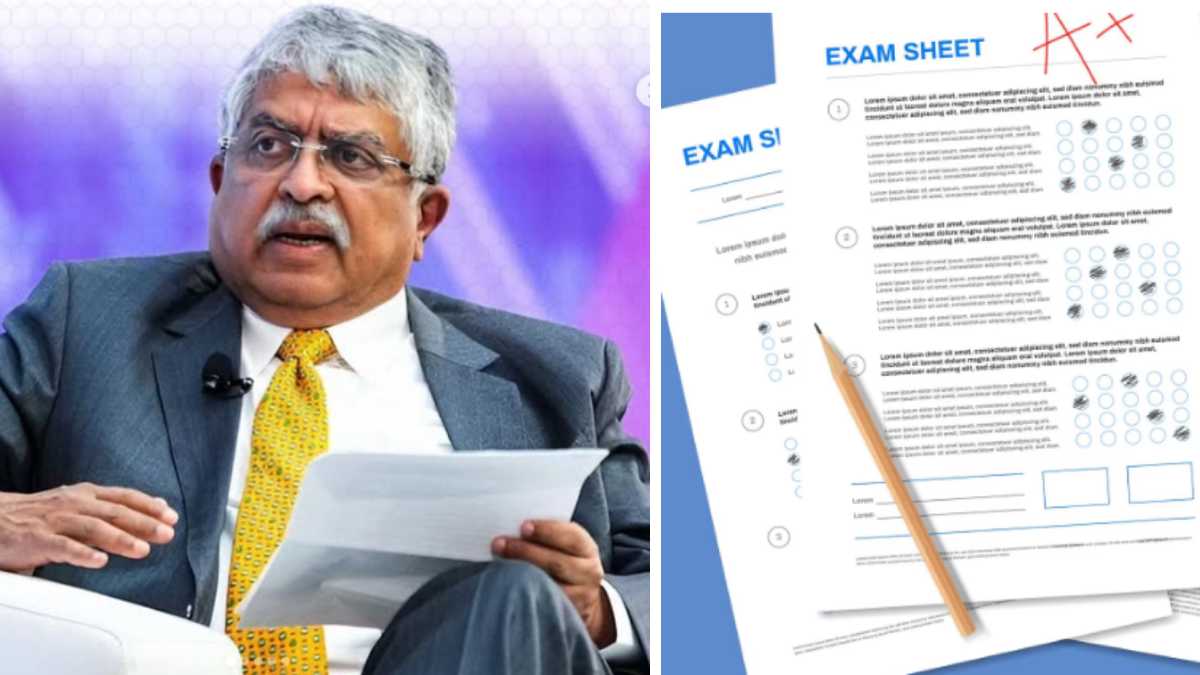
The developments follow a meeting on November 20 at Vidhana Soudha in Bengaluru where Chief Minister D.K. Shivakumar, ministers and senior officials discussed ways to improve the examination system. Nilekani said after the meeting that the committee report was in the final stages and suggestions made during discussion would be taken into consideration before recommendations are finalised.
Why Was the Nandan Nilekani-Led Committee Formed?
The High-Powered Task Force (HPTF) was set up to look into problems affecting examination systems (question paper leaks, impersonation, malpractice, administrative difficulties and confusion among candidates).
The committee is taking inputs from different states and studying how examinations can be conducted in a secure and transparent manner. It discusses digital examination systems, candidate identity verification, management of examination centres, equal access for students from rural areas etc.
Computer-Based Tests May Be Introduced in Phases
One of the major areas that is being considered is the gradual move from OMR-based examinations to CBT (Computer-Based Test).
Computer-based examinations could modernise the testing process but would require investment to be rolled out across the country. Authorities would need computer-equipped centres, technical staff and secure digital infrastructure.
“Setting up such facilities in every district immediately would be expensive and difficult, so we are thinking of a phased implementation,” he said. “The committee is also looking at how rural candidates can be protected from disadvantages caused by lack of access to computers and digital facilities.”
Could recruitment examinations go back to a decentralised model?
Another important topic discussed at the meeting was whether recruitment examinations could be conducted through a decentralised system.
Some examinations have already moved towards centralised arrangements but the committee is looking at whether these challenges are being faced and whether decentralised examinations might be revisited where appropriate.
The final report may contain recommendations on which examinations should be centralised or decentralised. No decision has been announced yet on examination-wise arrangement or responsibilities of individual agencies.
School and College Marks May Also Be Considered
Chief Minister D.K. Shivakumar said recruitment examinations should take into account candidates’ academic performance in schools and colleges as well as their competitive examination scores.
The proposal would allow us to take into account a candidate’s broader academic record during selection. But there are details that would need to be worked out before such a system could be introduced.
These decisions include which examinations would be covered, how much weight should be given to school and college marks and how scores from different education boards could be standardised. The committee has not announced whether this suggestion will become part of its final recommendations.
NEET Examination Reforms Also Discussed
Changes to the National Eligibility cum Entrance Test (NEET) used for medical admissions were also discussed at the meeting.
Shivakumar reportedly raised the issue of giving more opportunities to Karnataka students in medical colleges in the state. He also suggested grace marks or other support measures for rural students who are struggling while appearing for national level entrance examinations.
The meeting also addressed local opportunities and reservation-related issues in medical and engineering admissions.
Another proposal was to take into account Class 12 board examination marks when ranking NEET candidates (normalisation process). These are suggestions made at the meeting and not officially approved changes in NEET rules.
Technology-Based Measures to Prevent Exam Malpractice
The committee is also looking at ways to strengthen examination security and prevent impersonation and question paper leaks.
Officials also spoke about technology to check candidates’ identities and increase the reliability of examinations; a fact-checking mechanism for rumours and misleading claims about question paper leaks.
Candidates have been told not to believe rumours posted on social media but only official announcements.
The meeting also discussed measures to reduce exam stress (counselling facilities, parent awareness programmes and information about the 104 helpline).
KEA Examination Data Highlights Infrastructure Requirements
At the meeting, S. V. Ranganath, chairman of the committee on state competitive examinations and recruitment reforms, gave figures on Karnataka Examinations Authority (KEA) exams.
The data showed the scale of examination operations and the infrastructure needed to support a move towards computer-based testing.
KEA examination figures:
| Particulars | Number |
|---|---|
| Total Applications Received | 43,91,248 |
| Candidates Who Appeared | 30,50,996 |
| OMR Sheets Used | 17,29,318 |
Establishing computer-based examination centres on a large scale would cost money. The meeting discussed whether infrastructure could be developed in phases and under central and state government funding schemes or share the financial burden between the two governments.
Question Bank May Be Expanded from 1:10 to 1:100
Another proposal is to increase the size of the question bank used for examinations.
S.V Ranganath suggests that the ratio of questions in question bank should be increased from 1:10 to 1:100. A larger question bank would give access to a wider variety of questions and not depend on a limited number of questions.
The proposal is being considered as part of wider work on exam security and assessment quality.
KEA and KPSC Have Already Taken Technology-Based Steps
Nandan Nilekani also lauded the reform measures taken by Karnataka Examinations Authority and Karnataka Public Service Commission (KPSC).
Officials also discussed different databases and facial recognition technology to verify candidates and prevent impersonation. Aadhaar based verification throughout the application, examination and recruitment or admission process was also suggested by KEA officials.
The need for examination agencies to have their own technical teams was also discussed. Technology personnel could support management of digital systems and tackle technical problems.
What Can Candidates Expect from the December Report?
The final report from the Nandan Nilekani-led committee will include recommendations on examination security, computer-based testing, infrastructure development, candidate verification, centralised and decentralised model of examinations and equal opportunities for rural students.
Once the report is submitted in December, the government and concerned examination agencies have to look at its recommendations before deciding which measures should be taken.
For now, candidates should not assume that all recruitment examinations will be immediately converted to CBT or that NEET ranking rules and academic-mark calculations have already changed. Any confirmed change will come from official decisions and notifications issued by the concerned authorities.



Comments