
A 22-year old NASA space observatory called Neil Gehrels Swift Observatory is set to re-enter Earth’s atmosphere. Where will its debris land? Bengaluru, Mumbai, Hyderabad and Chennai have reportedly been listed in the broad potential debris risk zone — people in India are curious and worried.
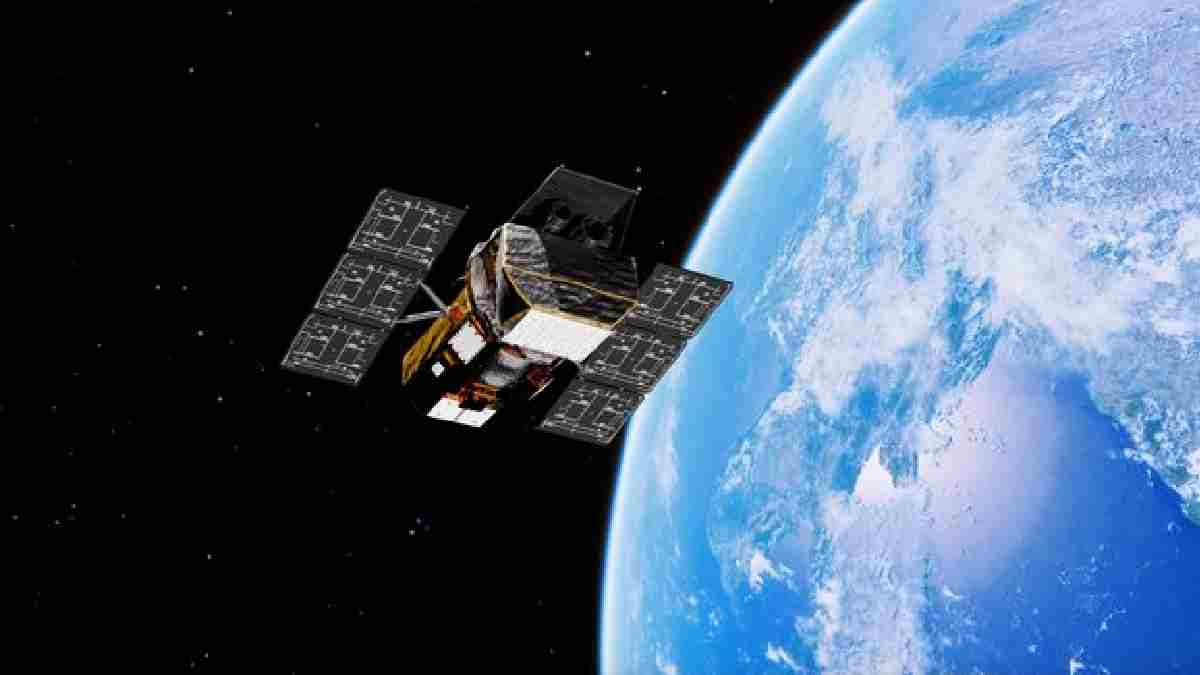
The satellite (1.5 tons) was launched by NASA on November 20, 2004. Originally designed for a two-year mission, the space observatory operated for nearly 22 years, making major contributions to astronomy research.
The spacecraft is expected to enter the Earth’s atmosphere at 2 PM Indian Standard Time on November 4, 2026. But when and where it will re-enter the atmosphere (and any debris that survives) are still unknown.

Is Bengaluru in Danger?
Bengaluru being in the potential debris zone does not mean that the satellite will fall on the city. Mumbai, Hyderabad and Chennai are also among Indian cities in the broad projected zone.
The debris corridor “is reported to stretch across Africa, Australia, India, Southeast Asia and Central and South America”.
However, it is not possible to predict where satellite debris will land until the spacecraft is much closer to re-entry into the atmosphere. Its trajectory can change because of atmospheric conditions and other factors as well.

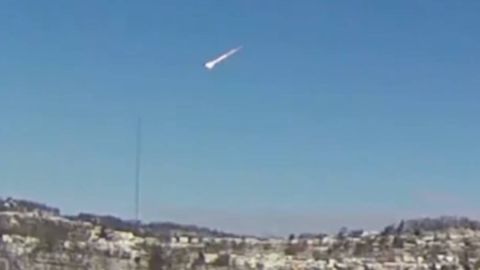
Most of the satellite will burn up because of the heat generated as it passes through Earth’s atmosphere; some stronger metallic parts could survive re-entry and reach the Earth’s surface.
Some of the debris might reach populated areas, but most surviving fragments will end up in uninhabited ocean regions.
What Is the Neil Gehrels Swift Observatory? The Neil Gehrels Swift Observatory is a NASA space telescope that studies some of the most powerful and energetic events in the universe.
It was launched on November 20, 2004 under the name Swift Gamma-Ray Burst Explorer. The observatory was planned for a two-year primary mission but has operated (almost) continuously since then for nearly 22 years.
During its extended mission, Swift made several important contributions to astronomy:
- Detected and studied more than 2000 gamma-ray bursts.
- Observed more than 1,400 supernovae.
- Helped scientists understand black holes and other powerful cosmic phenomena.
- They used three telescopes to observe different wavelengths of light.
- They detected cosmic explosions quickly and alerted other observatories to investigate further.
Its observations helped scientists understand how massive stars explode and how some of the most energetic events in the universe occur.
Why Is the Satellite Returning to Earth?
The satellite has lost altitude because of atmospheric drag. Solar activity increased too, so the orbit decreased more quickly.
NASA and a private space company had tried to save the observatory by moving it into a higher orbit, but the rescue failed and eventually the spacecraft was unable to continue scientific operations.
NASA officially ended its mission in October 2026 to prepare it for eventual re-entry back into the atmosphere.
What are the chances that satellite debris will cause damage?
NASA expects most of the spacecraft to break down during atmospheric re-entry. Some components may survive because they are material and structurally strong enough.
NASA estimates that the probability that someone on Earth is harmed by falling debris is about 1 in 2,100.
This means the overall risk to people is very low. The broad re-entry zone should not be confused with a confirmed crash site. NASA and the US Space Force are watching its descent and updating their predictions as it gets closer to Earth.
But for now, just because Bengaluru is in the potential debris corridor doesn’t mean residents should expect the satellite to fall on them.









Comments