
Karnataka Deputy Chief Minister D.K. Shivakumar has come up with a response to the ongoing protest by sugarcane farmers who are demanding a ₹1,000 per tonne increase in their support price. “We have had talks with legislators and government functionaries, and the decision will be taken after having discussions with sugar mill owners,” he said.
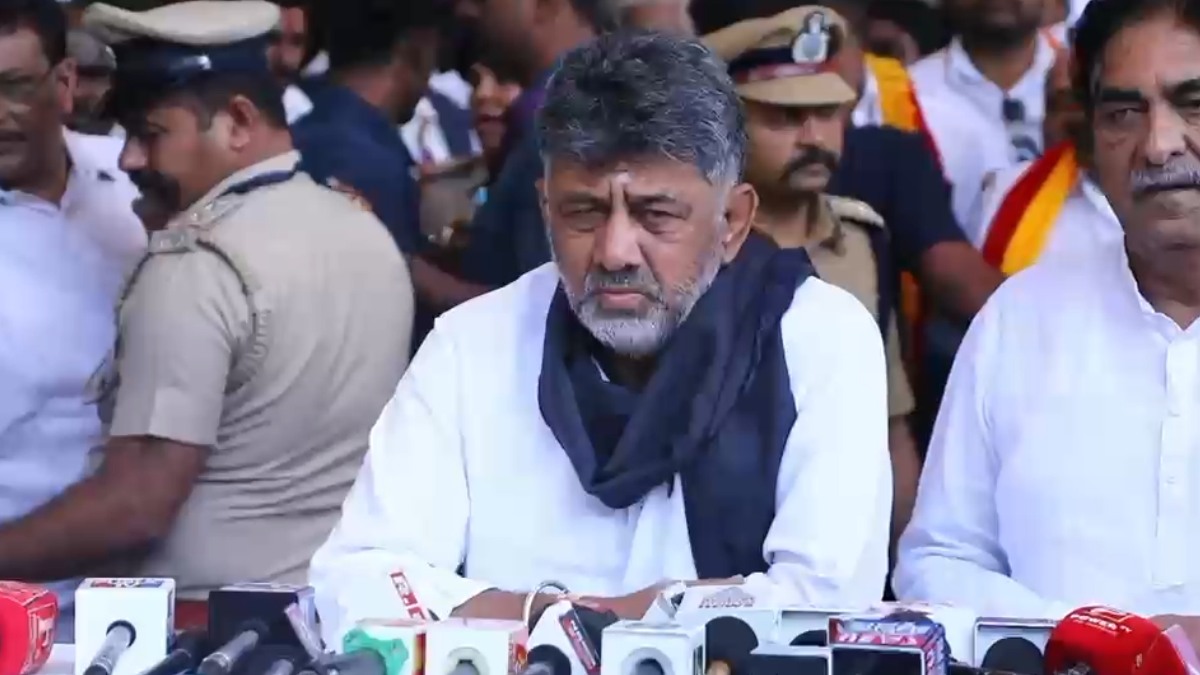
The statement comes as sugarcane growers are in demand for better prices as cultivation costs continue to pressure their earnings. Farmers want a price increase to pay labour, fertilisers, pesticides, irrigation and transportation costs.
Shivakumar stressed that protecting farmers' interests was a shared responsibility. He also said the state government’s share of responsibility in addressing the issue was 10%, while the Centre’s share was 90%, according to the supplied report.
Sugarcane farmers want ₹1,000 Per Tonne Increase
Sugarcane growers are asking the government to increase the price paid for their produce by ₹1,000 per tonne. Farmers say the increasing price of farm inputs has driven cultivation to become more expensive and cut off income by selling their crop.
Sugarcane requires a lot of investment and several months of cultivation before harvesting. Farmers must pay for labour, fertilisers, pesticides, irrigation, harvesting, and transportation. When the price received for the crop does not keep pace with these expenses, their profit margins can shrink.
The additional income made available to growers is intended to enhance them in order to control costs.
But any decision on sugarcane pricing also has sugar mills' purchasing and selling costs, sugar prices, production costs, and government pricing policies to factor into the equation. The challenge for policymakers is to address farmers’ needs at the same time as the financial situation of sugar mills.
But farmers are waiting for a clear answer from the government to respond to their demand as more protests are going on and the farmers are waiting for a clear response from the government to see if their demand will be received by the government's response to their proposal to the government of India.
DK Shivakumar Talks to Legislators and Officials
Shivakumar said the government had discussed the sugarcane farmers’ concerns with legislators and officials. The discussions were about looking at the issues and identifying solutions.
The deputy chief minister said consultations would take place before a final decision was made. His statement suggests that the government will consider growers’ concerns while considering the larger impact of an increase in prices.
Farmers are also worried about whether payments for sugarcane are being made on time. Timely payment is key because growers need money to pay for household bills, repay agricultural loans and to prepare for the next cropping season.
Even though discussions are ongoing, a consultation does not in itself mean approval of the price increase. Farmers are waiting for the government’s decision to be made, and the price that may be fixed and when we could see that it is implemented.
Talks with Sugar Mill Owners to Assess Next Steps
Shivakumar said a decision would be taken after discussions with sugar mill owners. These consultations are important because sugar factories purchase sugarcane from growers and process it into sugar and other products.
The purchase price would increase the cost of raw materials for mills. At the same time, farmers say they need a remunerative price to sustain cultivation and cover rising expenses.
The discussions may therefore need to consider the price paid to farmers, production costs, sugar-market conditions and the financial viability of mills. The payment plans and any outstanding dues might also be relevant to the larger concerns of growers.
The government will need to announce its decision clearly so farmers and mills can understand the prices in effect. Even if an official announcement is made, the proposed ₹1,000 per tonne increase is only a demand and not a change.
DK Shivakumar Says Centre Has 90% Responsibility
In response to the protests, Shivakumar said the state government’s responsibility was 10%, while the central government’s responsibility was 90%.
The comment highlights the role of both levels of government in agricultural pricing and the sugar industry. Central government policies have a big influence on sugarcane pricing, and state governments can talk to farmers and mills, coordinate consultations, and act within their respective powers.
However, the 10:90 division should be understood as Shivakumar's stated position, not automatically as a formal legal or administrative allocation of responsibility. The report does not explain the specific policy basis for the percentages.
The division of responsibilities and the pricing framework would need to be examined separately to establish how different decisions are made.
Farmers will still hope that there is relief for farmers as protests continue
Shivakumar said protecting farmers was everyone's responsibility and that discussions must be conducted to find a solution.
The immediate priority for sugarcane growers is a clear decision on the proposed price increase. Higher input costs, timely payments and the financial risks of cultivation have made the issue important for farming households.
The results of the talks with sugar mill owners will be central to the next stage of the discussions. Farmers will be looking for clarity on whether the ₹1,000 per tonne increase will be accepted, what price will apply, and when any revision could take effect.




Comments