
A fraudulent email impersonating the Income Tax Department of India is being sent to taxpayers, falsely claiming “compliance gaps” in income tax return filings. The email usually tells recipients of non-compliance identified during a regulatory review and to take action in real time to cover their back with a penalty in case they are subject to regulatory fines.
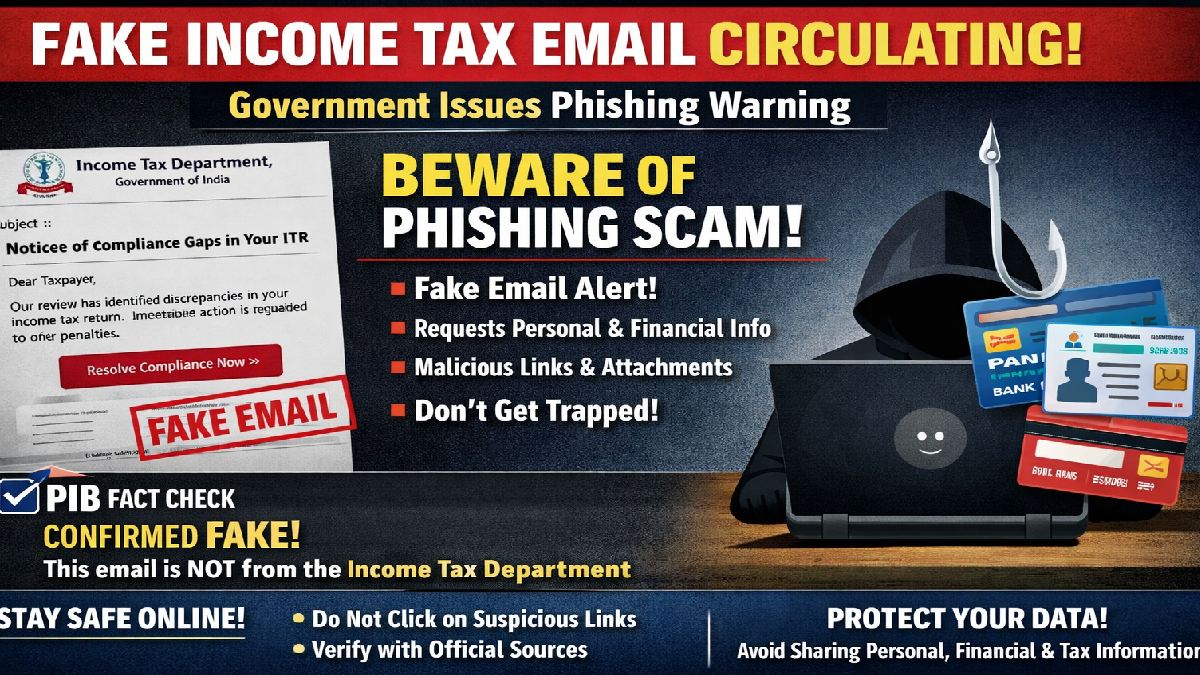
But in fact this email is not authentic and is part of a phishing campaign designed to mislead citizens and extract sensitive information.
PIB Fact Check
The PIB fact check unit has assured the Press Information Bureau that the email is fake. The Income Tax Department has never sent one to any taxpayer; however, it said they can’t answer their email. Fraudulent messages are intended to trick people into giving away personal and financial info (i.e., login information, PAN numbers, and banking details).
How Phishing Emails Work
Phishing emails of this nature are usually meant to look legitimate. They may show official logos, formal language, and organized structures to suggest official government lines of communication. They often include links that send people to fake websites for accessing personal and other sensitive information or install viruses or malware.
Advisory for Taxpayers
Taxpayers are advised to stay calm and stay away from suspicious emails. Don’t click on unverified links or download attachments. Don’t send anything that has personal, financial, or tax-related information via email or over the Internet.
To confirm whether any communication is authentic, users must rely on legitimate sources of inquiry such as the Income Tax Department’s website and government briefings. Tracking messages via verified sources and checking messages in real time to avoid scams is important.

With the ever-growing prevalence of digital fraud, awareness and vigilance are critical. Citizens should stay in the loop and take steps to help control their risk if financial or tax communications are made.









Comments