Indian households and temple trusts collectively hold an estimated 30,000 to 35,000 tonnes of gold– worth about $3.8 trillion– that's sitting in lockers, cupboards, and vaults to be put to use in the future. Now, the government is demanding citizens to put this idle wealth into action.
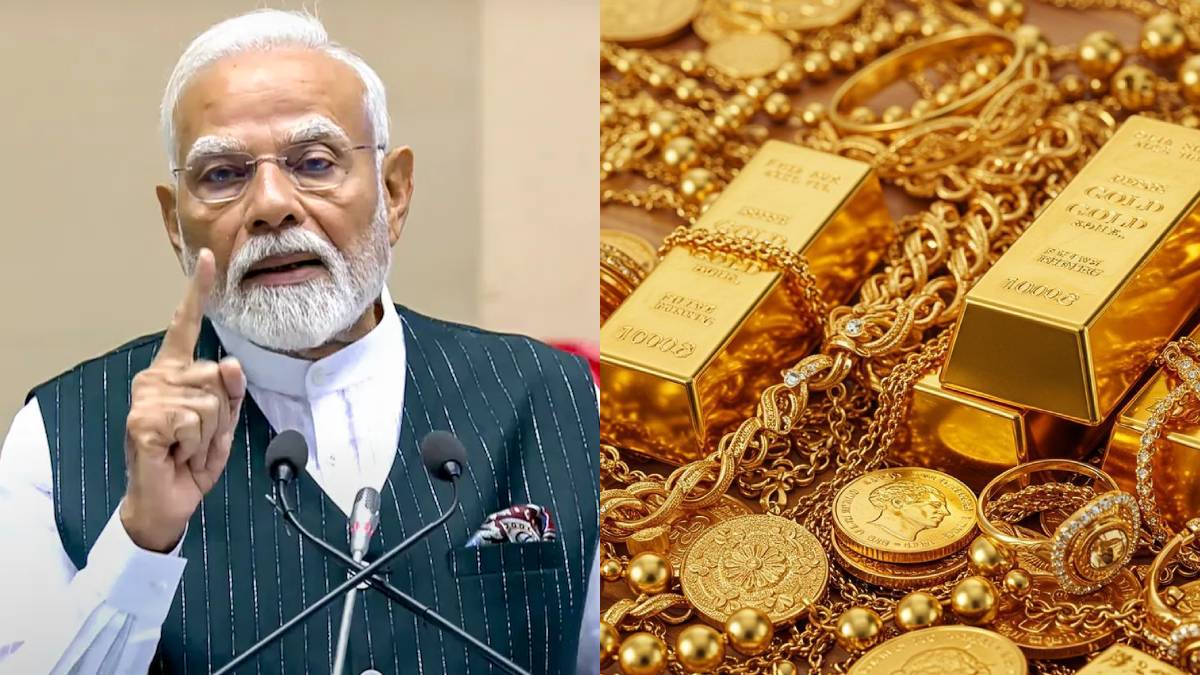
Narendra Modi last month appealed to citizens to recycle idle gold instead of importing new. The appeal came at a time of rising import costs and geopolitical uncertainty for India, which imported gold worth $72.4 billion in FY 2025-26.
What is gold recycling?
Gold recycling is the process of collecting old jewellery, broken ornaments, coins, bars and even industrial scrap and refining it back into pure gold (often 99.9 per cent purity) and reintroducing it into the market. Keyur Shah, CEO of Muthoot Exim, describes it as “the conversion of old gold into pure 24-karat gold through the refining process”. Recycling, unlike fresh mining, is energy-intensive and environmentally damaging as recycling utilizes the resources that are already in use.
What is the economic case: Why now?
India is the second-largest gold consumer in the world but it produces just 3-4 tonnes each year, importing roughly 99 per cent of its annual consumption of 800-1,000 tonnes. Gold is the country’s third-largest import category, accounting for nearly 9 per cent of the total import bill - second only to crude oil. Every ounce of imported gold requires foreign exchange, straining India's trade balance and current account deficit. With the rupee trading at 94-95 against the US dollar, the pressure on forex reserves is mounting.
The 1 per cent solution
Experts believe even a modest shift could transform the economy. Keyur Shah said, “If only 1 per cent of India's household and temple gold stock is recycled annually, gold imports could decline by roughly 25 to 30 per cent.” This kind of reduction would lower the import bill, strengthen macroeconomic stability and drive domestic refining and jewellery production.
The Gold Monetisation Scheme (GMS)
Besides recycling, the government has the Gold Monetisation Scheme — launched in 2015— where people deposit gold jewellery, bars or coins with a specific bank and earn interest. With GMS, depositors can open a gold savings account and choose from 1-3 years (short-term bank deposit) of gold savings account and decide on tenure of 1 to 3 years (short-term bank deposit). Interest rates range from 0.50 to 2.50 per cent, and all earnings are tax-free from capital gains and income tax.
The process involves submitting gold to the Collection and Purity Testing Centres (CPTCs) where it is melted, tested and credited as “fine gold” of 995 fineness to the depositor’s account. Depositors can also buy cash equivalent or real gold bars at maturity.
Important Caveats
However, there are some important considerations. The original jewellery is not returned in all this case; it is melted down. Embedded stones and studs are removed and returned before valuation. And in March 2025, the Medium and Long Term components of GMS were discontinued, with only the short-term one currently available.
Path Forward
As a result, industry bodies are now calling for a new, jeweller-integrated framework to make the scheme more accessible. Proposals include a way for gold owners to transfer gold to digital “demat” accounts in local jewellers rather than just banks. With festive and wedding seasons coming up, the government’s message is clear: India’s gold is not just an ornament – it is an economic resource waiting to be unlocked.