
These new regulatory acts should allow protection for the workforce in India, as the labour law in India will take effect from April 1, 2026. All of which is to say these new labour codes are going to be major sweeping changes, and they are going to shape everything from working conditions, through overtime and working conditions in all industries in the economy and the future.
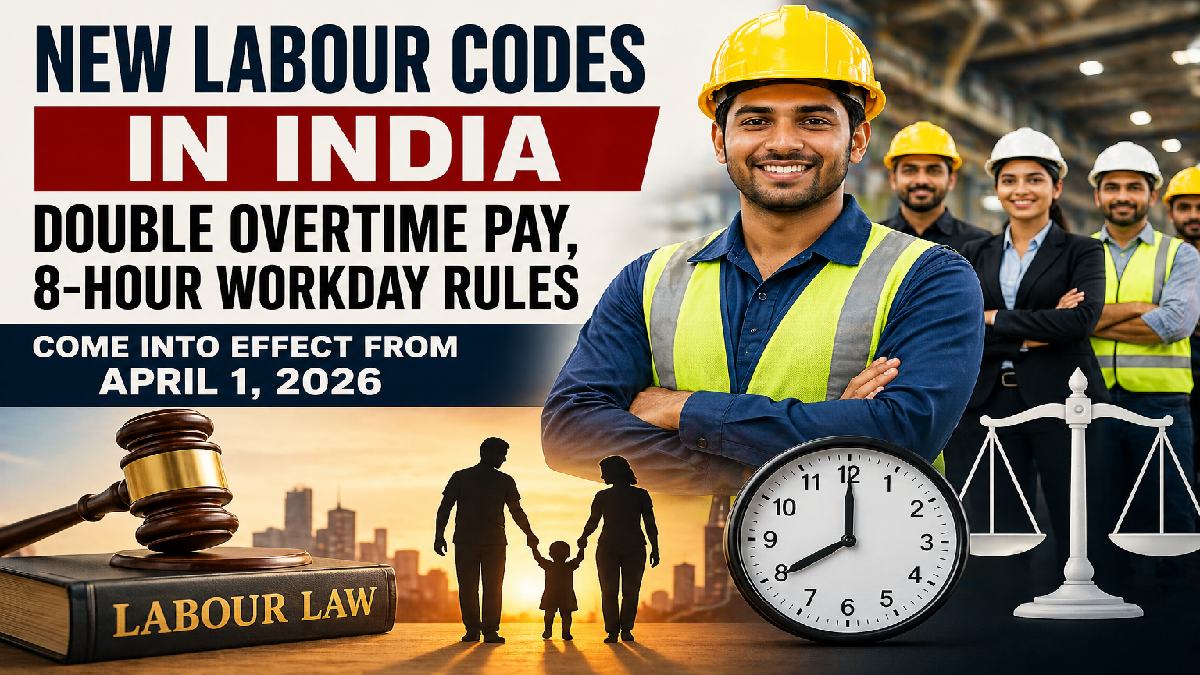
These reforms integrate 29 existing labour laws into the four primary codes of law: Code on Wages, Industrial Relations Code, Social Security Code and Occupational Safety, Health and Working Conditions Code. And as companies move to a more hybrid model, compliance efforts will increasingly be focused on making standardisation, simplification and bolstering worker protections across the country.
Defined Standards on Working Hours And Overtime Hours
The new system sets the standard hours of work. And workers are required to work no more than 8 hours per day or 48 hours a week. Work beyond the thresholds will be deemed overtime now. At its core, the reform requires that overtime be compensated at twice the employee’s regular wage.
It’s appreciated long overdue, and it provides that the workers will get exactly as many of their extra hours,” he said. Another safeguard, I believe, is workers’ approval. Overtime is a mandatory practice, requiring the permission of the employees so as not to impose inordinate overtime hours on them.
Who Does Qualify Under Overtime Benefits?
The new rules will expand protections in flexible schedules for workers, but not every worker will be able to take benefit from overtime pay. Management, and the legal definition of workers generally excludes this. Supervisory employees may need to work in a kind of grey area.

But eligibility depends on salary and the type of work, he said. Staff who are non-beneficiaries of overtime benefits, such as but not limited to those in charge or over a certain level of pay, may also be excluded from the benefit under overtime benefits.
What If Overtime Pay Is Denied?
Under the new system, employees who are deprived of exactly what they are owed by the time they're putting in extra hours can still choose some of the alternatives. What a customer should do is confront their employer privately at first. If it’s unresolved, the matter might possibly have to be directed to labour authorities such as the Labour Commissioner or inspector-cum-facilitator.
Workers can also have their complaints formally referred to wage tribunal hearings or to court. This kind of case will rely on supporting documents: payslips, attendance notes, and an employment contract. Most complaints are required to be made within two to five years after the date of violation, the law typically says.
Now it needs to be Fair To All WorkPLACE with Inclusion
Beyond overtime rules, the new labour codes speak to fairness and inclusion. To be part of this gender is unfair or even to work in such work, but, in the best case, employers are not to discriminate against members of society, including transgender gender identity in recruitment, salary, work environment, same age and similar roles.
A Move to A Modern Workforce
These labour codes are also a monumental work, transforming the face of work in India. Repair reforms for workplaces, and harmonise overtime policies and fair practices. But for workers, that means more rights and higher pay. It will be on both sides to find ways to adapt, as such changes become reality and in so doing, they should also embody a more inclusive and effective workplace for everyone in this nation that produces a better outcome with a broader vision of a better economy for all members of the nation.






Comments
Leave a Comment