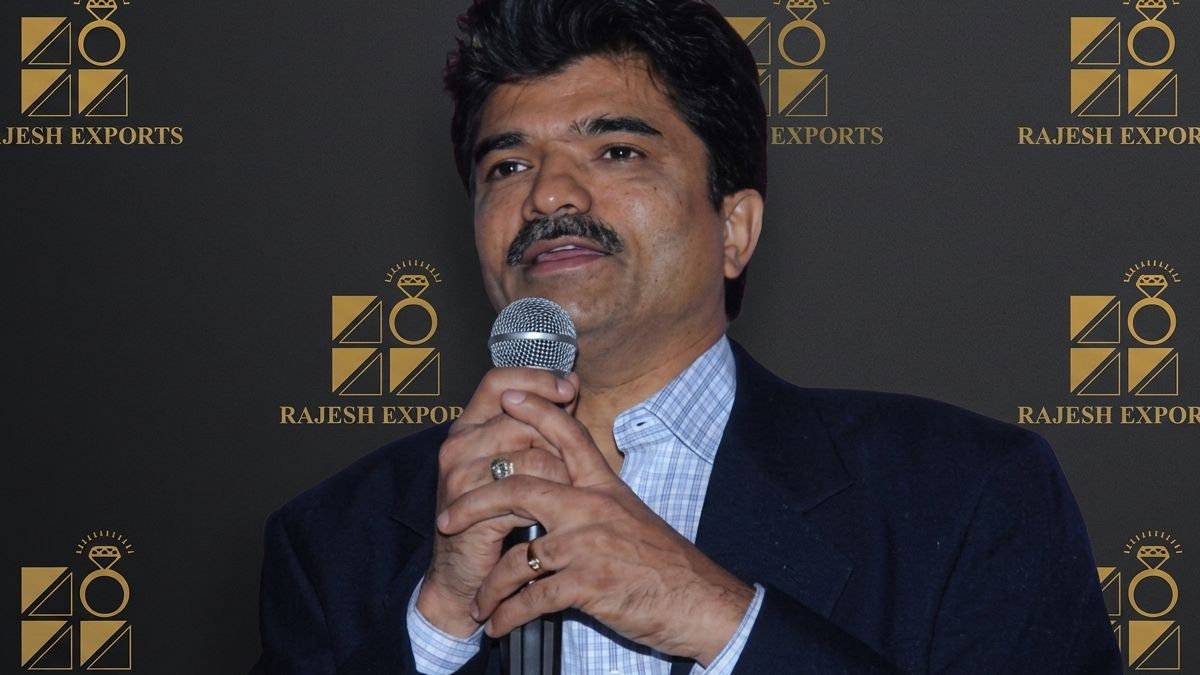
In a major regulatory action, Rajesh Mehta, promoter‑chairman of Rajesh Exports, is not allowed to take part in stock market activity as the Securities and Exchange Board of India (SEBI) has banned Rajesh Mehta from investing in stock market activities after massive revenue inflation. The interim order, which was issued on June 3, 2026, accuses the Bengaluru-based jewelry giant of falsely advertising revenues of ₹15.15 lakh crore between FY21 and FY25.
The company’s Swiss subsidiary Valcambi SA was also accused of misrepresentation, SEBI said. Rajesh Exports did not only book processing fees for refining gold but also recorded the gold transactions in full so it was able to generate all its revenue figures. The regulator also found fake trades worth ₹11,487 crore that put into question the accounting of the company and its transparency.
The order also cited suspicious fund flows, with money allegedly diverted into Mehta’s personal accounts. SEBI has since ordered a new forensic audit of the company’s books and financial transactions.
The market reacted sharply to the development. Rajesh Exports shares moved down 5 percent and sold off nearly 20 percent to ₹103–104, erasing years of shareholder value. The sudden collapse has rattled investors, especially as a company with a reputation as one of the world’s largest gold refiners.
The institutional investor is also a part of the controversy. The Life Insurance Corporation of India (LIC), which has a 10.8% stake in Rajesh Exports, is now under pressure to reveal its exposure to the company. Analysts and market watchers are wondering how such large‑scale discrepancies have been hidden for years, though with major stakeholders at the helm.
Rajesh Exports insists that its accounting methods are consistent with international standards and that they do not violate anybody’s rights. But SEBI’s interim order has cast a long shadow over the firm’s credibility. Industry experts believe the case could set a precedent for stricter oversight of Indian companies with global operations, especially those dealing in high‑value commodities like gold.
The SEBI action against Rajesh Exports is one of the most significant regulatory interventions in recent years, exposing alleged revenue inflation of unprecedented scale. While Rajesh Exports is still under investigation, the outcome will determine not only the future of Rajesh Exports but the confidence of investors in India’s corporate governance framework as well.