Ceiling fans have long been a practical way to keep homes cool, but a new style is changing the way people think about everyday air circulation.
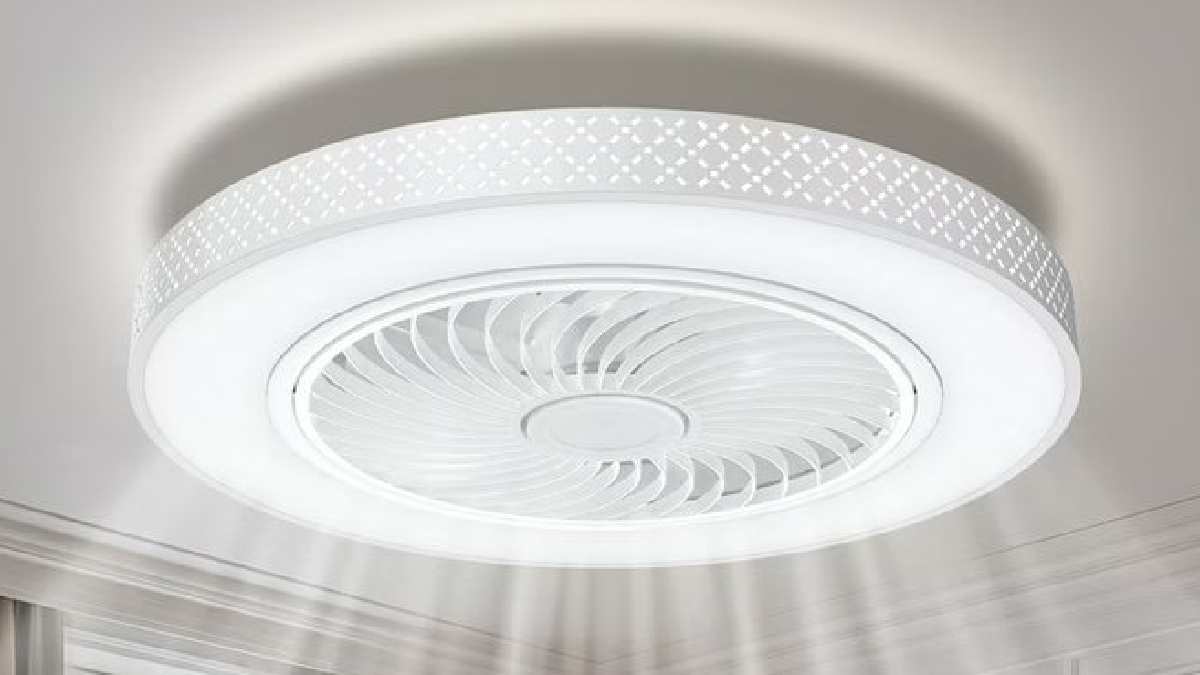
Bladeless ceiling fans are a sleek alternative to traditional fans and marry modern design with airflow technology. But are they better or are you mostly paying for the appearance
What is a Bladeless Ceiling Fan
Unlike ceiling fans, bladeless models do not have large exposed blades spinning around a central motor. They have a small internal motor and specially designed air channels to circulate air. Depending on the model, air is drawn into the unit and pushed through openings or ducts to create a steady airflow.
Some designs also employ ceiling lighting with the fan mechanism. Modern bedrooms, living rooms, and compact spaces are therefore very attractive.
How do Bladeless fans work
What is the same in all electric fans is the motor moving air and creating circulation. The difference is how air is created and distributed.
An internal impeller or fan pulls air into the housing. The air is then moved through carefully designed passages before it is released into the room. This is because moving parts are kept inside.
Many models also have remote controls, speed settings, timers, and even adjustable lighting. Premium versions could also have smart home and app-based controls.
What is the benefit of Bladeless Ceiling fans
One advantage is safety. The fans don’t have spinning blades that you can show to the public so they can be used in homes with children and pets.
Their second big advantage is appearance. Bladeless fans are simpler in design and can be incorporated more easily into today’s interior design without the visual bulk of traditional ceiling fans.
They are also easier to clean since there are fewer exposed surfaces where dust can collect.
Airflow can also vary from model to model. A sleek design does not necessarily mean better cooling. Traditional fans can also move a lot more air at a very low price.
Maintenance and repair are also more complicated because the motor and internal airflow components are enclosed.
Should you buy one
A bladeless ceiling fan is worth it if you want a modern design, safety, compactness, and so much more. In bedrooms, children’s rooms, and contemporary apartments it would work.
But when the goal is to get the most airflow at the least cost, a good conventional ceiling fan may still be better.
Before buying, compare airflow performance, energy consumption, noise level, motor warranty, installation requirements and replacement-part availability. Ultimately, the best choice depends on whether you value design and convenience enough to justify the higher price.