What if the next billboard you see isn’t on the road, on top of a building or inside a shopping mall—but floating above you in the sky?
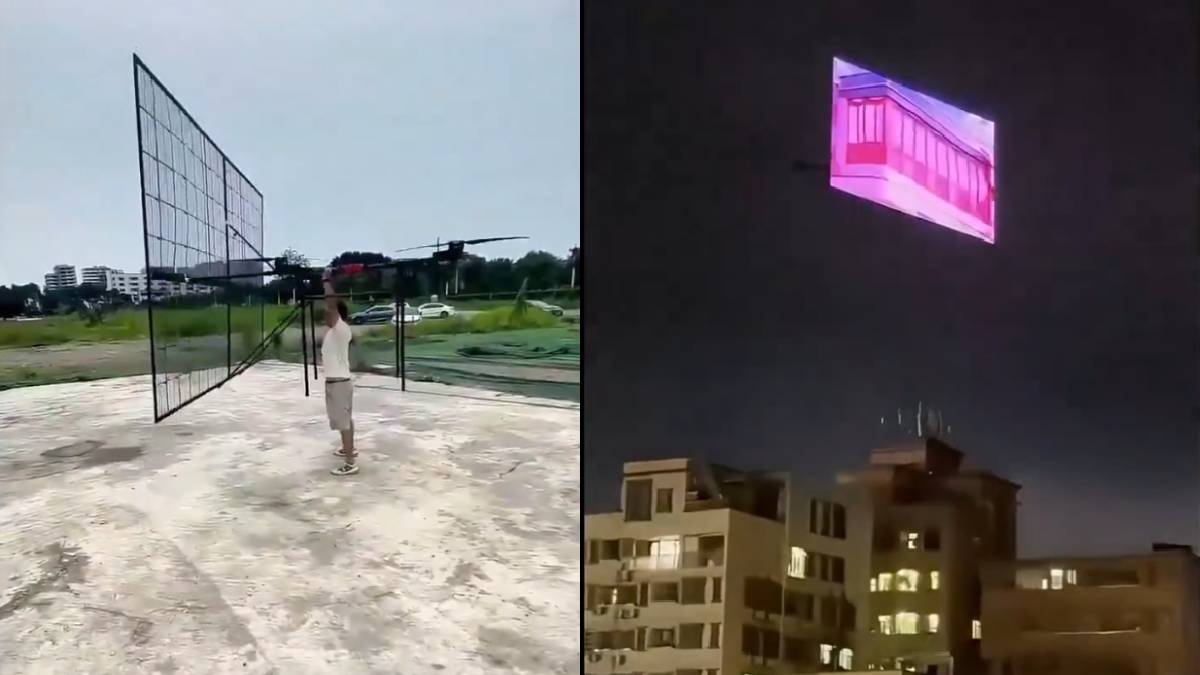
An unusual image of what looks like a huge advertising picture carried by a drone has attracted attention online and in the process raised the question: Is this the future of advertising?
For decades, outdoor advertising has been on fixed sites. Billboards run along highways, across busy roads, and cover the walls of buildings. Digital screens allow advertisers to run multiple campaigns on the same screen at once. But aerial advertising could be another kind of dimension, as it pulls advertisements out of the fixed infrastructure and up in the air.
It’s simple, but potentially potent. Instead of waiting for consumers to pass a billboard, an aerial advertising system could move through huge crowds. Depending on the technology and regulations involved, drone-based displays could be used for promotional campaigns, product launches, events, entertainment experiences, and other high-visibility marketing activities.
As a result, attention is the biggest attraction.
People are used to seeing advertisements on streets and screens. But a giant display flying overhead is much harder to ignore. The novelty itself could play a role in any advertising campaign. People would see it, shoot videos, and share what they see on social media to reach customers for brands long past the physical location where the advertisement appears.
The future of advertising? pic.twitter.com/zUbRKV8SKU
— HOW THINGS WORK (@HowThingsWork_) August 26, 2026
It’s an interesting connection between outdoor advertising and social media marketing. A physical advertisement in the sky could become a digital conversation almost instantly if people start posting videos and photographs of it online.
For advertisers, that combination might be very valuable. A single aerial campaign could potentially generate real-world visibility and organic online attention.
But the future of drone advertising is not just a technology-based one. Safety, aviation regulations, privacy, noise, weather conditions and operating restrictions will all need to be taken into account. Flying large objects over populated areas is well known, and the advertising would need to be done in line with regulatory and safety requirements.
There is also the practicality issue. Traditional billboards run on a regular basis and need little to no maintenance. Drone-based advertising systems could have much more complicated logistics—battery life, flight planning, weather monitoring and permissions.
But the idea is a shift in advertising that’s coming more broadly, and more specifically, brands are looking for ways to make what they say in advertisements experiences rather than just something in a message.
Digital screens, augmented reality, interactive campaigns, and drone light shows are all examples of how technology can upend old ways of marketing. A flying billboard can take that to a whole new level by transforming the physical location of advertising itself.
Imagine a huge sporting event where a giant branded display is projected above the field, a product launch where an aerial screen is projected over a city skyline, or a festival where advertising is part of the visual spectacle. This is why aerial advertising is catching people’s eye.
The picture on the web is futuristic, but the idea is real about advertising innovation. With drone technology on the rise and more people being attracted to it and more companies looking for other memorable ways to market, the sky could be one more frontier for outdoor marketing.
So roadside billboards are not going away anytime soon. But advertising has always evolved with technology—from painted signs to giant billboards, digital screens and interactive campaigns.
The next step may be to completely take those advertisements off the ground.
So is the sky the future of advertising?
Not everywhere and not right now, but one thing is certain: the billboard of tomorrow may not need a pole. It may need propellers.