
A tragic story just emerged from Odisha that conjoined twins born with a rare congenital condition known as dicephalic parapagus died after surviving a week. The tragic story has raised the profile of the medical challenges associated with rare conjoined twinning and the intensive care needed to care for newborns with complicated congenital abnormalities.
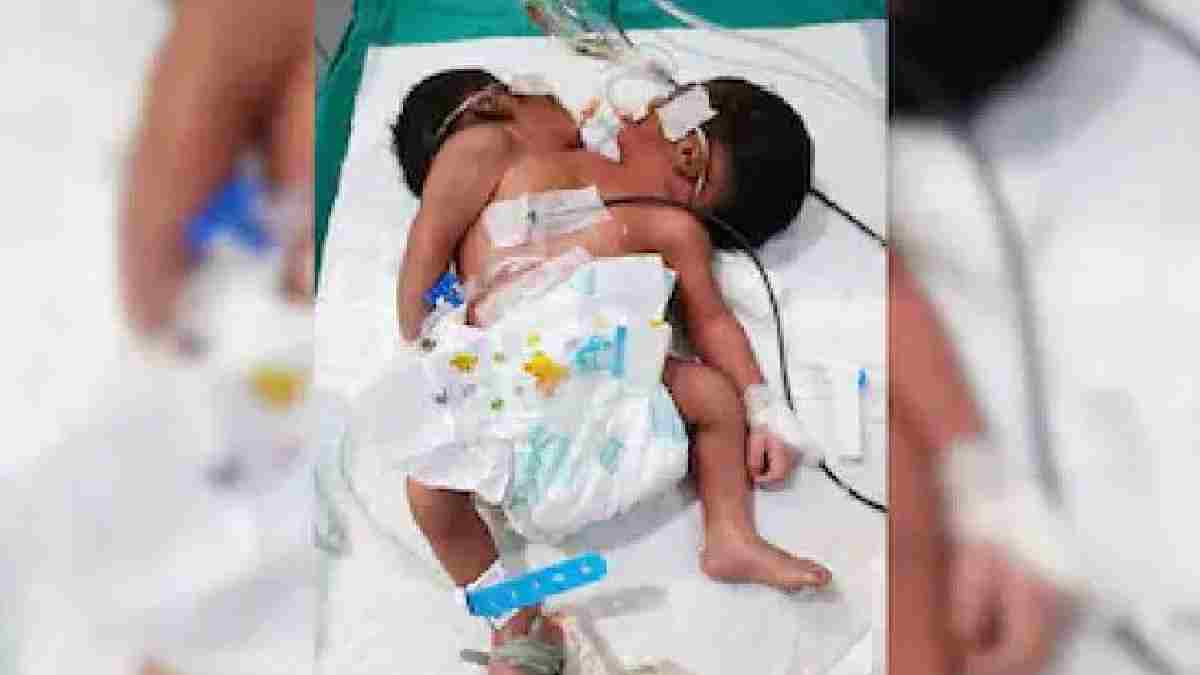
The babies were born physically connected to each other, and in this rare situation, the twins were born with two heads on the same body. These are medically complicated because twins may have many vital organs and anatomical structures shared between them, making treatment, survival, and long-term care extremely challenging.
What is Dicephalic parapagus?
Dicephalic parapagus is an extremely rare type of conjoined twinning in which two heads develop on a single torso. Depending on the individual case, the twins may share a chest, abdomen, and several internal organs, but the precise anatomy can vary considerably.
Unlike conventional twin pregnancies where two babies are born separately, conjoined twins develop when an early embryo is separated from a parent too early in development. The process of development of conjoined twins is still being studied by scientists.
The condition presents a serious challenge from birth. Doctors must carefully examine the babies to determine which organs are shared, whether each twin has a functioning heart and lungs, and how the circulatory, respiratory, and digestive systems have developed.
The survival prospects depend heavily on the twins' individual anatomy, the organs themselves, and the availability of specialised neonatal care. In some cases, the sharing of essential organs can render surgical separation impossible or medically hazardous.
Why are conjoined twins at high health risk?
Newborns with rare congenital conditions need immediate assessment and specialised care. In dicephalic parapagus cases, having two heads on a shared body can lead to problems with the heart, lungs, spinal structures, and other organs.
One of the most important issues for the doctors is whether the babies have separate or shared vital organs. If essential organs are shared or severely underdeveloped, oxygen, blood circulation, and other life-sustaining functions can be extremely difficult to deliver.
Neonatal specialists can use clinical examinations, imaging tests, and other diagnostic procedures to determine the babies’ anatomy. Depending on their condition, treatment can include respiratory support, monitoring, nutritional assistance, and intensive care.
But even with advanced medical facilities, survival can’t always be guaranteed. As with all congenital abnormalities, many are complicated, and there are limited treatment options available.
That Rare Condition That Presents Major Medical Challenges
Conjoined twinning is rare, and dicephalic parapagus is an unusual form of the condition. Each case is different, so doctors must evaluate the babies individually rather than look at a prescribed treatment strategy.
Surgical separation requires significant planning and depends on whether the twins can survive independently. If they share critical organs that cannot be divided safely, an operation may carry an unacceptably high risk.
Medical teams also have to make difficult decisions as to how much intervention is appropriate for newborns with severe congenital abnormalities. These decisions are based on comprehensive medical assessments and close communication with family.
The death of the Odisha twins after one week highlights the vulnerability of newborns in the presence of very complex congenital conditions. It also underscores the need for specialised neonatal services, prenatal assessment, and expert medical advice when rare fetal abnormalities are detected.
Prenatal Diagnosis and Specialist Care
Prenatal ultrasonography and other diagnostic techniques have made it possible to identify many cases of conjoined twinning before birth. Early diagnosis can help medical teams assess the twins' anatomy, anticipate complications, and plan delivery at a suitable hospital.
If a rare congenital condition is detected during pregnancy, doctors may recommend detailed imaging and consultation with specialists in fetal medicine, neonatology, paediatric cardiology, and paediatric surgery.
These assessments help families to know what is next and what treatment options are open after delivery. They also help hospitals prepare the staff and equipment needed to cope with a high-risk birth.
But prenatal diagnosis cannot eliminate all risk, and some conditions remain difficult to treat even when identified early.
The tragic loss of the conjoined twins in Odisha is yet another sad reminder of the challenges of rare congenital disorders. Modern medicine is improving diagnosis and treatment, but for the most complex cases, it is difficult to predict.
Note: The babies' names, hospital, exact location in Odisha, medical findings, and official confirmation of the cause of death have not been established in the information provided. These details should be verified with reliable news reports or official medical sources before publication. The deaths should not be attributed to a specific complication without confirmation.







Comments
Leave a Comment