
For Indian students in Ontario, Canada, there is uncertainty about funding of education and college operations after the provincial government suspended financial assistance payments under the Ontario Student Assistance Program (OSAP) for students at private postsecondary institutions. The government has also referred to the Ontario Provincial Police (OPP) for possible funding problems in a preliminary audit.
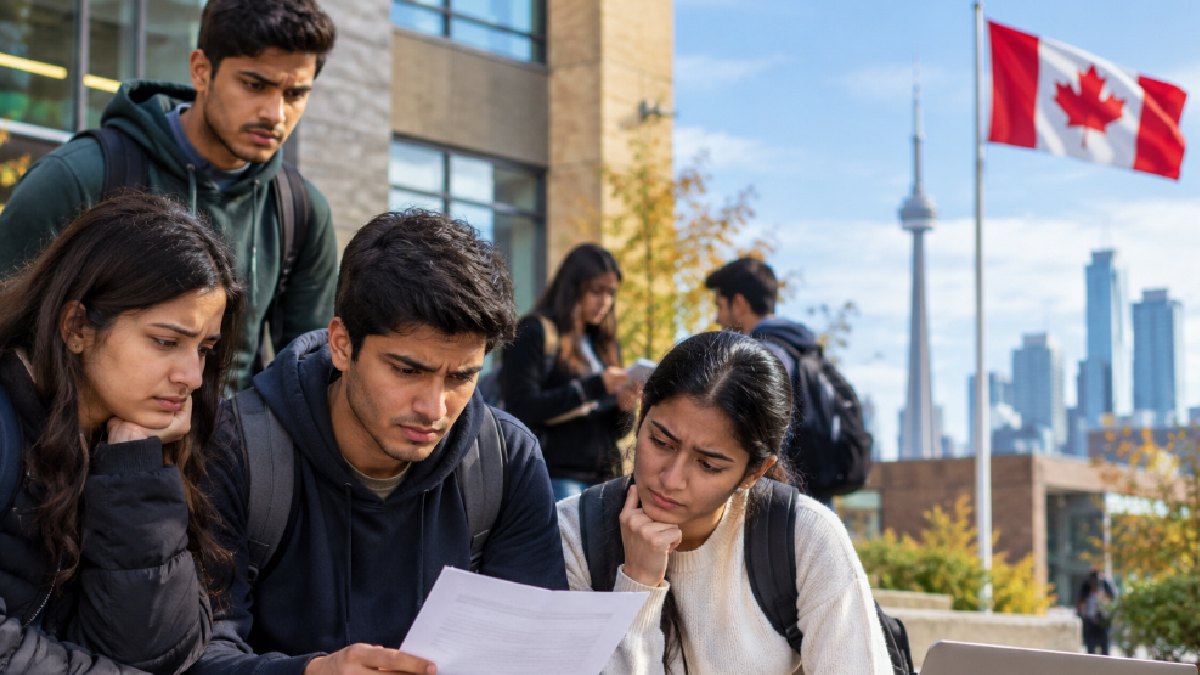
The investigation has received a lot of attention from Indian communities, particularly from families of Punjab students who are a large portion of the international student population enrolled in some private career colleges in Ontario. But the immediate impact of the funding suspension is likely to vary based on students’ eligibility, institutions and programmes.
Most international students in Canada are not eligible for OSAP, which mainly provides financial assistance to eligible Ontario residents pursuing postsecondary education. So the funding suspension does not directly affect every Indian student studying in the province.
But any enforcement action against colleges could create uncertainty around course delivery, enrolment, student services and the financial stability of affected institutions.
Ontario Government flags possible OSAP irregularities
The provincial government began reviewing OSAP applications at private career colleges after complaints about a growing number of applications in the sector. Ontario Minister of Colleges, Universities, Research Excellence and Security Nolan Quinn said the ministry started receiving an increasing number of complaints in late 2024.
Career Colleges Ontario, an independent organisation which operates separately from the government and provides financial aid processing services to its members, also raised concerns about specific institutions in January 2025.
The ministry subsequently expanded its review after receiving information from the federal government in May 2025. Targeted inspections started in July 2025 and the government's Forensic Investigation Team was involved in December 2025 to advise on strengthening oversight.
In May 2026, the ministry issued notices of non-renewal to six campuses and suspended their OSAP eligibility. The government has since widened its response to these cases by postponing OSAP payments to private postsecondary institutions while an independent audit continues.
The province has more than 500 career colleges, of which 242 were eligible for OSAP before the latest action. The government has not concluded that every institution or student receiving assistance was involved in wrongdoing. The investigation is intended to establish the scale and nature of the concerns identified during the review.
Preliminary Audit Identifies Several Areas of Concern
The Ontario government engaged independent auditor KPMG in August 2026 to assess the broader integrity of OSAP applications at private postsecondary institutions. Quinn said preliminary findings have raised serious concerns about how the programme was being administered in parts of the private education sector.
The issues identified include common ownership structures among colleges, links between educational institutions and immigration recruitment or advisory firms, and cases in which colleges and immigration service providers operate from the same locations.
The review also raised questions about student verification processes to verify enrolment, participation in courses and student outcomes. Unusually high concentrations of OSAP applications originating from particular geographic areas were also noted in the preliminary findings.
He said the government had notified the Auditor General of the problem and referred it to OPP. These steps will allow the authorities to investigate further and to carry out the independent audit.
The referral does not by itself establish criminal wrongdoing by any college, recruiter or student. Further findings and any further investigation will determine if violations occurred and who, if anyone, was responsible.
Why Indian students from Punjab are following the investigation
These developments are being closely watched by Indian families, particularly those from Punjab, because private career colleges have been part of the education pathways pursued by some students moving to Canada. These institutions offer programmes in healthcare, pharmaceutical studies, clinical research, food and nutrition, and other vocational fields.
One institution mentioned in coverage of the sector is AAPS College, which has campuses in Toronto and Mississauga and provides training in several healthcare-related disciplines. But the wider review should not be seen as evidence that every college in the sector has done bad things.
The controversy has also raised the question of immigration consultants and recruitment agencies’ role in steering student applications to Canadian higher education institutions.
In July 2026, around 1,000 Punjabi students protested in Calgary over the denial of post-graduation work permits (PGWPs). Reports linked the issue with the immigration firm in Jalandhar whose owner also owned the Canadian Institute of Osteopathic Therapy.
The protest and the current OSAP investigation are different problems but both have highlighted the need for education and immigration-related claims to be verified before committing to large financial investments.
The Ontario government has not announced immigration restrictions specifically targeting Indian students as part of the OSAP investigation.
Government plans stricter rules for eligibility.
The Ontario government has said private postsecondary institutions will have to meet tougher standards to regain OSAP eligibility. The goal is to ensure that verification procedures are strengthened and financial assistance is made available to those students who can use them and the education system is legitimate.
Quinn said the government plans to introduce legislation that would exclude predominantly online programs at private career colleges from OSAP eligibility. This follows previous changes that removed OSAP grant eligibility for career colleges.
The government has recognised that students at private institutions may need financial assistance to complete their studies. To deal with the disruption it is exploring low-interest loans provided through third parties and is discussing possible arrangements with financial institutions. When the arrangements are finalized, more details will be provided.
What Students Should Know
Those students at private career colleges should check the OSAP status of their school and contact their college directly for classes, enrolled students, fees and student support. Anyone who gets OSAP needs to seek clarification from the relevant authorities about how the payment suspension affects their situation.
Students must verify a college's approval status, programme eligibility, refund policies and written fee arrangements before paying deposits or tuition.
Anyone using an education agent or immigration consultant should independently confirm claims about financial assistance, work permits and immigration outcomes through official Canadian government sources. The KPMG audit and police referral underscore a growing scrutiny of OSAP administration at private postsecondary institutions in Ontario.
While the findings may result in stricter rules and funding eligibility for students and colleges, the full impact of such a review and the changes made by the provincial government will be determined in the near future.
For Indian students and their families, the immediate priority is to distinguish confirmed policy changes from unproven allegations and get reliable, institution-specific information before making decisions about education and finances.






Comments
Leave a Comment