
Bangladesh has signalled that it is no longer pursuing a new agreement on the 1996 Ganga Water Sharing Treaty but hopes India will start formal talks for renewal of the pact weeks before it expires on December 12, 2026.
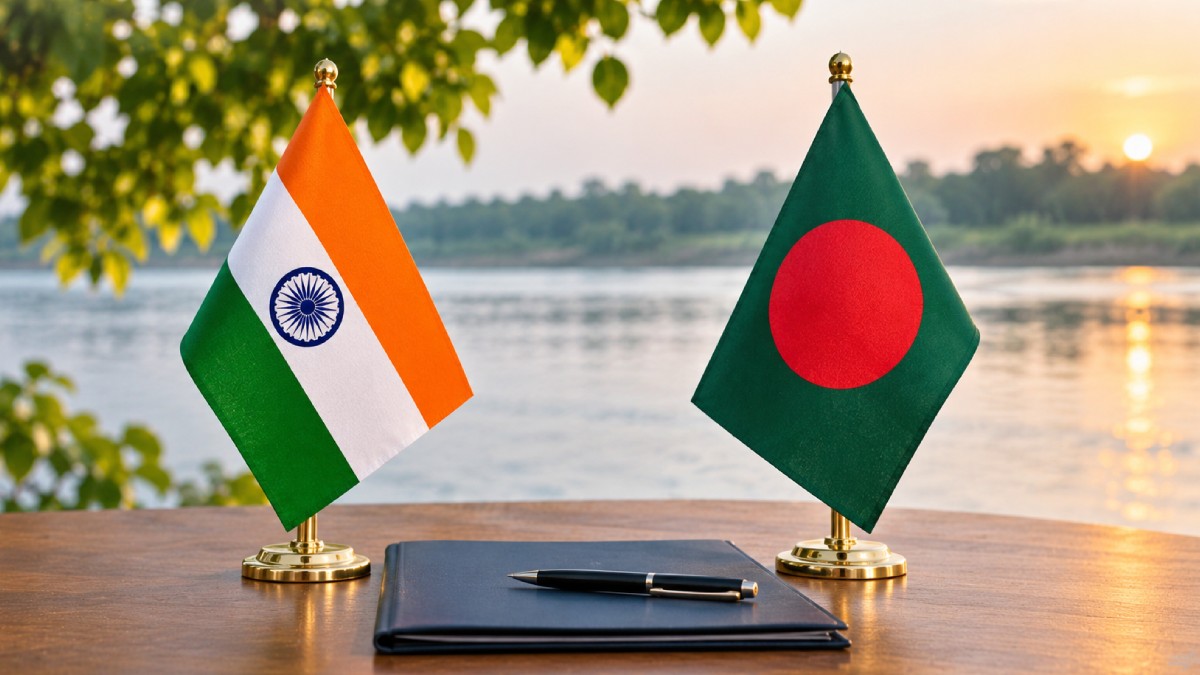
The change in tone came after the 91st meeting of Bangladesh-India Joint Committee on implementation of treaty (held in Dhaka on November 22). The two sides finalised annual report on implementation of agreement for 2026.
Bangladesh Seeks India's Initiative on Renewal
Rashed Al Mahmud Titumir, Prime Minister’s Adviser on Finance and Planning of Bangladesh and head of country’s 10-member technical committee on the treaty said Dhaka had made all preparations.
He hoped New Delhi would take steps to ensure fair and equitable sharing of Ganga waters and start formal negotiations before the existing agreement expires.
Bangladesh had demanded a new agreement with provisions to protect its share of river water (especially during the dry season). Its government had also asked India to form a technical team and start discussions.
Bangladesh’s Water Resources Minister Shahiduddin Chowdhury Anee wrote to his Indian counterpart through diplomatic channels recently asking for an early start to talks.
What Is India's Position?
India has said that the Joint Rivers Commission (JRC) is the established bilateral forum for discussing issues relating to shared rivers (including Ganga).
Sharad Chandra led the Indian delegation to November meeting and Anwar Kadir headed the Bangladeshi side. But the meeting was about monitoring implementation of the existing treaty and finalising its annual report not formal negotiations on renewal.
India has also not publicly announced a schedule for negotiations on the treaty’s future.
Why Is the Ganga Water Treaty Important?
The treaty signed on 12 December 1996 by then Indian Prime Minister H.D. Deve Gowda and Bangladesh Prime Minister Sheikh Hasina provided for sharing of Ganga waters at Farakka Barrage in West Bengal.
The agreement governs water distribution during the dry season (January 1 to May 31) on a 10-day sharing formula (river flow) which is applied.
It says equal sharing if flow is 70,000 cusecs or less; at higher flows the allocation formula changes. The agreement also contains specific provisions for sharing water during leanest part of dry season.
But Bangladesh says the arrangement does not protect it if river flows become very low; Dhaka has therefore wanted a guarantee mechanism like that included in the 1977 agreement which gave additional safeguards for its share of water.
Treaty Expiry Raises Concerns
The Ganga Water Treaty will expire on 12 December 2026 after being in force for 30 years. Article XII of the treaty allows renewal by mutual consent but not automatic extension.
The deadline is approaching and this has created uncertainty over the future of water-sharing arrangements between the two neighbours. Renewal, revised agreement or interim arrangement will require decisions at the appropriate political level.
India and Bangladesh have 54 transboundary rivers but the Ganga is the only one for which there is a bilateral water sharing treaty.
The river is especially important for agriculture, fisheries, navigation and freshwater availability in Bangladesh. Changes in dry-season flows can also increase salinity intrusion in parts of the country's southwest.
The deadline is approaching so the next steps will depend on whether both governments can start formal discussions and reach an agreement.

Comments