
There are demonstrations in lots of countries to the young people -- student unions, workers, civil society organizations and even other social organizations that are taking the streets. In Brazil, India and elsewhere such protests are growing due to the increasing cost of living, the funding of education and political accountability that are not being met in people’s lives. And the protests are not entirely the same, but they are in response to frustration from sections of the public that feel as if they are not being listened to.
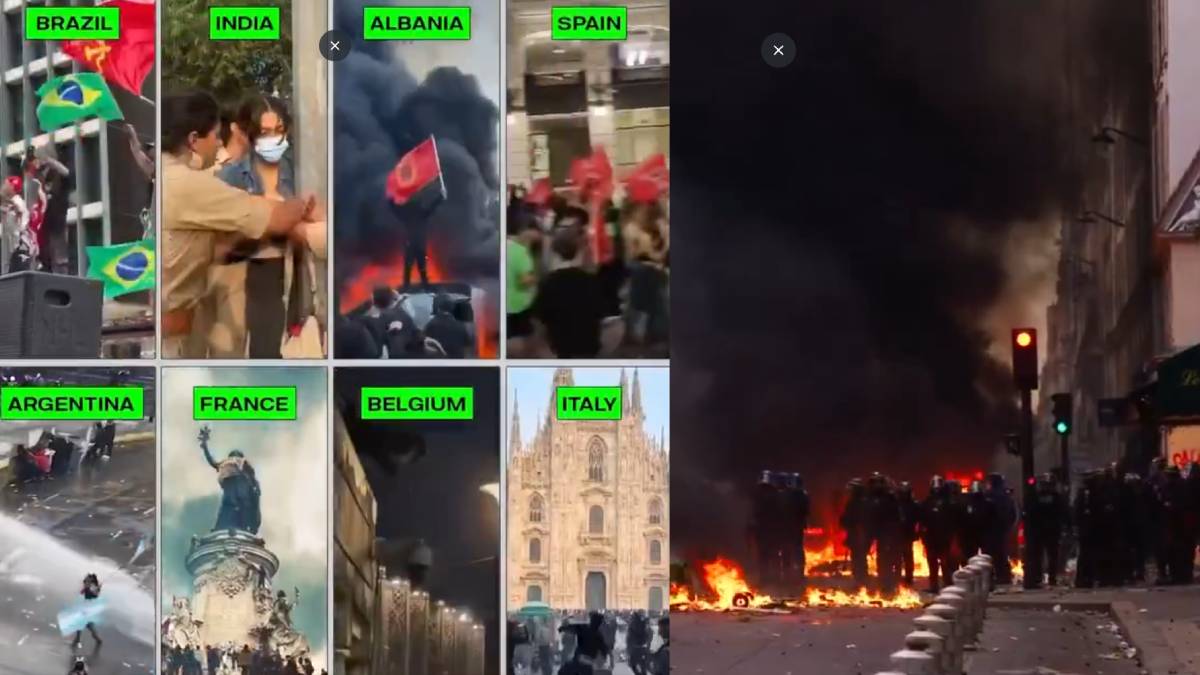
The wave of demonstrations raises a key question: do governments listen to the people they were elected to represent, or are the people who have been elected to serve them more and more being forced to take their demands to the streets?
Gen Z around the world rising up against the system https://t.co/jONd8SoHkR
— LPC (@landpalestine) October 18, 2026
Brazil: political polarisation ahead of elections.
As Brazil’s left-wing groups and supporters of President Luiz Inácio Lula da Silva have rallied before the presidential runoff against Flávio Bolsonaro, son of former President Jair Bolsonaro, a flashpoint for political divisions in Brazil, political anger is at the forefront of the campaign and demonstrations are also a reflection of the Bolsonaro political legacy and concern about the country’s future direction.
Jair Bolsonaro’s handling of the COVID-19 pandemic and his record on civil liberties attracted widespread criticism during his presidency. The protests show how political division continues to shape the public debate in Brazil.
Argentina: Students demand university funding
And across the border in Argentina, students, university staff and teaching unions have been protesting against President Javier Milei's spending cuts and the government's failure to release funding for public universities.
The dispute centers on a university-financing law passed by Congress in 2025. Milei’s government suspended it, saying it was funding-related; a federal court overturned that decision. Demonstrators have insisted the administration comply with the law and pay for universities, staff salaries and education.
The protests have been a perennial problem for Milei’s austerity program. For students and educators, public education should not bear the burden of economic adjustment; the government insists spending decisions must take into account the country’s financial constraints. Education funding is still the subject of public anger, as it is in the dispute.
France and Europe: Education, housing and the cost of living.
Demonstrations have been organized by a variety of causes- from public education, housing affordability, wages and rising living costs to wages and housing prices- around Europe.
In France, high school students are demanding better educational conditions, safer facilities and better public education. It’s also popular with memes and sarcastic slogans like the viral phrase “Bismillah, c’est les ténèbres.” Police officers have also been accused of trying to invade online discussions among students by pretending to be young people. The claims became to some protesters the symbol of the distrust of the government.
Some French demonstrations have turned violent with clashes between protesters and police, as well as looting of some local stores.
In Italy, clashes in Milan during demonstrations against war and rising living costs saw some protesters throw stones and paving blocks at police and cause property damage; in Portugal, thousands protested against low wages, expensive housing and the increasing difficulty of living in major cities. In Spain, housing affordability and evictions have also driven public demonstrations.
In Belgium, protests have included opposition to education reform and budget cuts. Taken together, these developments illustrate the strains on the lives of households in Europe and show the pressure that housing costs and inflation and fears for public services in general are putting on households. The majority of them are young, but also trade unions, workers and other sectors of society are involved in the demonstrations.
India: How is electoral accountability important to us?
Young people and the opposition are protesting in India, demanding the resignation of Chief Election Commissioner Gyanesh Kumar for voter list changes that were not correct.
Critics say the Special Intensive Revision of electoral rolls threatens to remove voters and can benefit the ruling Bharatiya Janata Party. The Election Commission and BJP have denied that there is politically motivated manipulation and that the electoral-roll revisions are to make voter lists more accurate.
But the demonstrations have reignited the debate about electoral transparency, democratic accountability, and trust in institutions. For protesters, the demand is not just an individual resignation; it is whether the electoral process is fair, transparent, and trusted by citizens.
Japan: Anger over the presence of US military forces.
In the east, public anger has resurfaced in Japan after the arrest of a US Marine suspected of killing a Japanese woman in Okinawa. Protests erupted and criticism of the US military presence in the prefecture, which hosts a major portion of American military facilities in Japan.
The allegations are being heard, and the accused has denied them. But the case has reignited longstanding concerns about crimes involving US service members, local safety and the arrangements governing American forces stationed in Japan.
The protests reflect broader public frustration over security, accountability and the relationship between local communities and military authorities.
Will governments listen before it is too late?
From university funding in Argentina to housing costs in Europe to electoral accountability in India and anger over military-related incidents in Japan, the causes of protests are different. Not every demonstration is held by Gen Z entirely and not every protest has the same political agenda. But the common demand is for governments to respond to the concerns that protesters feel have been ignored.
Young people have increasingly been using social media to organize, share evidence and to raise their concerns. Online mobilization can help protests gain visibility quickly, but lasting change can be difficult to achieve because of the need for clear demands, public sympathy, institutional response and sustained engagement beyond the streets.
Governments have a duty to listen to peaceful dissent, to explain their decisions clearly and to respond to legitimate public concern. Violence against people and property is a violation of the aims of a movement, but to dismiss all protests as disorder is a threat to peace.
The message from the streets is clear: People expect governments to implement what they promised and be accountable to the public. How likely are they that the demonstrations will lead to real reforms? But if governments don’t address the problems driving this unrest, the distance between elected leaders and the people who they represent will only grow.



Comments
Leave a Comment