
17-year old Canadian student Melody Silva has found creative ways to bring environmental issues out of the classroom. Documentary filmmaking, theatre performances, scientific research and school campaigns have all helped young people and local communities get involved in climate change and environmental protection.
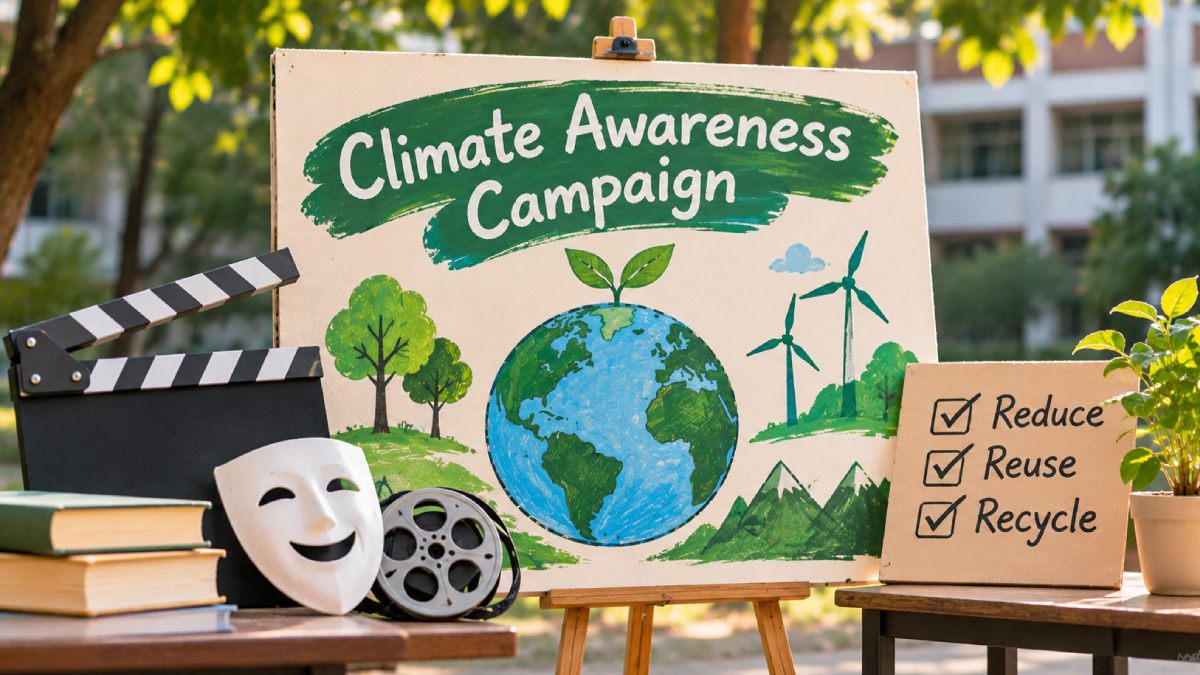
Silva grew up on Salt Spring Island in British Columbia and felt a deep connection to nature. Those experiences led her to explore environmental challenges and find practical ways to get people to take collective action.
Documentary Highlights Threats to British Columbia's Wild Salmon
One of Silva’s projects was a documentary she directed and produced in the spring of 2024. The film looked at how fish farming might impact wild salmon populations in British Columbia and the coastal ecosystem as a whole.
To hear the issue from different perspectives she interviewed two Kwak’waka’wakw elders and Dan Lewis, executive director of environmental organisation Clayoquot Action.
Clayoquot Action and filmmaker Jérémy Mathieu funded the project. Silva later showed the documentary at her school where she used it to introduce other students to concerns about fish farming and wild salmon conservation.
Her approach also showed how Indigenous knowledge and community experiences had to be brought into conversations about environmental protection.
Using Theatre to Communicate Climate Concerns
Silva has also used performing arts to reach audiences beyond environmental groups and classrooms.
She competed in the national finals of the Canadian Improv Games where she addressed climate injustice through a live performance. The event was at the National Arts Centre and streamed so audiences from across Canada could watch.
Her involvement showed how creative platforms (theatre, improvisation) can make complex environmental issues more accessible to wider audiences.
Turning School Activities into Environmental Action
Silva’s climate work has also been about practical change within her school community.
She restarted her high school’s Earth Club and started activities to reduce waste and promote sustainable habits: clothing swaps, gift exchanges and repair cafés so students had alternatives to throwing away usable things.
She also worked on plans for a plastic recycling system at Gulf Islands Secondary School. The project measured how much plastic waste could be diverted from landfills and encouraged school administrators to set up permanent recycling facilities.
Silva has volunteered with the local environmental group Transition Salt Spring for many years so she knows what community led sustainability projects look like.
Scientific Research and Future Ambitions
Her environmental involvement doesn’t stop at activism. Silva was part of a preliminary research team that studied moss and soil microorganisms relationship through Salt Spring Climate Adaptation Research Lab.
The research helped with work on soil conditions on Mount Maxwell where low levels of microorganism activity were found which needed to be investigated further.
Silva also wants to go on to higher education in environmental studies and build a career in environmental law. In her 2026 youth climate profile she said she planned to study Geography with Environmental Studies minor at UVic followed by a law degree (if possible).
Her grandfather was involved in the Mears Island logging protests too. Seeing how collective action can bring environmental issues into public debate helped her believe in community participation.
A Young Voice in the Climate Conversation
Melody Silva’s work shows that climate action doesn’t have to start with large organisations or government campaigns. Students can do it through research, creative expression, community projects and changes in everyday habits.
Through documentary filmmaking, Indigenous perspectives, performing arts and school based initiatives she has found different ways to engage people with environmental concerns.
Her efforts also show how important it is to give young people the opportunity to have a say in decisions about the environment they will inherit.



Comments