
Pakistan’s external debt has almost doubled over the last decade (US$135.1 bn at end of 2025) since the International Debt Report 2026 published by World Bank.
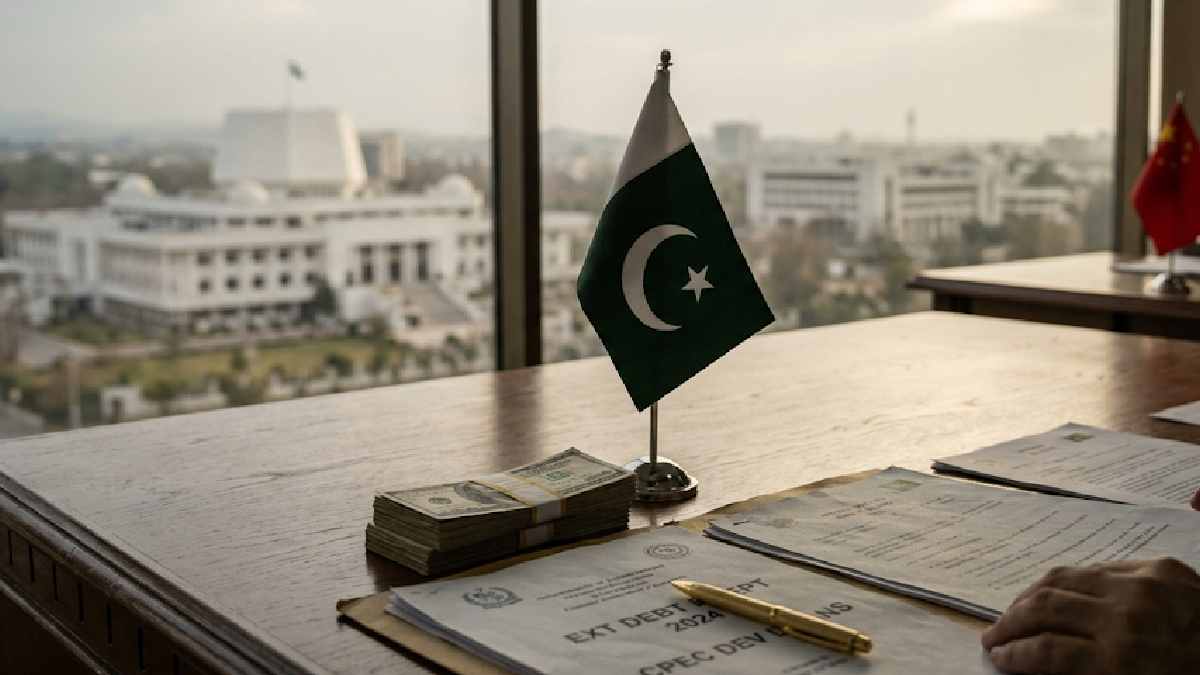
These latest figures show how much Pakistan is borrowing abroad and how it relates to international lenders China in particular.
In 2015, Pakistan’s external debt was $68.673 billion; by 2025 it was $135.107 billion. These are huge increases in overseas financial obligations over ten years which raise questions about debt management and repayment commitments in the future.
China remains Pakistan's biggest creditor
China is Pakistan’s largest individual creditor with $22.4bn in outstanding loans followed by World Bank with $19.2bn owed, ADB owes $16.83bn.
The figures show China’s strong position in Pakistan’s external financing structure. The country has continued to rely on bilateral partners and international financial institutions for its financial requirements.
Breakdown of Pakistan's external debt
The World Bank report gives a detailed picture of Pakistan’s external liabilities. Of the total debt of $135.107 billion, $107.076 billion is public and publicly guaranteed debt.
Private non-guaranteed external debt is another $17.58 billion and short term debt about $10.45 billion.
Multilateral creditors account for $56.83 billion of public and publicly guaranteed borrowing; bilateral lenders are owed $42.43 billion and private creditors are owed $7.8 billion.
The report also shows differences in borrowing costs. Loans from official creditors had an average interest rate of 3.6 per cent, maturity period of 16 years and grace period of four years.
Private credit had an even higher average interest rate of 8.6 per cent; repayment periods were three years on average with a one-year grace period and so private borrowing was much more expensive.
China and IMF provide financial support
Pakistan got some repayment relief in 2025 when China extended maturity periods for $2 billion of loans. That gave the country more time to meet its financial commitments.
At the same time, the IMF provided Pakistan with $2.3 billion under its Extended Fund Facility and Resilience and Sustainability Facility arrangements. The money was to help bring stability to the economy and longer-term financial reform.
Global external debt also hits record levels
Pakistan’s debt rise follows a wider borrowing spree among developing economies. The World Bank says external debt of low and middle-income countries rose by 5.5 per cent in 2025 to a record $9.4 trillion.
The region of Middle East, North Africa, Afghanistan and Pakistan also saw an increase in its external debt-to-gross national income ratio (from 26.7 per cent to 29.4 per cent).
Pakistan’s debt figures show how difficult it is to borrow overseas and keep the economy afloat. China remains its largest individual creditor so Pakistan’s ability to repay, control borrowing costs and improve financial position are economic issues.



Comments