
A new set of demographic projections from the Pew Research Center shows that Muslims will become the world’s largest religious group by 2035 for the first time in modern history.
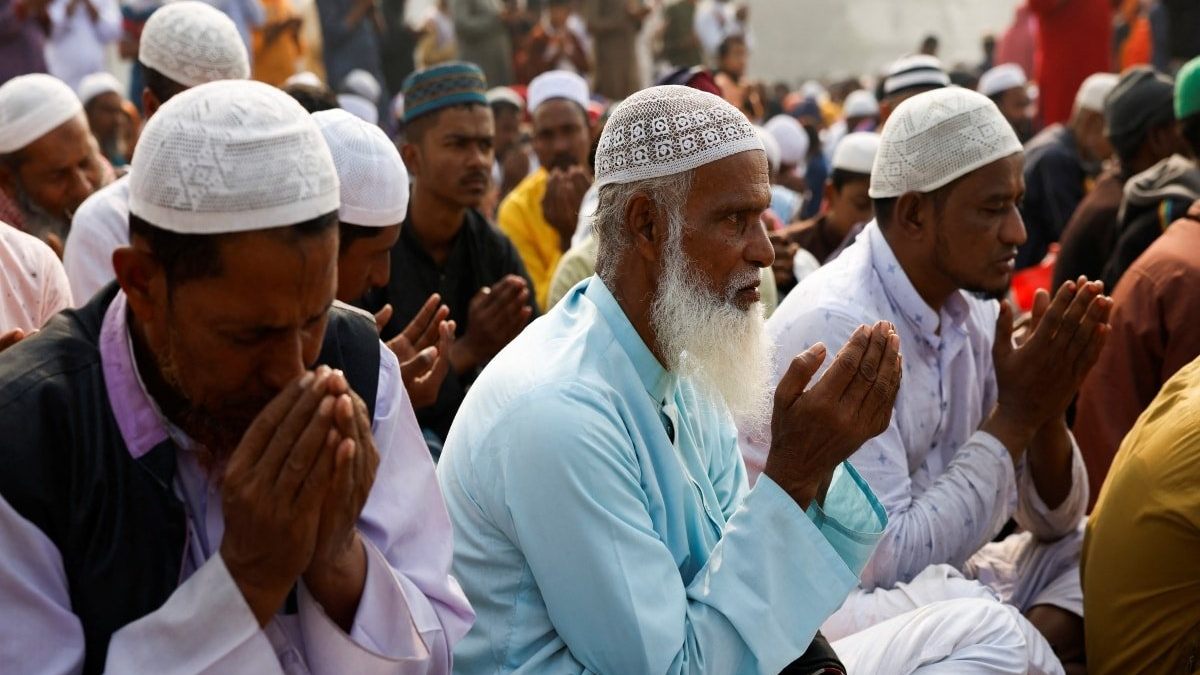
The report models population changes in 201 countries and territories between 2020 and 2070, and projects the global Muslim population to reach about 2.57 billion by then (slightly ahead of the projected 2.52 billion Christians). Both groups are projected to continue growing in absolute numbers, but the Muslim population is expanding much faster.
Fertility is what drives this change, not large-scale conversion, researchers say: Between 2020 and 2025, Muslim women had an average of 3.1 children compared with 2.5 for Christian women and roughly 1.6 for other religious categories; a fertility rate of about 2.1 is generally considered necessary for a generation to replace itself.
Also, Muslims have, on average, a younger age structure which magnifies the effect of higher birth rates. Between 2020 and 2070, Muslims will gain about 1.6 billion people (births > deaths) through natural population change (Pew senior demographer Conrad Hackett says “it’s the babies” fertility differences trump religious switching in these long-term projections).
If current trends continue, by 2070 the Muslim population could exceed 3.6 billion while Christians would be just under 3 billion; Muslims would be around 36 per cent of the world population (up from 26 per cent in 2020), and Christians would be steady at about 29 per cent. The world’s population is projected to grow by 29 per cent over that period, but only Muslims and Christians are expected to keep up or exceed that growth rate: Muslims by about 80 per cent and Christians by 30 per cent.
Other major groups are also studied. The number of Hindus worldwide is projected to grow from roughly 1.2 billion in 2020 to nearly 1.4 billion by 2070, but because non-Hindu populations are growing faster than Hindu ones, the share of Hindus in the global population will fall (from 15 per cent in 2020 to about 14 per cent in 2070).
In India, where most of the world’s Hindus live, the absolute number of Hindus is projected to rise by around 176 million over that same period. But Hindus will be a slightly smaller share of India’s population (from roughly 79 per cent in 2020 to around 76 per cent in 2070) while the Muslim share goes up from about 15 per cent to nearly 20 per cent.
Hindus would still make up more than three-quarters of India’s population under these projections. The difference is again fertility: Muslim women in India still have more children on average than Hindu women, and India’s Muslim population is younger.
Pew researchers note that these are projections based on recent patterns of fertility, age structure, migration and religious switching, but they aren’t predictions about what will happen; birth rates could change, migration policies or social trends could alter the trajectory. Most of the projected growth in the Muslim population will be in countries where Muslims already form a majority;
Christianity’s geographic centre is also shifting: sub-Saharan Africa will become home to an increasing share of world Christians. The findings show how differential fertility rates continue to determine global religious geography even as overall population growth slows down.
Both Muslims and Christians will increase in absolute numbers for decades, but it’s the faster growth of the Muslim population that drives the projected crossover around 2035. For Hindus, it’s absolute expansion and a gradual reduction in relative share globally and within India.





Comments