
The unemployment rate in India fell to 5.1% during the July-September quarter of 2026 (PLFS released by Ministry of Statistics and Programme Implementation). In April-June quarter last year, it was at 5.4%.
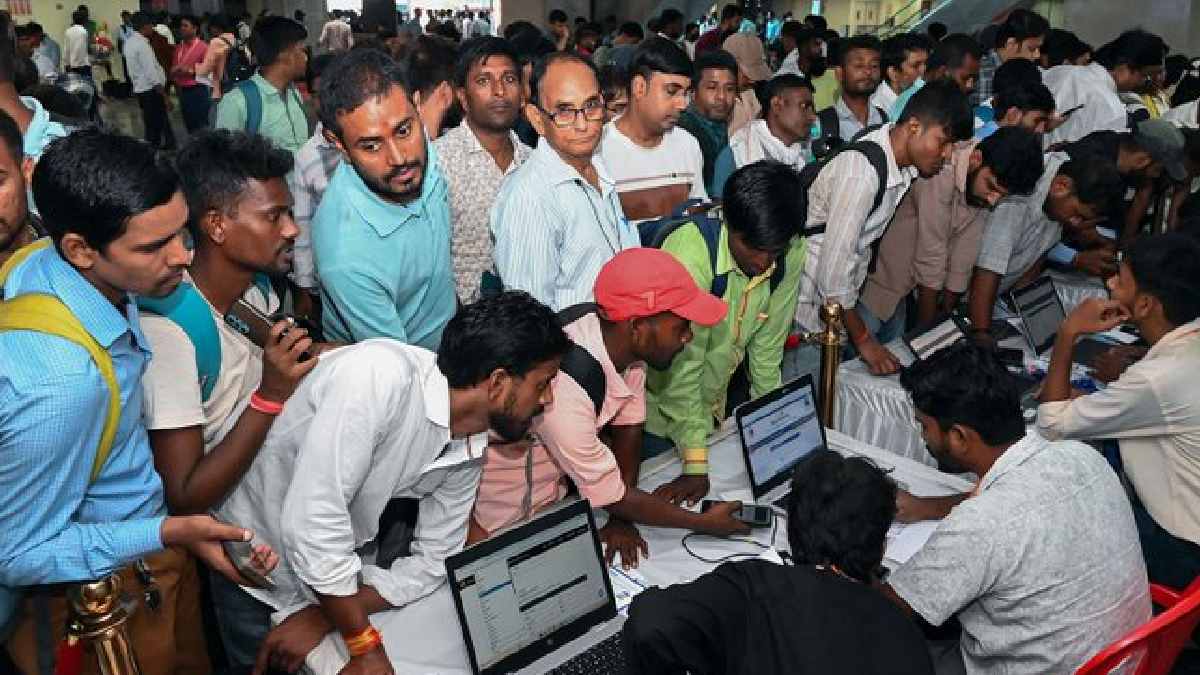
The improvement has been driven largely by rural India where joblessness fell but urban unemployment is still relatively high (and differences between employment conditions in villages and cities continue).
Rural Employment Drives the Improvement
The unemployment rate in rural areas fell from 4.8% in April-June to 4.3% in July-September 2026 as agricultural activity increased and seasonal employment opportunities emerged.
The share of rural workers in agriculture rose from 52.9% to 56.7% during the quarter as well; this was kharif season, when farming activities tend to create additional demand for labour.
Self-employment also increased in rural India. Its share among rural workers rose from 61.4% to 62.7%. The proportion of people working casual labour decreased from 22.5% to 21.7%.
These figures show stronger rural workforce participation but the growing dependence on agriculture and self-employment also raises questions about income stability and jobs security.
Urban Unemployment Remains a Concern
The rural unemployment rate fell markedly but urban unemployment moved up from 6.7% in April-June to 6.8% in July-September.
Although the rise was small urban joblessness is still much higher than rural. That shows that people looking for work in cities continue to struggle (regular salaried positions can be hard to come by).
Urban worker population ratio was almost unchanged at 46.9% (46.8% in the previous quarter). Regular wage and salaried employment comprised 49.6% of urban workers (49.3% earlier).
The figures suggest that urban employment conditions have not improved but rather remained broadly stable.
Women's Workforce Participation Improves
Another important finding in the latest survey is that women’s participation in the labour market has improved.
The overall female labour force participation rate rose to 34.7 percent in July-September from 33.2 percent in the previous quarter; women who were actually employed rose from 31.3 percent to 32.8 percent.
The overall labour force participation rate for people aged 15 years and above rose to 55.5% in July from 54.6% in April-June; the worker population ratio increased from 51.7% to 52.7%.
What the Latest Numbers Indicate
The government survey estimated that 57.9 crore people (15 years and above) were employed in India during July-September 2026 (around 40.5 crore men; 17.4 crore women).
The latest figures show that India’s employment situation is improving (particularly in rural areas). But the gap between rural and urban unemployment shows we need to keep paying attention to job creation, better employment opportunities and stable incomes.
While the decline to 5.1% is good news, the bigger challenge will be whether employment growth translates into sustainable livelihoods in rural and urban India.





Comments