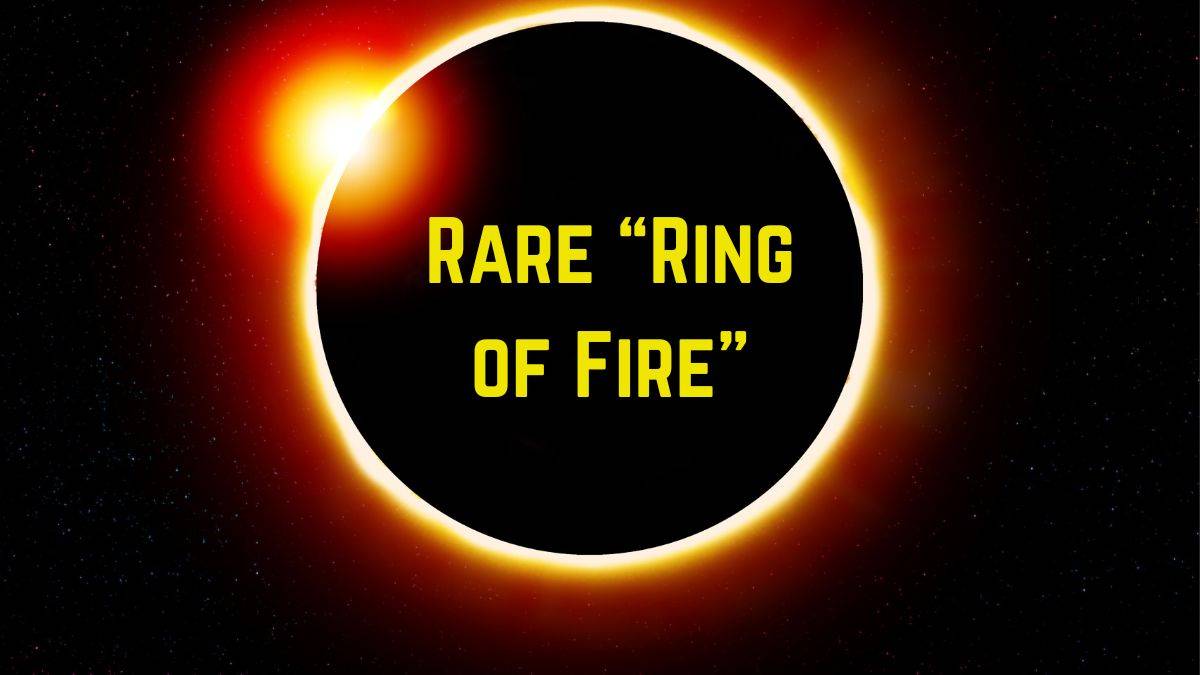
Skywatchers will gaze at an awe inspiring astronomical sight on Feb. 17, 2026, a nearly uncommon annular solar eclipse known to scientists as the “ring of fire.” This happens when the Moon goes right in between the Earth and the Sun but doesn’t completely block the Sun’s light. But instead of it, it leaves a glowing ring near the outer crescent where it forms a fiery halo in the sky that enchants onlookers.
Eclipses occur from a few seconds to a few minutes, and this eclipse is one of three but is scheduled to be amongst the most dramatic in the year. At its height, the Moon fills about 96% of the Sun, only a thin band of sunlight remaining. The most intense portion of the eclipse’s view lasts for about 2 minutes and 20 seconds, making for a fleeting but unforgettable opportunity for those who get to watch right at home.
The annular solar eclipse differs from the total solar eclipse in a fundamental way. During a perfect eclipse, the Moon covers the Sun completely; night and day turn one for a brief time. In an annular eclipse, the Moon is a little more distant and less visible when it’s orbiting Earth, so the moon looks smaller in the sky. Because of this, it cannot wrap the Sun completely around it, causing a spectacular “ring of fire” effect. The sky stays relatively light, yet the effect is as impressive as ever.
The path of this eclipse will largely traverse Antarctica, something that will challenge people all over the Earth to receive direct viewing. The partial eclipse is potentially observed in some parts of southern Africa, South America, areas close to the Indian, Pacific and Atlantic Oceans. Regrettably, India will not be in the path of the viewing for this event. However, astronomy fanatics are still able to witness it with the help of live streams by space agencies and observatories.
This eclipse is part of Saros cycle 121 that is a series of eclipses happening in approximately each 18 years. The 61st eclipse in this cycle and each has slightly different traits. It’s the 2026 eclipse, with all its high coverage and uncommon ring of fire effect, that’s special for scientists and everyone else who loves the sky.

Safety is especially important for those lucky enough to see it. Even during an eclipse, staring directly at the Sun can harm your eyes. Certified solar viewing glasses or eclipse glasses should be used. Simple sunglasses are not safe. Telescopes and cameras should contain solar filters, and indirect modes of viewing, such as pinhole projectors, are also available. For the rest of us, viewing online is the safest and most convenient thing to do.
The annular solar eclipse of February 17, 2026, is more than a visual feast – it’s a reminder of both the marvel of our solar system, and of its beauty and precision. That kind of stuff piques interest, causes wonder, and instills a greater appreciation for the cosmos. Whether you’re watching from a remote place or listening to it online, this eclipse provides you an opportunity to connect to the cosmos and see a rare instance of cosmic harmony.
Upon observing a blazing and fiery ring between the Moon and the Sun, the world will take its moment to appreciate a natural marvel that has fascinated humans for hundreds of years. The “ring of fire” is more than a scientific phenomenon; it's a metaphor for the eternal harmony among Earth, Moon, and Sun and it’s a celebration of the mysteries beyond our stars.