An interfaith couple doing a Griha Pravesh ceremony according to Hindu traditions has gone viral online — people are celebrating it as an example of love, mutual respect and cultural understanding. Seeing a Hindu wife and her Muslim husband in a traditional housewarming ceremony has also raised questions about religion and why the husband is wearing a skullcap.
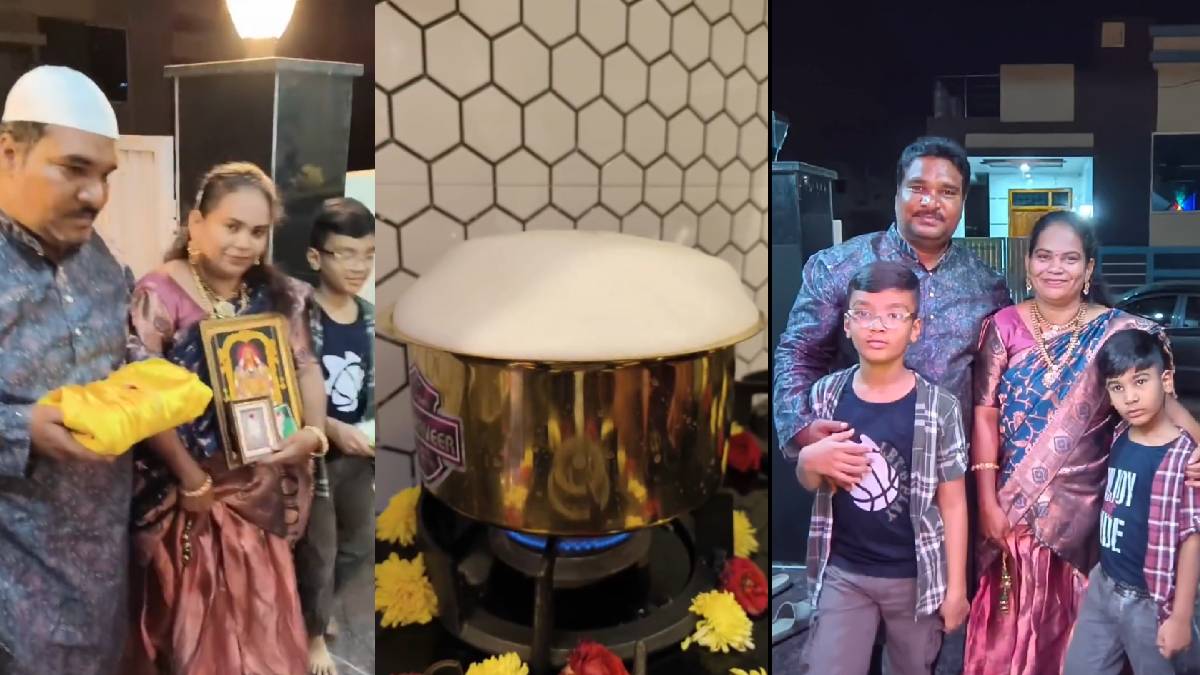
Griha Pravesh is the Hindu housewarming ceremony that takes place when a family moves into a new home. Depending on regional customs and family traditions, prayers, rituals, offerings, and blessings are made to mark the auspicious beginning of life in the new house.
For an interfaith couple, participation in such a ceremony can take on a very personal meaning. Couples of different religions may choose to respect each other’s family traditions while keeping their own beliefs and identities separate. The decision to participate in a spouse’s cultural or religious ceremony therefore has different meanings depending upon the couple and how they personally understand faith.
One thing that has been singled out for comment is the skullcap worn by a Muslim husband during the ceremony. Some social-media users have asked whether wearing such a cap while participating in a Hindu Griha Pravesh ceremony is contradictory or religiously impermissible.
However, don’t assume a person’s religious beliefs from their clothing. A skullcap (taqiyah or kufi in various Muslim communities) is worn by some Muslim men as an expression of religious or cultural identity. Its use and religious significance vary among individuals and traditions.
A Muslim husband and Hindu wife performing a Griha Pravesh ceremony according to Hindu traditions happy news indeed! ❤️
— ಸನಾತನ (सनातन) (@sanatan_kannada) September 9, 2026
But why is he wearing a skullcap? Is that considered haram, or is it “Al-Taqiyya”? 🤔 pic.twitter.com/l1U62Z21QA
Whether or not one participates in a particular non-Islamic religious ceremony is also not something that can be answered from a photo or short video. Islamic scholars and different schools of thought have different opinions on participation in the rituals of other faiths; to say he did it definitively “haram” without knowing what beliefs he has, what his intentions were, or what the nature of the ceremony was would be an oversimplification.
Another term used online is “Al-Taqiyya.” Taqiyya is a theological concept that refers to hiding one’s religious identity or beliefs when in danger of persecution or serious harm. It would therefore be misleading to automatically call an ordinary interfaith interaction “taqiyya” just because a Muslim person is participating in a Hindu cultural or religious setting.
The viral discussion about the couple, though, does focus attention on a larger conversation about interfaith relationships in India. Marriage between people of different faiths involves family traditions, festivals, rituals, food customs, and religious practices too. Couples find their own ways of respecting both sides of the background.
For some viewers, the Griha Pravesh ceremony is acceptance and mutual respect between two people from different religions. The husband’s presence and participation alongside his Hindu wife may be seen as support for her family traditions and an important milestone in their shared life.
At the same time, religious questions about such events need to be asked (not assumed). Neither what people wear nor whether they go to a family ceremony is enough information to tell you anything about their personal religious beliefs or theological position.
Ultimately, the best thing about now is that interfaith marriage can be based on mutual respect. A couple can come from different religions and build a family around understanding, affection and respect for each other’s traditions.
Rather than turn this into a clash between religions, the ceremony can also be seen as a reminder that India’s social fabric includes families whose cultural and religious identities are not homogeneous.
The viral image has raised questions but also an opportunity for a more informed conversation about interfaith relationships, religious identity and respecting individual choice.