Today, millions of people flip a switch without even getting a second thought about the electricity that powers their homes, businesses, hospitals and industries.
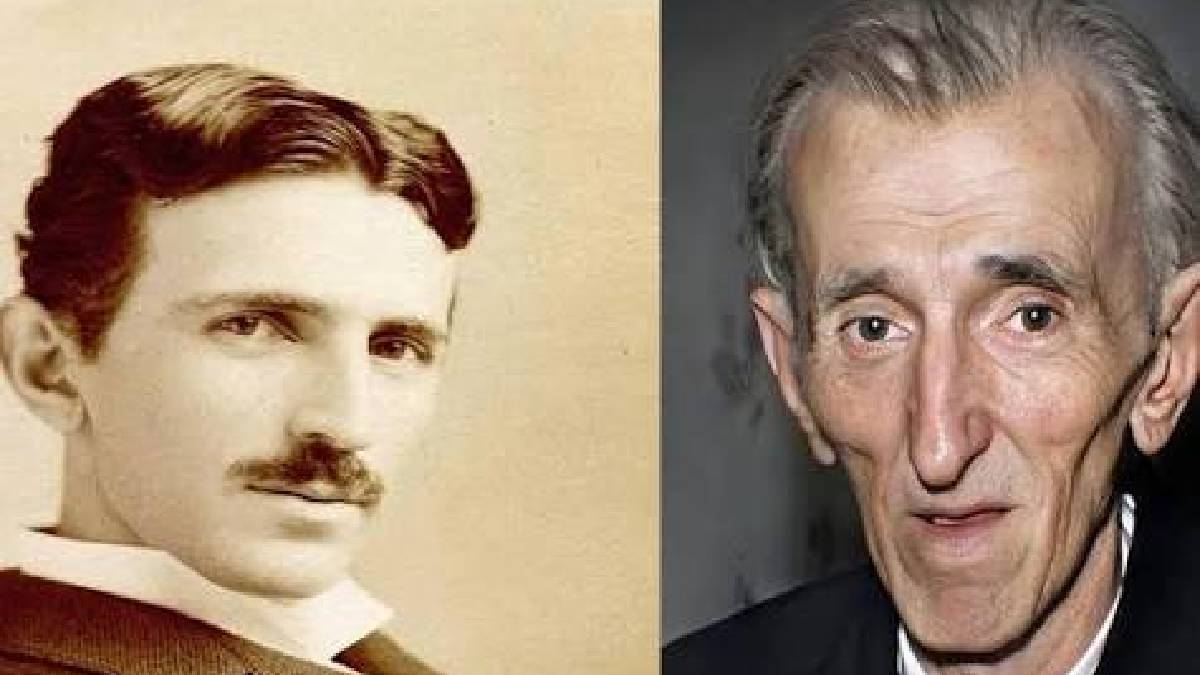
But behind this everyday convenience is the remarkable story of one man whose vision changed the modern world. The man was Nikola Tesla an inventor, electrical engineer, physicist and futurist who had ideas decades ahead of his time.
Although his work helped shape the electrical systems we rely on today, Tesla lived in relative obscurity for much of his life. He was eclipsed by his contemporaries and often financially poor, and never quite got the credit for what he did. Now more than a century later, history still sees him as one of its greatest innovators.
This is the story of how a young boy from a small European village developed into the brilliant mind that forever changed the future of electricity.

A Humble Beginning with Extraordinary Potential
Nikola Tesla was born on July 10, 1856 in the village of Smiljan which was part of the Austrian Empire (which is now Croatia). He was born into a Serbian family.
His father Milutin Tesla was a Serbian Orthodox priest, while his mother Georgina "Duka" Tesla had a great mechanical skill and made household tools despite having no formal education.
Tesla often credited his mother for bringing to life his creative personality. He would watch her solve practical real world problems with ingenuity and skill. It was at home that the seeds of curiosity, innovation and determination first started to grow.
From an early age Tesla had abilities that shocked people in his immediate vicinity. He had an incredible memory, recalling books, diagrams and mathematical formulas very well. He also had the ability to visualize the huge machines in his mind before he would actually put pencil to paper.
These extraordinary mental abilities would later become one of the defining characteristics of his career.
Education and an interest in Science
Tesla had a love of science and engineering with which he got into school. He attended the Higher Real Gymnasium in Karlovac, where mathematics and physics quickly became his favorite subjects.
His teachers realized he had a remarkable intellectual capacity. Tesla never simply recalled what he learned, but rather sought to know how machines worked and to think about how they could be made better.
He later entered the Austrian Polytechnic in Graz to study engineering. There he was studying electricity, mechanics and mathematics. Financially and personally difficult times interrupted his education, but he never stopped learning.
Tesla believed that knowledge had no limits. He spent hours reading scientific books and doing mental experiments, developing ideas that would revolutionize electrical engineering.
A Dream That Crossed an Ocean
By the early 1880s Tesla had already had experience working with electrical systems in Europe. But he hoped for more opportunities in the US, where electricity was fast becoming one of the most exciting new industries in the world.
In 1884, Tesla arrived in New York City at the age of 28 with little more than a few personal belongings, a letter of recommendation and an unwavering belief in his ideas.
The recommendation letter, written by one of his former employers, described Tesla with a memorable statement addressed to inventor Thomas Edison:
"I know two great men. You are one of them; the other is this young man."
Even if the exact wording has become part of popular historical accounts, it is a testimony to the extraordinary expectations surrounding Tesla's abilities.
For Tesla, America was more than a new country it was a place where imagination and innovation could become reality.
Working with Thomas Edison
Shortly after arriving in New York, Tesla began working for Thomas Edison, who was already one of America's most celebrated inventors.
Both men had a passion for electricity but their methods of innovation were much more different.
Edison was experimental and believed that practical testing would eventually lead to success. Tesla preferred mathematical precision and mental visualization. He often honed inventions in his imagination before building a working model.
Initially, Tesla had great admiration for Edison and thought that he would be able to work with him to improve electrical systems.
But as soon as they got into a professional situation, the relationship deteriorated.
According to accounts, Tesla believed Edison had promised him a large financial reward for improving the efficiency of his electrical generators. When Tesla finished the work, the promised payment never materialized.
This incident permanently damaged their relationship.
Tesla resigned from Edison's company and set out to pursue his own vision of the future.
The Beginning of the War of Currents
Leaving Edison was a turning point in Tesla’s life.
At the time, Edison promoted Direct Current (DC) electrical systems. DC worked well over short distances but lost much power during long-distance transmission and was expensive and impractical for the supply of electricity to large areas.
Tesla thought there was a better solution.
He studied Alternating Current (AC), in which the electric current occasionally changes direction. This enabled electricity to be transmitted over much longer distances with much less energy loss.
Tesla's ideas attracted industrialist George Westinghouse, who recognized the immense potential of alternating current. Westinghouse bought Tesla’s patents and provided financing for the development of the technology.
This partnership began one of the greatest technological rivalries in history the War of Currents.
The battle between DC and AC was not merely a scientific fight. It was a public competition with demonstrations, business interests, engineering innovation and competing visions for the future of electricity.
Tesla still felt AC was the best even as critics questioned its safety and practicality.
History would eventually prove his confidence was well founded.
The Foundation of an Electrical Revolution
At the end of the 1880s, Nikola Tesla established himself as one of the brightest minds in electrical engineering. His radical ideas challenged conventional thinking and were intended to change how electricity was produced and distributed.
Although Tesla had not yet made his greatest inventions, he had already established the groundwork for a revolution that would illuminate cities, power industries and shake up modern society in a way never before.
His story was only beginning.
Continue Reading:
In Part 2, discover how Nikola Tesla's groundbreaking inventions including the AC power system, Tesla Coil, and induction motor transformed the world and why his legacy continues to inspire generations of scientists and engineers.
Read Part 2: Nikola Tesla: The Electrical Pride That Powers Our Modern World - https://www.saptashwatv.com/lifestyle/nikola-tesla-electrical-pride-part-2-16444.html