
Mumtaz Jehan Begum Dehlavi was born in Delhi, on February 14, 1933. The world would later consider her Madhubala, one of the most beautiful and gifted actresses in Indian cinema. Her charm, expressive eyes, and graceful acting convinced the world with respect to her, she earned the title “Venus of Indian Cinema.” Even now, some thirty years after her death, she has become a muse for filmmakers, actors and audiences around the world.
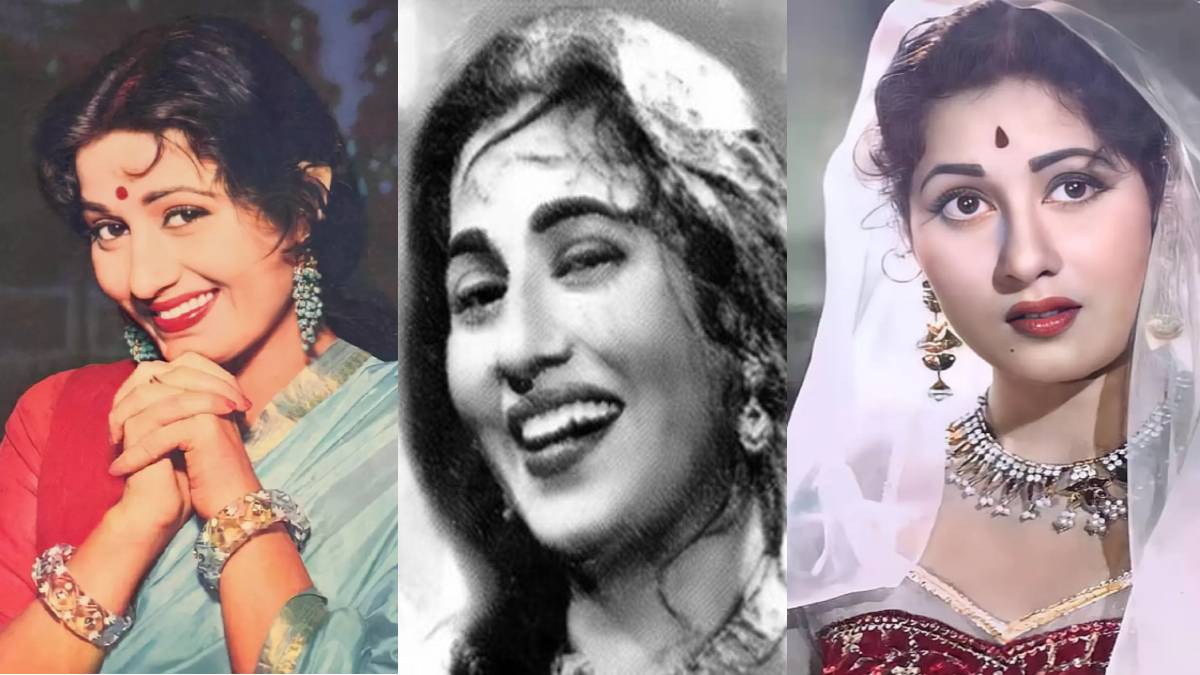
Early Life and Career
Madhubala was born and raised in a big family; there were 11 siblings. She began working on film at an early age, as a child artist in Basant (1942) as “Baby Mumtaz.” Her major breakthrough was Mahal (1949), a massive hit and making her a rising star.
Iconic Roles
Madhubala spent a lifetime on stage. Through her own role in Howrah Bridge, Kala Pani, Barsaat Ki Raat and Chalti Ka Naam Gaadi her classics came to fruition. Yet she is best remembered for her role as Anarkali in Mughal-e-Azam (1960). Her dramatic turn with the tragic courtesan in love with Prince Salim, remains one of the most important performances in Indian movie history.
Beauty and Talent
Madhubala was famous not only for her beauty but also due to her natural acting style. Where many of her contemporaries couldn’t articulate deep emotions, she did, through small gestures and expressive eyes. International media compared her to Hollywood darlings such as Marilyn Monroe.
Personal Struggles
Behind that glamour, Madhubala’s existence had its challenges. Her work was curtailed by a congenital heart condition which, when she was only 36 years old in 1969, killed her. The love affair she shared with the actor Dilip Kumar unfortunately ended, further complicating the enigma and sadness around her life.

Legacy
The Government of India in 2008 commissioned an honorary postage stamp of her posthumous birth. Now, on her 93rd birthday, her fans not only acknowledge her as a star; they also recognize her as a symbol of timeless beauty and talent. Her films remain among those watched today–her story inspires other generations of artists yet unborn.
Madhubala’s was a short life, but the influence she left is lasting. She will continue to be an inspiration in Indian cinema and our children of film and film show us that a lot of art resides in cinema for eternity.











Comments
Leave a Comment