“Is anybody here? Is anybody here?” Rescuers’ desperate calls echo through Gyirong Port’s devastated landscape as Chinese emergency workers search for people who may still be buried in the mud after a huge disaster.
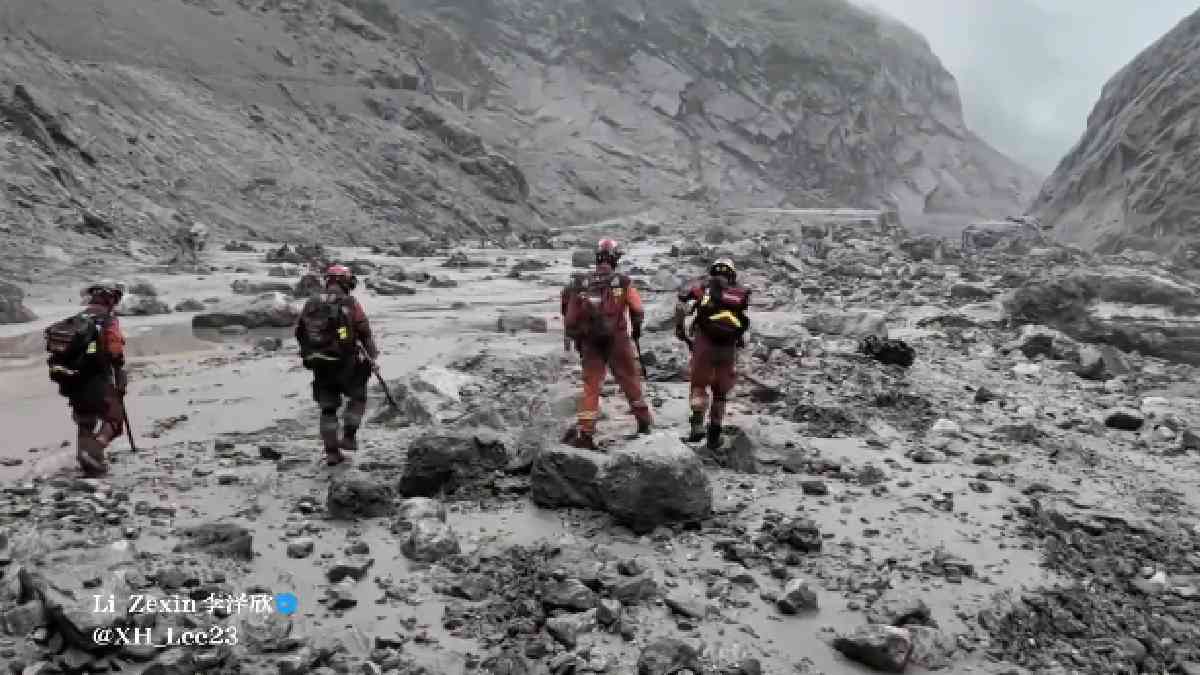
The rescue operation has to be carried out in very difficult conditions. Much of the affected area is buried under extensive mud and huge areas of mud-covered land, so it is difficult for rescuers to locate and reach the potential survivors and safely reach them.
Video from the scene shows rescuers moving through the disaster zone as they repeatedly call out to anyone who could be alive somewhere in the rubble.
Rescuers Search for Signs of Life
The rescue teams are focusing their efforts on the main disaster area of Gyirong Port, where the scale of destruction has made the operation particularly difficult.
Hence, instead of heavy machinery, rescuers are also using their voices and careful physical searches to detect possible signs of life.
The repeated calls of “Is anybody here?” are intended to tell anyone trapped beneath the mud that help has arrived. Rescuers are also reported to have been knocking on buildings and debris, in an effort to contact survivors.
And those searches are particularly time-sensitive after a major disaster because trapped people may find themselves without access to air, water and other basic needs.
All Area Reportedly Buried in Mud
The disaster zone around the port is currently covered by mud, leaving rescuers with a tough path to walk through for rescue teams to navigate, they said.
Mud and debris can hide people, vehicles and structures, and unstable ground can create additional risks for emergency personnel.
A rescue agency in that situation needs to balance the need to find survivors with the need not to get any more casualties or cause a collapse.
Emergency workers are trying to proceed cautiously as they take stock of the situation in the affected area and keep an eye on it, they said.
Rescue Operation Continues
The Chinese rescue team is still searching for people amid the destruction and is looking into areas in which people could be trapped, says the Chinese rescue team.
The process of searching and trying to communicate with anyone living in the debris can take several minutes.
The emotional scenes from the rescue effort have attracted attention because they convey the human side of disaster response. The rescuers’ calls are an attempt to trace someone who may still be waiting for help.
And for families and communities affected by the disaster, though, even when the disaster has left a lot of damage to the surrounding area, rescue operations can provide hope in the process and for the residents and communities in the rest of the disaster.
"Is anybody here? Is anybody here?"
— Li Zexin 李泽欣 (@XH_Lee23) August 29, 2026
Chinese first rescue team is searching the core disaster area of the Gyirong Port. The whole area is buried under the mud.
Rescuers knock and call out, trying to find anyone who may still be alive. Be careful and stay safe🙏 pic.twitter.com/WkIhJIY0zq
At present, safety is a major concern
The disaster site is still very dangerous. Mud-covered areas could shift unexpectedly, and damaged buildings and infrastructure could pose additional dangers.
So rescue personnel are therefore urged to be alert and to take the safety of their search team into account.
Emergency response teams generally face multiple risks during such operations, including unstable structures, difficult terrain, poor visibility, and the possibility of additional mud movement.
Despite these challenges, rescuers continue to work through the affected area to search for survivors.
A Race Against Time
Search and rescue in disaster areas is a race against time. The first hours and days can be instrumental in finding people buried in rubble.
At Gyirong Port, the rescuers’ repeated calls and careful inspection of the mud-covered area underline the urgency of the operation.
The words “Is anybody here?” have come to represent a collective feeling of the search as rescue workers hope for a response from beneath the rubble.
Then we look for any survivors, and we find them, rescue them, and help them immediately.
Rescuers are working under extremely difficult conditions and covering as much of the disaster zone as possible, they said.
The scenes all point to the very difficult challenges emergency workers face as they work in disasters of this scale. Gyirong Port continues in dangerous conditions but the search will lead to survivors.