Spain’s North African enclave of Ceuta is now a zone of major border and humanitarian crisis, with an estimated 60,000 migrants reportedly having entered the region from Morocco, presenting a new challenge for local authorities and security agencies.
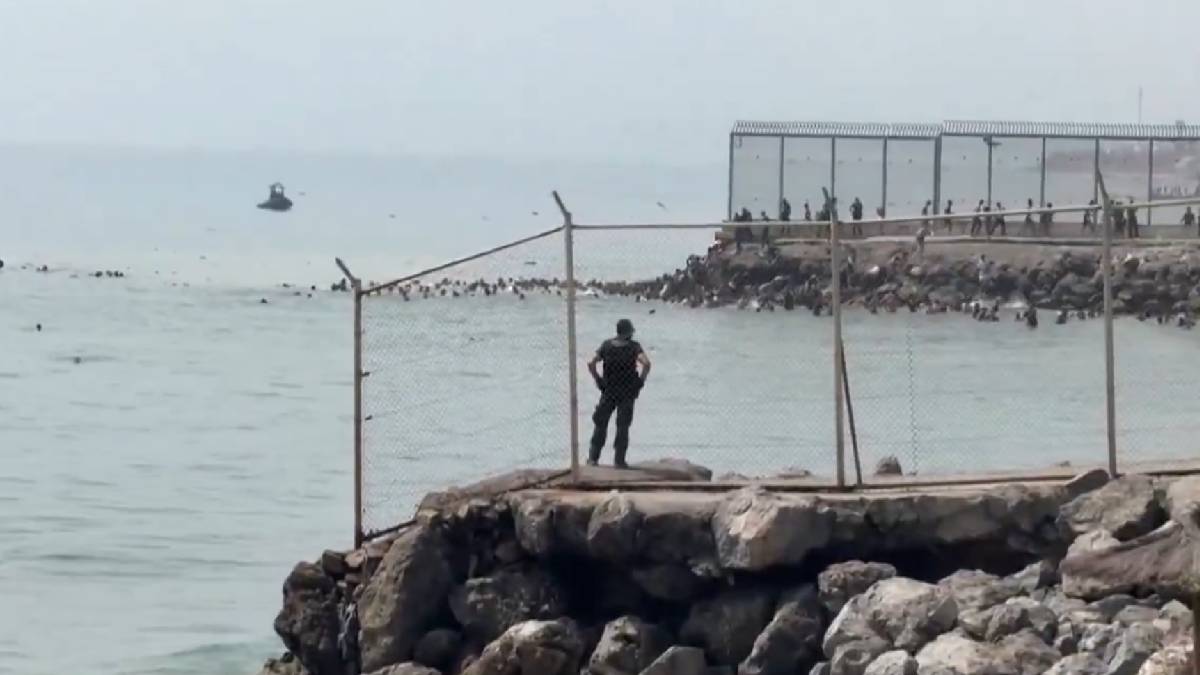
The magnitude of the influx has caused great concern as the reported number is said to account for almost 70 per cent of Ceuta’s regular population. The sudden arrival has been putting a lot of pressure on the city’s infrastructure, public services, security arrangements and emergency response systems.
60,000 illegals have entered Spain's Ceuta from Morocco during the border crisis.
— News Arena India (@NewsArenaIndia) July 31, 2026
Ceuta's president says - “That is equivalent to 70 per cent of the city's regular population.” pic.twitter.com/GauS0Iqyna
Ceuta President Juan Jesús Vivas described the situation as an extraordinary challenge and highlighted the scale of the influx compared with the city’s population.
“That is equivalent to 70 per cent of the city’s regular population,” he said, citing the number of people who came to the Spanish territory during the border crisis.
The huge movement of people has triggered concerns over accommodation, food, water, medical assistance and public safety. Local authorities are working to handle the situation while coordinating with the central government of Spain and border-security agencies.
Ceuta is a small Spanish autonomous city on the northern coast of Africa and shares a land border with Morocco. It is one of the only land frontiers of the European Union with Africa, along with Melilla.
Its location has been one of the main focal points for migration for many years. People who have been trying to enter Europe through land crossings and sea routes have taken different routes.
The influx may have overwhelmed some parts of the border system and caused chaotic scenes, the Spanish government has said.
Spain has taken the situation as a big national security and humanitarian problem. The government is expected to work with Moroccan authorities to restore border control and address the immediate needs of people who entered Ceuta.
The crisis also illustrates the fraught relationship between Spain and Morocco when it comes to migration management.
The two countries have collaborated to control migration flows across the border. But big increases in arrivals can put immense pressure on both countries and present political and diplomatic challenges.
The reported arrival of around 60,000 people in a short period is a great deal for a region with a relatively small permanent population.
Such a rapid population surge can affect public transport, healthcare services, emergency facilities, food supplies and law-enforcement operations.
More than that, authorities are likely to encounter legal and administrative problems in determining the status of those who entered, identifying people and processing asylum or immigration claims.
The situation has renewed debate in Spain and in Europe about border security, migration policy and governments’ responsibility for responding to large-scale movements of people.
Supporters of stronger border controls have argued that stronger measures are needed to prevent irregular crossings and protect local communities.
Human rights groups and humanitarian organisations, meanwhile, are likely to be concerned about migrants’ safety and welfare, especially children and other vulnerable people.
The crisis illustrates the challenges of policing our border and also our humanitarian obligations.
The immediate priority for authorities will be to restore order, provide emergency assistance, and control further crossings.
Many migrants reportedly came to Ceuta by land and sea routes. The circumstances for the sudden increase, as well as the reasons behind or in which mass movement was promoted or enabled, will be investigated.
The Spanish government might also be looking for greater cooperation with Morocco and European institutions to address the crisis.
Ceuta’s location makes it strategically important because it is the most direct link between Europe and North Africa.
The latest developments could therefore have wider implications for European migration policy and relations between Spain and Morocco.
The number of arrivals reported could be revised as authorities verify border records and conduct assessments. Official estimates from different agencies could also vary depending on the time period and the methods used to count entries.
For now, the reported arrival of approximately 60,000 migrants has created one of the most serious migration challenges faced by Ceuta in recent years.
The influx, which is estimated to be about 70 per cent of the city’s regular population, has intensified calls for urgent action and raised the security, humanitarian and political dimensions of the border crisis.