Today we could see an awesome event in space exploration as a retired SpaceX Falcon 9 rocket stage will collide with the Moon.
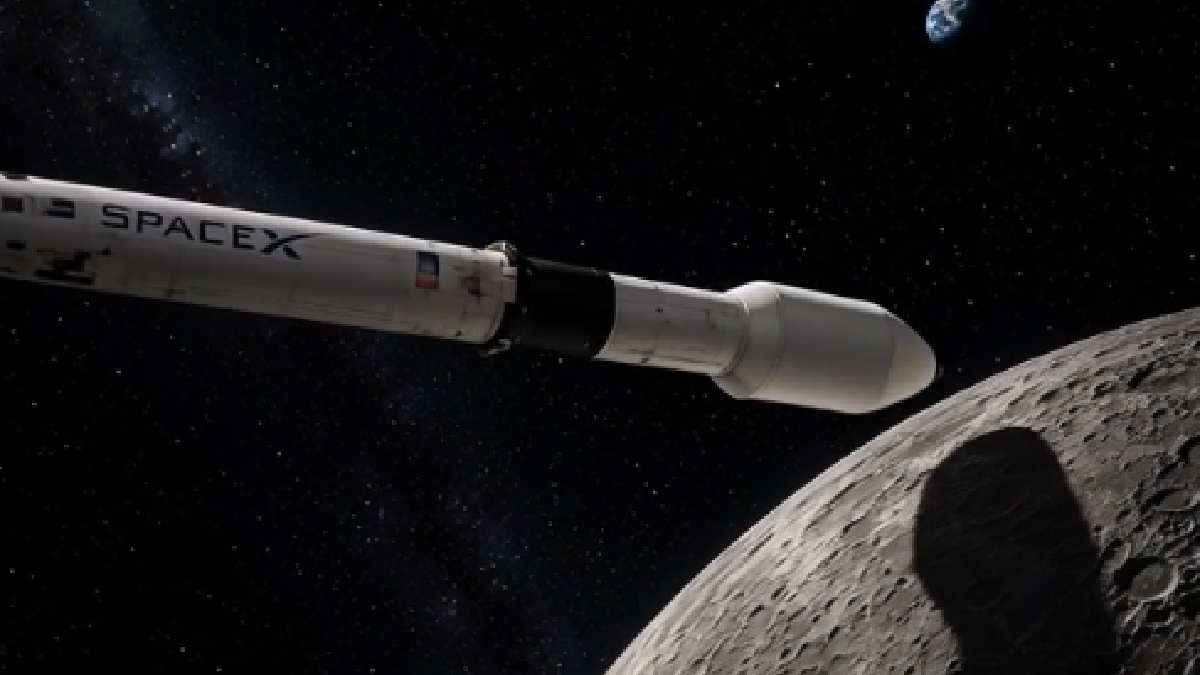
The impact is unintentional but scientists like to see how it will affect the Moon because it’s very rare to see scientists observe a large object touching the Moon.
Our current data indicates that the Falcon 9 upper stage is likely to hit the Moon around 12:05 PM IST (06:35 UTC) on August 5, 2026. The rocket is expected to hit on the western side of the Moon, near the Einstein Crater, at an estimated speed of 8690 km/h (5,400 mph) with the same velocity.
Will the Moon Impact Be Visible
Despite the excitement around the impact, the collision won't be visible to anybody on Earth from the naked eye. It is due to happen close to the far western edge of the Moon, so direct viewing of this event is extremely difficult.
But astronomy organizations, observatories and popular space-focused YouTube channels will be providing live coverage, expert analysis and computer-generated simulations. Scientists will also use powerful telescopes to monitor the impact site and search for any dust cloud created by the collision.
Why Is the Rocket Crashing Into the Moon
The Falcon 9 upper stage has been drifting through space since it completed its work on a lunar mission in early 2025. Unlike rockets returning to Earth after completing their missions, this stage stayed in space because it didn't have enough fuel to change course or return to Earth's atmosphere safely.
The gravitational pull of Earth, Moon and Sun gradually altered its orbit and brought it into a path that would terminate with a collision on the lunar surface.
Why the Impact Matters
Even though accidental, the crash is a scientific opportunity for researchers as well. The impact would make for a new crater and the lunar dust to be tossed high above the surface of the Moon and scientists will have to study how impact craters are formed and how the material is ejected during this way of impacting.
The observations could help us better understand the Moon’s surface and may in fact be useful for future lunar missions. And it also provides an example of the need to find better ways to dispose of spacecraft and rocket stages that were launched beyond Earth’s orbit.
No Risk to Earth
Experts have confirmed that the impact is ‘no danger to Earth or its residents’. The collision will occur entirely on the Moon, and any debris produced is expected to stay in the Moon's environment.
As space missions become more frequent, the more we need to take care of spacecraft after they leave. While today's collision is not planned, yet it provides scientists with the opportunity to learn more about our closest celestial neighbour and the challenges of deep space.