The trade war between the US and Canada has taken a new, more aggressive turn as Donald Trump banned imports of some Canadian dairy products, most alcoholic beverages, and some motorcycles. The restrictions take effect September 29, 2026 — another layer on the rapidly deteriorating trade relationship between the two longtime allies.
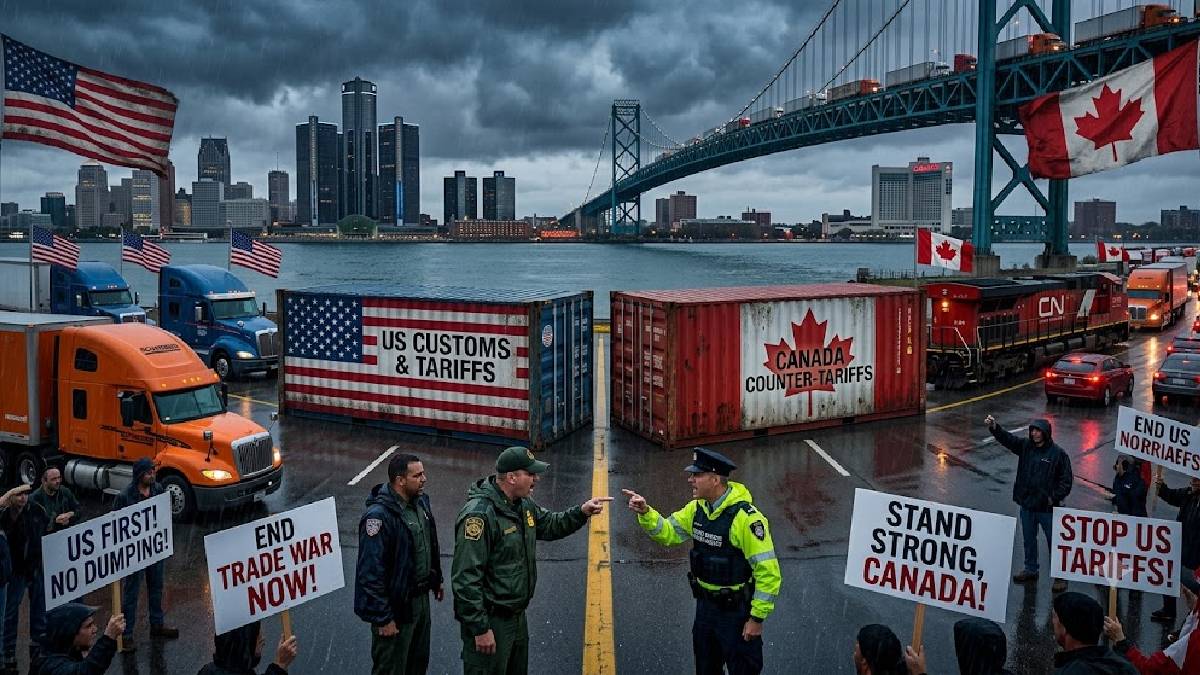
The new tariffs came after Canada retaliated with tariffs on about $20 billion worth of US imports. Ottawa responded to earlier US tariffs on Canadian goods — including a 50% levy on some Canadian products — and back-and-forth measures have turned what started as a trade policy dispute into a much broader confrontation (tariffs, import restrictions and government procurement).
Under new US restrictions, a lot of Canadian alcohol products won’t be allowed into the USA — wines and spirits among them, whey and molasses too; some motorcycles and mopeds from Canada are also on the list. Cheese products from Canada have been put into the category of goods subject to a 50% tariff, not an outright ban.
Washington has said the latest move was necessary because of what Trump administration officials say is discriminatory treatment of American businesses and agricultural producers. The US has complained repeatedly about Canada’s dairy market, alcohol policies and other trade practices, saying American producers don’t get what Washington says is fair access to the Canadian market.
Canada has strongly opposed the US measures. Prime Minister Mark Carney defended Ottawa’s retaliatory tariffs but said Canada needed to reduce its economic dependence on the United States. Canada exports most of what it produces to the US, so the trade dispute is especially damaging for Canadian businesses and workers. Carney says diversifying Canada’s international trade relationships could make it less vulnerable in future to economic pressure from Washington.
The dispute is also changing consumer behaviour. Some Canadian provinces had already taken American alcoholic products off government-controlled liquor stores; Canadians have turned more to domestic products and cut some spending in the United States. These developments give political dimension to the economic conflict — trade becomes closely linked to questions of Canadian national sovereignty and economic independence.
The US has also gone beyond tariffs and import bans. Trump directed US government agencies to exclude Canadian-origin products from certain large federal procurement programs unless Canada provides what his administration calls full and fair reciprocal access for American companies and farmers. Those kinds of measures could put more pressure on Canadian manufacturers and exporters trying to get into the U.S. government market.
The effects could be far wider than alcohol, dairy and motorcycles. The two countries have very integrated supply chains in automobiles, energy, agriculture, manufacturing and other industries. Prolonged trade restrictions will increase costs for businesses; disrupt established supply chains; and create uncertainty about whether companies are planning to invest on either side of the border.
The future of the United States-Mexico-Canada Agreement (USMCA) is also becoming a major issue. The agreement has been the basis for much North American cross-border trade, and tariff disputes could make businesses nervous about the stability of the regional trading system.
The Trump administration has also been pressuring Canada’s automobile industry — tariffs on Canadian automobiles and parts could go from 25% to 50% effective January 1, 2027 if the move is implemented. If that happens, it would be a hammer blow to an integrated North American automotive sector.
Despite the escalation, US and Canadian officials have said that the two governments are still talking. American officials have said there may be another way if talks continue; Canadian authorities say they are building stronger relationships with other international partners (EU among them).
The biggest question for businesses and investors is whether these latest moves are going to stay in specific industries or escalate into a broader economic war. US and Canada are very economically linked, so prolonged restrictions could end up affecting producers, exporters, retailers and consumers in both countries.
The bans are therefore not just another round of tariffs. They also signal a serious deterioration in one of the world’s most important bilateral economic relationships. Canada has retaliatory measures already in place, and Washington has imposed more restrictions, so coming weeks will be telling to see whether talks can stop the dispute from spiralling out of control or if US-Canada trade war enters an even more damaging phase.