Every year on May 8, the world observes World Red Cross and Red Crescent Day to honor the humanitarian efforts of millions of volunteers, medical workers, and aid staff who dedicate their lives to helping people in times of crisis. The day represents compassion, humanity, neutrality, and solidarity — values that continue to inspire global humanitarian work.
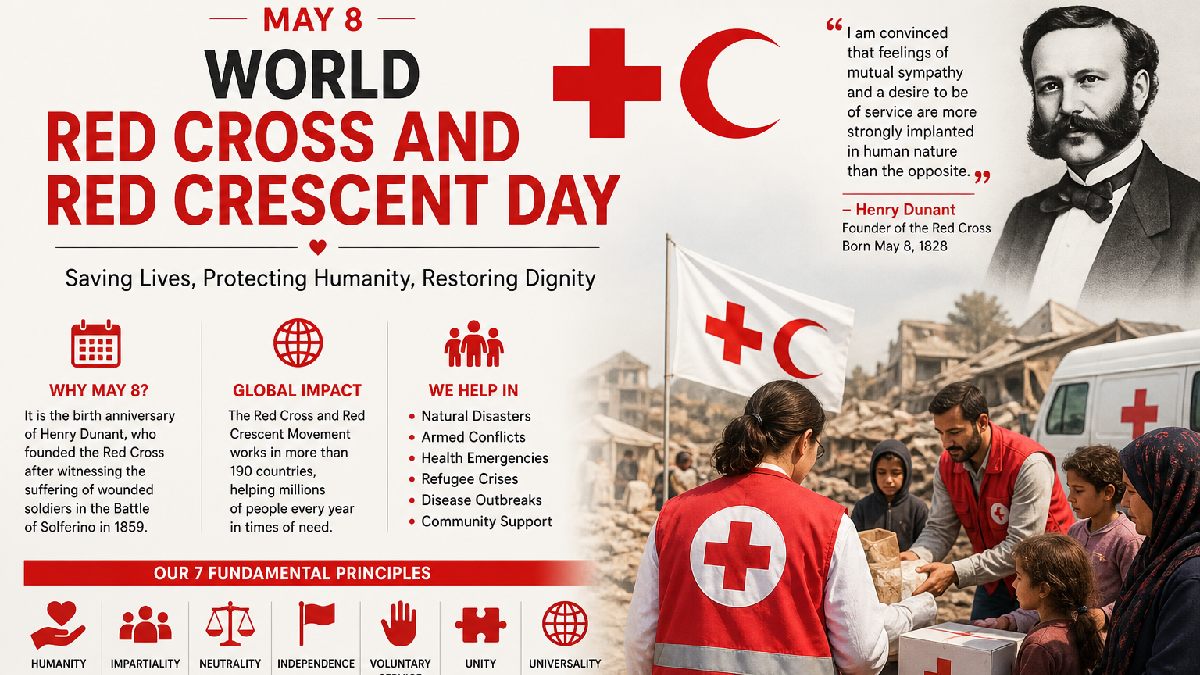
The occasion is celebrated on the birth anniversary of Henry Dunant, born on May 8, 1828, in Geneva. Dunant’s life-changing experience during the Battle of Solferino led him to establish the modern humanitarian movement that later became the International Red Cross and Red Crescent Movement.
History and Origin of the Day
The roots of the movement trace back to 1859 when Henry Dunant witnessed thousands of wounded soldiers left without medical assistance after the Battle of Solferino. Shocked by the suffering, he organized local civilians to help injured soldiers regardless of nationality. His humanitarian vision eventually inspired the creation of the International Committee of the Red Cross and the first Geneva Convention.
In recognition of his humanitarian work, Henry Dunant received the first-ever Nobel Peace Prize in 1901.
World Red Cross Day was officially recognized in 1948. Over time, the observance expanded to include the Red Crescent, reflecting the movement’s presence across different cultures and nations. Today, the movement operates in more than 190 countries worldwide.
Global Importance of the Red Cross and Red Crescent
The International Red Cross and Red Crescent Movement plays a crucial role during:
- Natural disasters
- Armed conflicts
- Health emergencies
- Refugee and humanitarian crises
- Disease outbreaks
- Community health programs
The organization provides emergency medical care, food, shelter, clean water, mental health support, and disaster relief to millions of people each year without discrimination based on religion, nationality, race, or political beliefs.
Its volunteers often work in some of the most dangerous and challenging environments to protect human dignity and save lives.
Seven Fundamental Principles
The movement is guided by seven core principles that ensure humanitarian aid reaches people fairly and effectively:
- Humanity
- Impartiality
- Neutrality
- Independence
- Voluntary Service
- Unity
- Universality
These principles help maintain trust and ensure that assistance is delivered solely based on need.
Celebrations Around the World
World Red Cross and Red Crescent Day is marked globally through:
- Blood donation drives
- Health awareness campaigns
- Community service activities
- Volunteer recognition programs
- First-aid training sessions
- Educational events and seminars
Schools, hospitals, governments, and humanitarian organizations also conduct awareness initiatives to encourage people to support humanitarian causes and volunteer work.
Why the Day Matters Today
In a world facing increasing climate disasters, conflicts, pandemics, and humanitarian emergencies, the role of humanitarian organizations has become more important than ever. World Red Cross and Red Crescent Day reminds people that kindness, unity, and collective action can make a meaningful difference during times of crisis.
The observance also highlights the importance of global cooperation and community support in protecting vulnerable populations.
A Global Symbol of Hope
The Red Cross and Red Crescent are more than humanitarian organizations — they are symbols of hope, relief, and humanity. Their work continues to inspire millions across the world to stand together and support those in need.
As the world observes May 8, the day serves as a tribute to every volunteer, healthcare worker, and humanitarian who works tirelessly to save lives and restore dignity. It is also a reminder that even small acts of compassion can create a powerful impact on humanity.