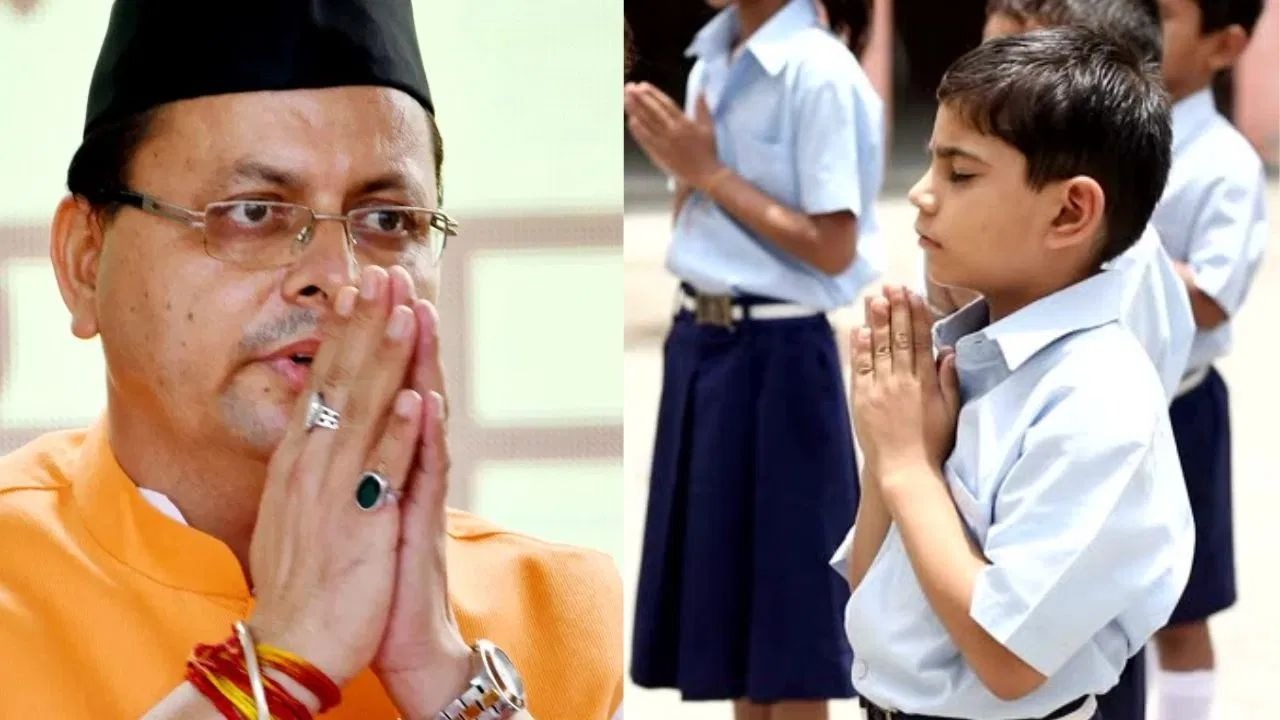
Uttarakhand has taken a new step in education as Chief Minister Pushkar Singh Dhami declared that reciting verses from the Bhagavad Gita will be compulsory in all government schools. This initiative is part of the state’s effort to strengthen cultural values and moral education among young students.
A Cultural Initiative
According to the announcement, every morning assembly in schools will now include a verse from the Bhagavad Gita, along with its meaning explained to students. The government has also planned to include both the Bhagavad Gita and the Ramayana in the curriculum, aligning with the National Education Policy (NEP) 2020.
The Chief Minister emphasized that this step is not just about religious practice but about connecting children with India’s heritage, philosophy, and ethical values. He believes that the teachings of the Gita will guide students toward discipline, respect, and holistic development.
Impact on Students
The daily recitation is expected to help students build strong moral foundations. Teachers will explain the verses in simple language, ensuring that children understand the lessons of courage, honesty, and responsibility. Schools will also display a weekly verse on notice boards to reinforce the learning.
Officials say this initiative will encourage students to reflect on life’s challenges and solutions through the wisdom of the Gita. It is seen as a way to balance academic learning with character building.
Reactions to the Move
The decision has received mixed responses. Supporters, including cultural leaders and some educators, welcome it as a positive step to preserve traditions and instill values in the younger generation. They argue that the Gita’s teachings are universal and can inspire students regardless of background.
However, some groups have raised concerns about whether mandatory recitation could blur the line between cultural education and religious instruction. Teachers’ associations have suggested that while moral education is important, schools should ensure inclusivity and respect for all communities.
With nearly 17,000 government schools in Uttarakhand set to adopt this practice, the initiative will touch the lives of thousands of students. The government hopes it will pave the way for all‑round development, blending modern education with traditional wisdom.
As the program begins, the morning assemblies in Uttarakhand schools will echo with verses from the Bhagavad Gita, symbolizing a new chapter in the state’s educational journey.