The reported abuse of toddlers at a daycare centre operated by Capgemini HAL campus in Bengaluru sent shock waves through India and raised questions about the safety and regulation of private childcare systems in India. Videos that have emerged of children being shoved into a front-loading washing machine, sprayed in the mouth with a toilet jet and locked in bathrooms as punishment have horrified parents and triggered a criminal investigation. Police registered an FIR against five caregivers after the footage came out, but it has also raised a wider question about the safety of India’s rapidly growing private daycare sector.
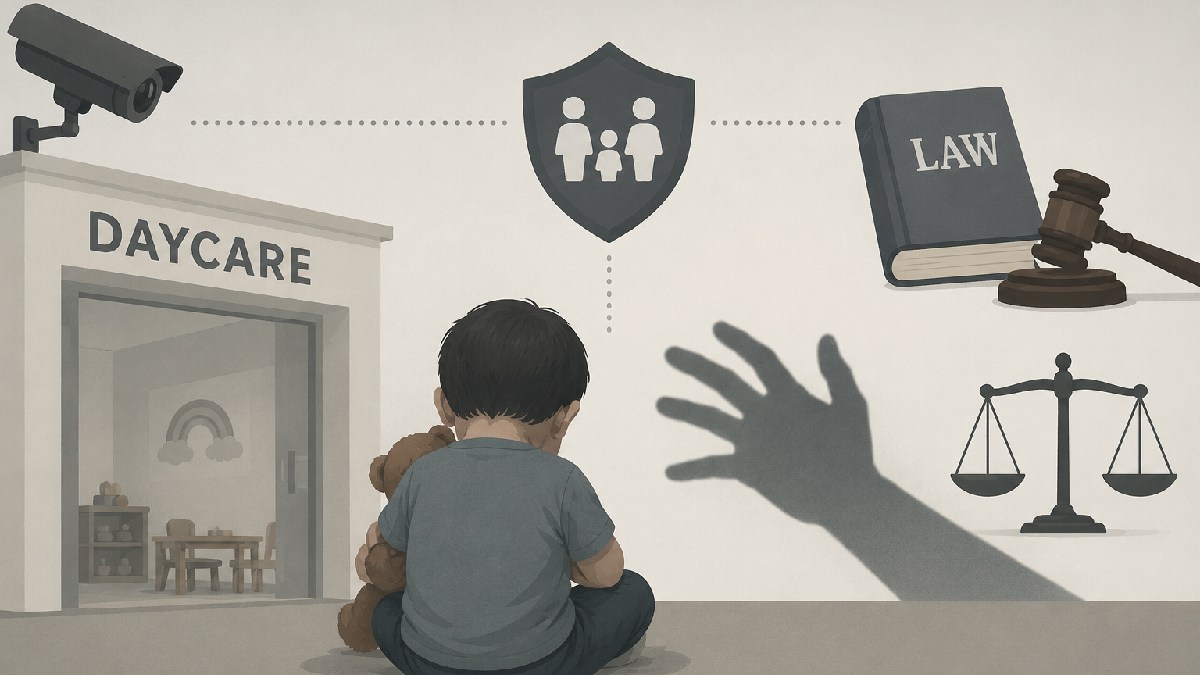
For millions of working parents, especially in urban India, daycare centres have become a necessity rather than a choice. With nuclear families replacing joint family systems and both parents pursuing full-time careers, childcare facilities have become an essential support system. However, unlike schools or hospitals, private daycare centres in India are not governed by any single national law or regulator.
Instead they operate under a patchwork of state-specific rules, labour laws, child protection legislation and general criminal law. Although government-run Anganwadis are in the Integrated Child Development Services (ICDS) programme, private daycare centres often fall into a regulatory gray area. Standards in infrastructure, staff qualifications, child-to-caregiver ratios, safety procedures and inspections vary significantly from one state to another. And many cities have no licensing framework specifically for private daycare centres.
One of the few central laws that relate to workplace childcare is the Maternity Benefit Act, 1961, which was amended in 2017. Under Section 11A, employers who have 50 or more staff are required to provide a creche facility, independently or in partnership, and allow mothers to visit during the workday. But the law is intended to protect access to childcare, not to set out strict guidelines for daycare centres. It does not establish national guidelines on caregiver qualification, inspection frequency, staff training or safety requirements.
Most large companies are outsourcing childcare services to highly specialized daycare operators. While employers are responsible for compliance with the law, day-to-day management is entrusted to third-party companies. The Bengaluru case has thus raised a difficult question about accountability: when a daycare operates on a corporate campus but is run by an external agency, who actually takes responsibility?
The incident has also raised questions about the effectiveness of CCTV surveillance in childcare centres. While many private daycare centres advertise CCTV cameras as a key safety feature, India does not have a uniform national policy on cameras, where they are to be installed, how long footage should be kept and who should have access to them (parents or children in the home). CCTV is often useful only after abuse has already taken place, so it is more of an investigative tool than a preventive measure.
If investigators establish that children were physically assaulted or unlawfully confined, authorities may invoke provisions of the Bharatiya Nyaya Sanhita (BNS) relating to causing hurt, wrongful confinement and criminal intimidation. If there is sexual abuse evidence, the Protection of Children from Sexual Offences (POCSO) Act would apply, and the Juvenile Justice (Care and Protection of Children) Act also deals with cruelty against children by individuals or institutions responsible for their care.
And unfortunately, the Bengaluru case isn’t an isolated one. In November 2016, video from a daycare in Navi Mumbai showed a caretaker repeatedly beating and kicking a 10-month-old girl (the caregiver and daycare owner were arrested). Almost eight years later, police filed an FIR against the owners and staff of a daycare in Dombivli after video evidence of children being beaten, verbally abused and in one instance tied up to a chair was leaked to a social worker. The abuse was only unearthed when a new employee secretly recorded the incidents and took action. In August 2025, another disturbing incident took place at Noida where a 15-month-old girl was slapped, bitten, punched and hit with a plastic bat by a daycare attendant. The incident was found out after the child’s mother examined CCTV footage and took action against the daycare management and caregiver.
These repeat incidents tell a worrying story. In most cases, abuse has been uncovered only after surveillance footage has emerged or insiders reveal wrongdoing, not by regular inspections or regulatory oversight. Child rights experts have repeatedly insisted that India’s legal framework is not robust enough to prosecute those responsible for abuse and there is a lack of preventive mechanisms in place to ensure that there are uniform standards in private daycare centres.
The Bengaluru case has reignited calls in India for national regulation of private creches with licensing, background screening of caregivers, minimum training standards, regular inspections, child-to-caregiver ratios and uniform CCTV protocols. As more Indian families have to rely on daycare services, the safety of children must not be dependent on individual operators’ internal policies. The latest allegations are a reminder of how stronger oversight and accountability are crucial for parents to regain faith and trust in one of the country’s critical childcare services.