As part of this development package, the Government of India has approved a major development package for West Bengal in the form of ₹1,000 crore for rural road projects and approved the construction of one lakh houses in a central housing scheme. The twin projects will help in improving rural infrastructure, enhance connectivity, and bring in a lot of families who are in need of homes to the state.
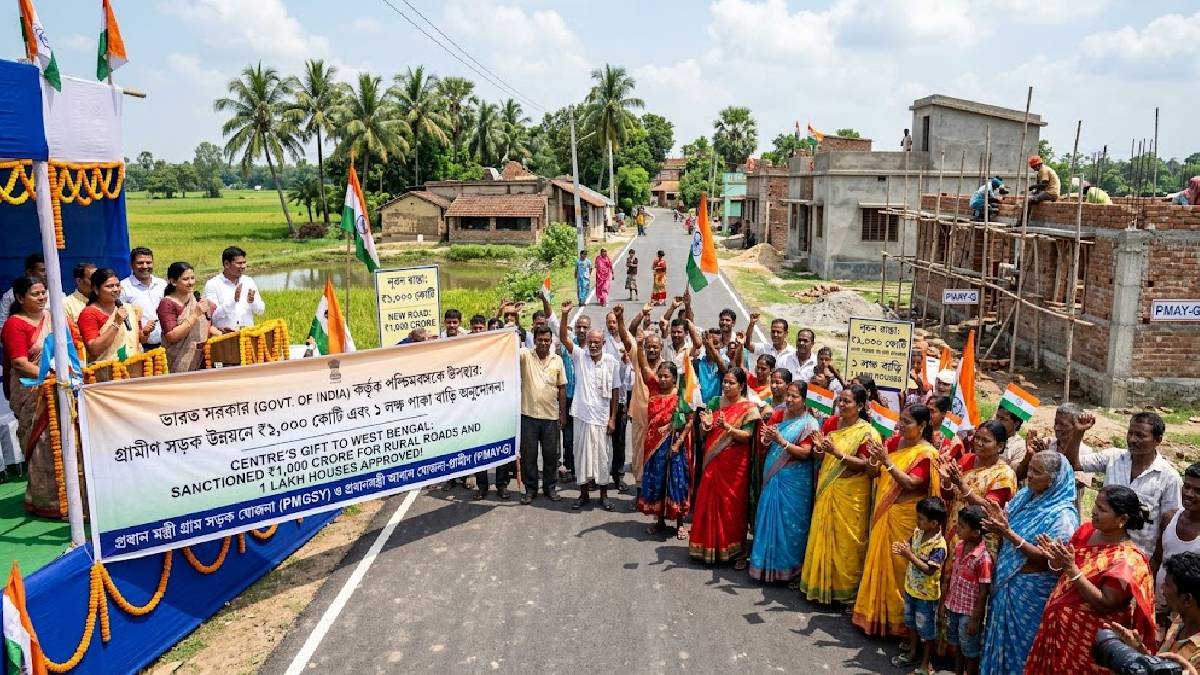
That is a continuation of the Centre’s emphasis on improving rural India’s road network and affordable housing. Better roads and permanent homes are key ingredients for inclusive development that will allow for access to education, healthcare, markets, and employment.
🚨 The Indian government sanctions ₹1,000 crore for rural road projects and approves 1 lakh houses in West Bengal. pic.twitter.com/1py5tLLmoB
— Indian Tech & Infra (@IndianTechGuide) July 15, 2026
The ₹1,000 crore allocation will be utilised for rural roads under the Pradhan Mantri Gram Sadak Yojana (PMGSY) and related infrastructure projects. These projects will facilitate all-weather road connectivity for villages, especially in remote and underserved regions where transportation is a challenge.
Improved rural roads are expected to reduce travel times, move agricultural products, and improve access to essential public services. Better connectivity among rural communities will be beneficial for local businesses with connections to towns and markets, and rural farmers will also get an attractive price for their products and for investment in the rural economy.
Infrastructure experts have long recognized the importance of road connectivity for socio-economic development. Good transportation networks improve school attendance, enable quicker emergency medical access, lower logistics costs, and encourage industrial and commercial activities in rural areas.
Along with road development, the Centre has also approved the construction of one lakh houses under the Pradhan Mantri Awas Yojana-Gramin (PMAY-G) scheme as one of India's flagship rural housing projects. The scheme aims to provide pucca (permanent) houses with basic facilities to economically weaker groups of people who are forced to live without adequate housing.
Beneficiaries are selected according to eligibility criteria set out in the scheme and are given financial support for the construction of durable homes. Many houses built under PMAY-G also have the facilities of sanitation, electricity connections, clean drinking water, and cooking fuel through a convergence of government welfare programs.
Housing will help thousands of rural families by replacing temporary or dilapidated structures with safer and more resilient homes. Secure housing is good for living standards, but it is better for health, education, and social welfare in general.
Construction of roads and housing will also generate significant jobs in the construction process. Road building and housing projects will create opportunities for engineers, contractors, skilled workers, construction laborers, suppliers, and local businesses that create economic development in rural areas.
Government officials have said that infrastructure development is still a key component of India’s long-term growth strategy. Rural connections, housing, digital infrastructure, and basic public services are being expanded at the same time to address regional disparities and enhance economic mobility among villages.
West Bengal is already a rural community and has a variety of geography in which these kinds of initiatives can benefit. Better roads may increase the connectivity between villages and district headquarters at a time of high poverty and a higher number of people, and in particular, the development of housing projects, which can provide security and dignity to low-income people.
The approval also complements broader national aims of supporting inclusive growth by delivering welfare programs. At the same time, when investing in transportation and housing simultaneously, the government wants to create long-term economic and social benefits that are not just about building infrastructure, and it will have to be done in the long term.
Central and state agencies will be crucial in coordinating the implementation of the projects as soon as the project starts. Monitoring mechanisms, quality standards, and transparent beneficiary selection will be imperative to bring about the full impact of these investments.
With a total of ₹2,000 crore rural road plan and approval of one lakh houses, the government's commitment to rural development of infrastructure and affordable housing is very clear. All of these projects will help and will bring about better mobility, employment opportunities, and living conditions in West Bengal’s rural areas and will ensure that there is a good quality of life in West Bengal.