As the world’s foremost centre for diamond cutting and polishing, Surat is now one of the leading centres for worldwide diamond cutting and polishing and is now one of the world’s major centres for lab-grown diamond manufacturing.
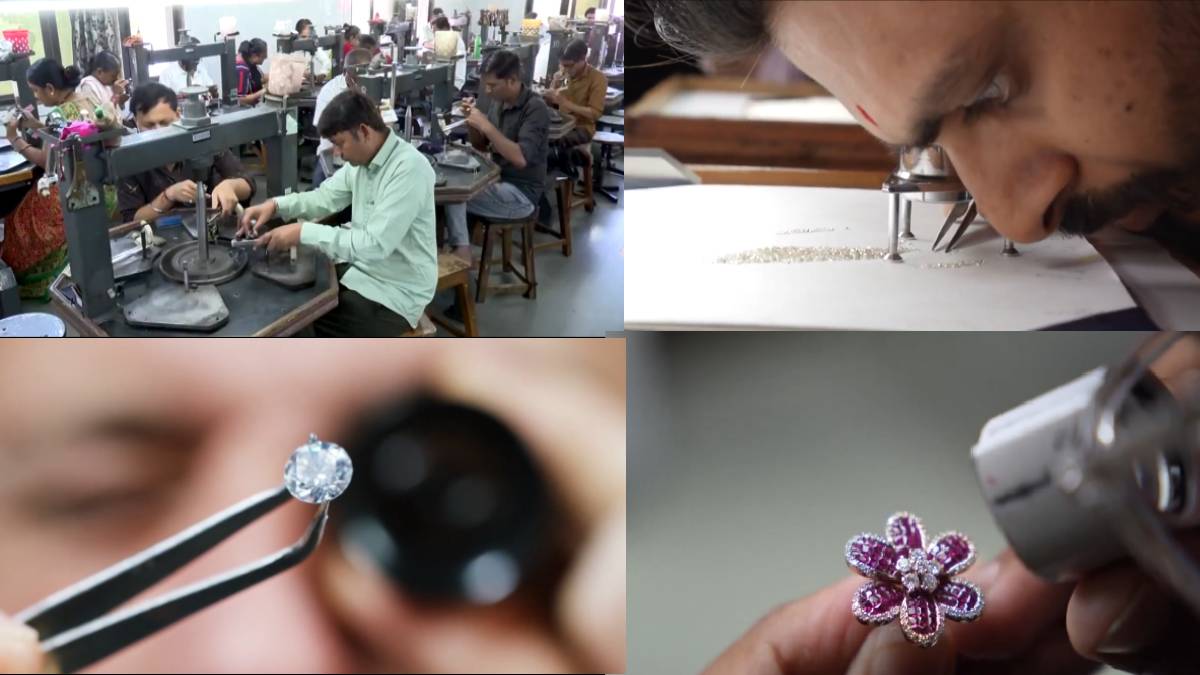
The city has developed an integrated ecosystem that covers the whole diamond value chain, from laboratory-based diamond production and cutting to polishing and jewellery manufacturing.
Globally renowned for diamond cutting and polishing, Surat has now emerged as a major hub for lab-grown diamond manufacturing.
— News Arena India (@NewsArenaIndia) July 31, 2026
From diamond production to cutting, polishing and jewellery making, the entire value chain is now available in one place.
As the industry evolves,… pic.twitter.com/5Xk8MMJi5A
The rise of lab-grown diamonds is setting Surat apart in the world diamond industry. As consumers’ preferences change and demand for technologically produced diamonds increases, Surat is a leading manufacturing and export centre.
As the sector’s international demand increases, exports of lab-grown diamonds have reached ₹962 crore, a 68 per cent annual growth.
The growth highlights lab-grown diamonds’ growing role in India’s jewellery and gemstone industry.
Surat has historically been associated with natural diamonds and is known for its extensive network of cutting and polishing units. The city has developed specialised skills, infrastructure and supply chains over decades.
The expansion into lab-grown diamond manufacturing will allow Surat to build on this proven expertise in this new area and to enter a fast-growing diamond market.
The availability of the complete value chain in one location is considered one of Surat's major strengths.
Lab-grown diamonds can be produced using advanced technology, processed by skilled workers, polished, graded and converted into jewellery in the same industrial ecosystem.
The combined system would enable manufacturers, processors and jewellers to have better coherence and reduce logistics problems.
Diamond prices are historically affected by fluctuating international prices. Fluctuations in natural diamonds have affected traders, manufacturers and exporters.
Different global demand and supply have also caused uncertainty for the traditional diamond industry, it points out.
In this environment, lab-grown diamonds have emerged as a viable alternative.
Unlike natural diamonds, which are formed over long periods beneath the earth’s surface and extracted through mining, lab-grown diamonds are created in controlled laboratory environments using advanced technology.
Production processes give manufacturers more control over output and more control over supply-demand in order to respond to market changes.
Lab-grown diamonds are mainly made of carbon and are designed to have physical and optical characteristics similar to those of natural diamonds.
They can match natural diamonds in brilliance, appearance, and quality, but their origin and production process are different.
The cost of lab-grown diamonds has become one of the most compelling factors that are driving consumer interest.
Lab-grown diamonds are generally available at lower prices than comparable natural diamonds, and diamond jewellery is available to a broader range of buyers.
Other reasons for demand are cited by industry representatives in relation to their environmental profile.
Because lab-grown diamonds are not mined traditionally, they are marketed as an alternative to consumers who look at environmental and sustainability factors in buying jewellery.
However, the environmental impact of laboratory production can also depend on the energy sources and technologies used during manufacturing.
The growth of Surat's lab-grown diamond industry has received support from both the Gujarat government and the Central government.
Government action (including policy support and investment in more advanced technology) has also helped build momentum for the sector.
That is, the development of specialised infrastructure and research capabilities will further strengthen India’s position in the global market.
The rise of lab-grown diamonds is also creating new opportunities for skilled workers, engineers, researchers, jewellery designers and technology specialists.
As production increases, the industry might create employment in manufacturing, processing, quality assessment, marketing and exports.
The sector is expected to benefit from continuing technological advancements.
Production methods could be made more efficient, with better quality, and manufacturers can make diamonds in different sizes and specifications.
A great change in consumer preferences will still be the driving force in the industry’s growth.
Younger buyers are looking for affordability, design, transparency and sustainability. In many of those countries, lab-grown diamond jewellery is now recognized and accepted.
The rapid rise in exports indicates that India is now at the forefront of lab-grown diamonds.
Surat’s experience in cutting and polishing is already at the heart of the industry and in the city’s depths as the industry expands.
With production, processing and jewellery manufacturing implemented in the same ecosystem, Surat is positioned to strengthen its role in the global diamond value chain.
The transition is also part and parcel of a wider transformation in India’s diamond industry.
Natural diamonds are still part of the sector, but lab-grown diamonds offer a new growth channel fuelled by the technology in the market and changing consumer behaviour.
Surat’s integrated manufacturing ecosystem, as the world’s interest in the industry grows, could be an ideal platform for India on which to develop and export lab-grown diamonds.
For now, the growth in exports to ₹962 crore and an annual increase of 68 per cent shows the increasing commercial importance of the sector.
With government support, technological innovation and rising global demand, Surat is carving out a new position in the world diamond industry and helping India enter a new era of diamond manufacturing.