Gig workers are the invisible core of the fast‑moving economy. They help cities run 24/7, delivering food in torrential rain and picking up parcels and transporting them from one point to the next, so they can get where they need to be in blazing heat.
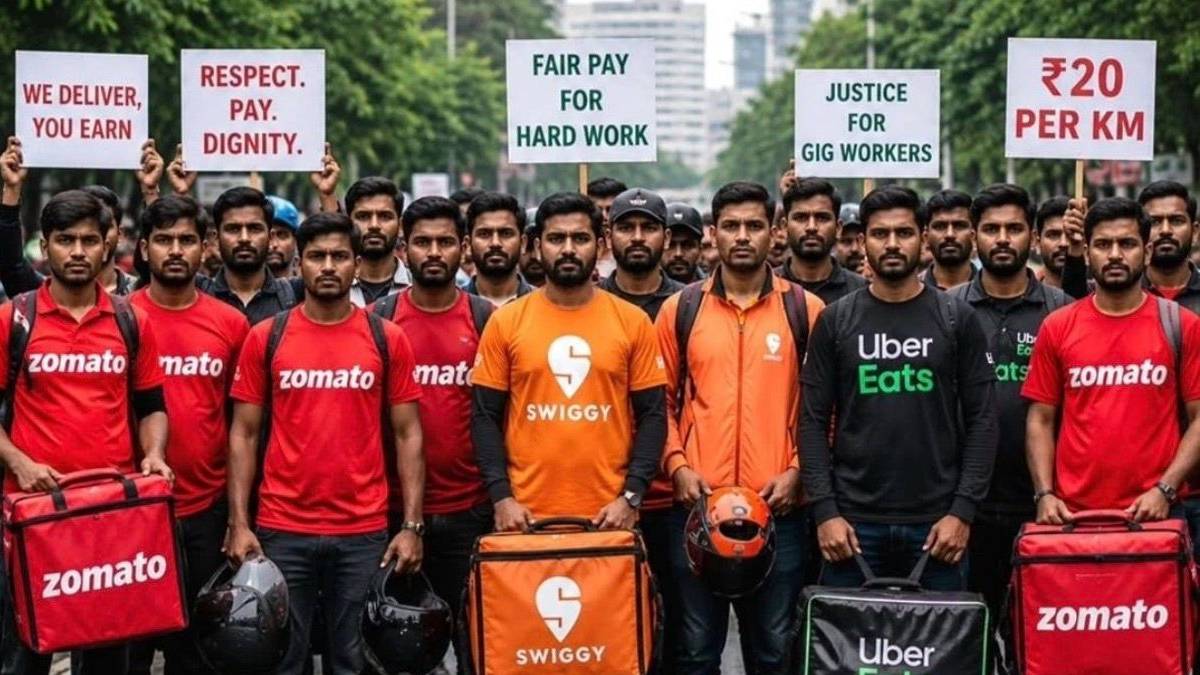
But beneath each rapid delivery is a person putting in grueling hours, rising costs and extreme physical stress. Delivery partners and gig workers alike began demanding ₹20 per kilometer recently as fair remuneration. It is more than a simple economic demand this entails a profound struggle for dignity and respect, and most salient of all a decent, sustainable way of life. Fuel prices have shot up, vehicle maintenance costs have rocketed and the grind of traffic has turned almost impossible for the workers supporting the gig economy to endure.
Conversations about compensation reveal an important truth: You cannot build a successful economy on the back of the demoralised productivity of its workers.
But growth actually is something for everyone especially on the ground who take care of their millions of customers. Fair wages are not just an economic issue, for the average Joe, it is an issue of ethics. That ecosystem has to be fairer and fairer for everyone and so, too, have companies, customers and policymakers.
This includes:Fair wage structures that reflect real-world costs and efforts expended. Safety and insurance coverage for workers to avoid accidents and unexpected threats. Incentives that are open and reward performance without ambiguous conditions. Programs that understand our limitations in terms of human-centered, work‑life balance.
India’s gig economy delivered billions of packages and meals in that year — but the invisible people behind those numbers go ignored. Their demand for fair compensation serves as a clarion call that change should be equitable. To honor human labor is to ask that any and every rider and driver and delivery partner can work with dignity, security and hope.
And the next time you’re sent a package delivered to your doorstep, or have a meal delivered to a table, it’s critical to keep in mind: Behind the service is a worker, a person who has responsibilities, dreams and struggles, a person who isn’t someone to merely thank, for whom you owe to be fair.