In a major breakthrough for inter-state water sharing, Haryana and Rajasthan signed a landmark Memorandum of Agreement (MoA) to implement the long-pending 1994 Upper Yamuna River Board Agreement, ending a conflict that had been pending for nearly 32 years.
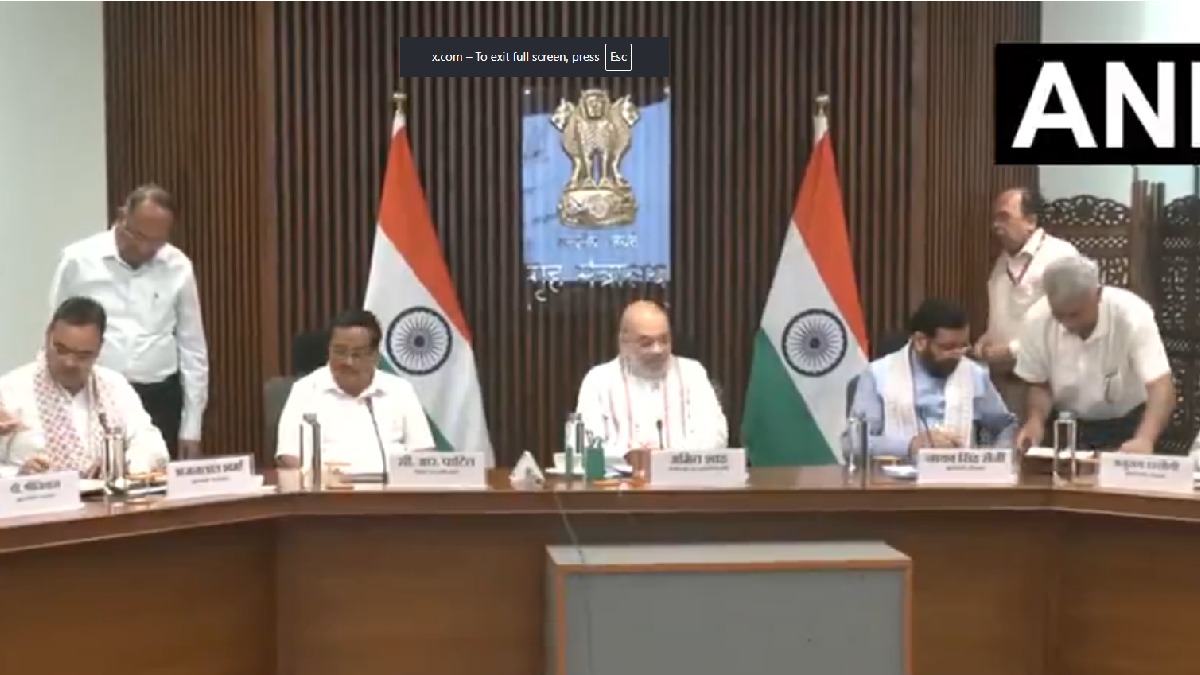
The agreement was signed in New Delhi in the presence of Union Home Minister Amit Shah, Union Jal Shakti Minister C. R. Patil, Haryana Chief Minister Nayab Singh Saini and Rajasthan Chief Minister Bhajan Lal Sharma. The ambitious project, estimated to cost ₹34,102 crore, is expected to provide long-term drinking water security to Rajasthan’s water-scarce areas while also creating new water infrastructure that will benefit parts of Haryana.
One of the landmark steps towards water security.
The agreement is based on the Upper Yamuna River Board Agreement in 1994 that governs Yamuna River waters allocation and management among the basin states.
Rajasthan will receive its share of 577 million cubic metres (MCM) of Yamuna water, or 1,917 cusecs, by a 295.5 km underground pipeline from Hathnikund Barrage in Haryana to Hansiyawas Reservoir in Churu district.
Officials said the project will transform water availability in Rajasthan’s Shekhawati region, which has long had water scarcity.
Massive Infrastructure Project
The Yamuna Water Project will include three underground pipelines with a diameter of 3.6m, inspection roads, artificial reservoirs, pumping stations and a modern water management system.
The infrastructure is also intended to supply Rajasthan with drinking water to 10 locations in Haryana, making it a mutually beneficial project for both states.
To ensure smooth execution, both governments have agreed to establish a Special Purpose Vehicle (SPV) named the Rajasthan-Haryana Yamuna Water Project SPV (RHYW-SPV). The SPV will oversee construction, financing, operation and long-term maintenance of the project.
Centre Facilitates Long-Pending Consensus
Rajasthan Chief Minister Bhajan Lal Sharma described the agreement as a historic milestone and praised the Central Government for bringing in the solution of the dispute that had been pending for more than 30 years.
He said the project is consistent with Prime Minister Narendra Modi’s vision of a “Viksit Bharat” where water security is one of the key pillars of national development.
Sharma also said Union Home Minister Amit Shah was instrumental in facilitating talks between Haryana and Rajasthan and helping both states come to a consensus. In addition, he also referred to Union Jal Shakti Minister C. R. Patil for technical and administrative support that helped expedite the project's approval.
DPR Ready, Pipeline Alignment Approved
The Rajasthan government has already completed the Detailed Project Report (DPR) and uploaded it to the Central Water Commission's e-PAMS portal, the officials said. Haryana has also given in-principle approval to the proposed pipeline alignment, clearing another major hurdle in the implementation process.
Now the project is expected to move through statutory clearances and construction phases under the supervision of the newly formed SPV.
Economic and Social Impact
Apart from overcoming drinking water shortages, the Yamuna Water Project will also help to improve irrigation facilities, industrial development and water infrastructure in Rajasthan's arid areas.
The Shekhawati region, which has historically faced recurring water scarcity, is expected to be the biggest beneficiary. Better water availability will help agriculture, investment, job creation and the quality of life for millions of people.
One of India's longest-pending inter-state water projects has finally moved towards implementation, a watershed step in cooperative federalism and sustainable water management.