Hyderabad Traffic Police has introduced a new one-way traffic system around KBR Park as part of a major traffic management plan to accommodate construction under the Hyderabad City Innovative Transformation Initiative (H-CITI). The new arrangement took effect at 6 a.m. on August 18 and will be in place for almost a year and a half with major infrastructure work ongoing in Banjara Hills and Jubilee Hills.
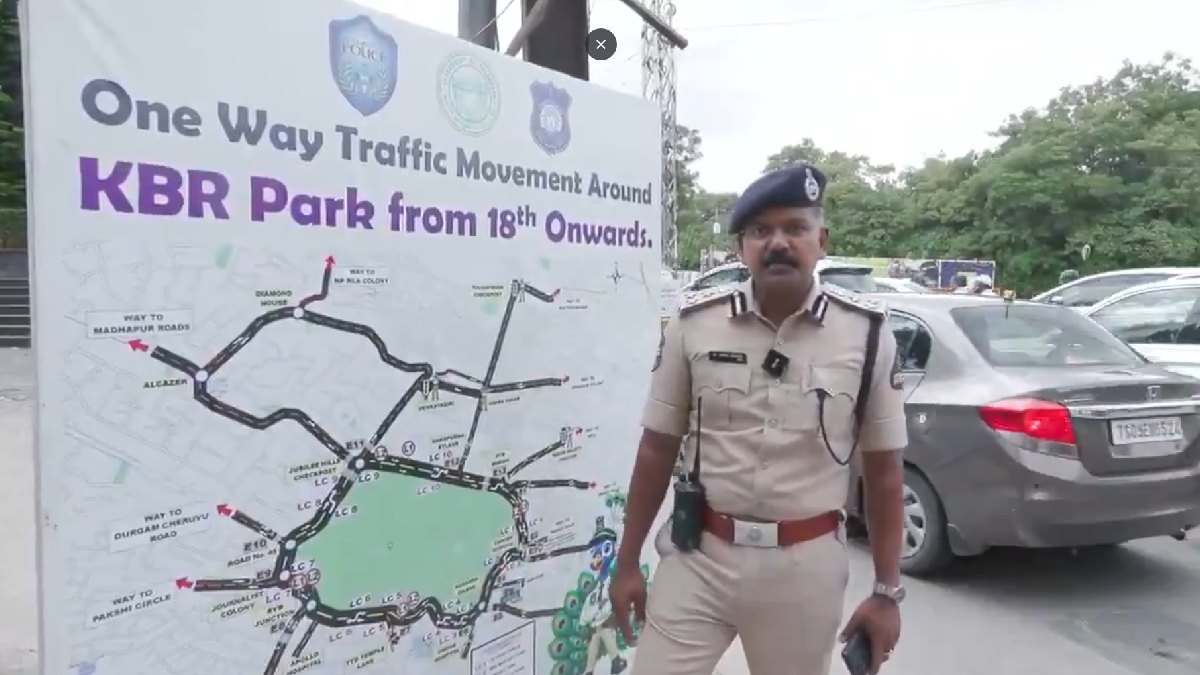
The traffic diversion has been introduced at a time when Hyderabad is seeing extensive road infrastructure development. The H-CITI project consists of seven flyovers and underpasses to increase the flow of traffic and reduce congestion at key junctions. While the completed infrastructure will increase the flow of traffic, construction will temporarily decrease the road capacity in a few locations.
There is much less road space and officials say there will be a 30 to 40 percent reduction in road space at some locations because of the ongoing construction work. This will impact traffic very much, particularly during morning and evening peak hours as well. The one-way loop around KBR Park has therefore been designed to organise the traffic flow and reduce the conflict among vehicles moving in different directions.
To organize the new arrangement, Hyderabad Traffic Police has deployed around 200 personnel over the affected stretches. Officers are stationed at the crucial junctions and entry and exit points to direct the drivers and to make sure the new system works well. Traffic cones, barricades, and directional signs have also been set up along the route to make sure drivers know the changes.
The first few days of the traffic arrangement are to be critical because regular commuters will need time to adjust to the new ways of moving around and will need time there to learn. Cars that regularly drive through KBR Park, Banjara Hills, and Jubilee Hills have established routes that they have been following for years. The new one-way system could require them to take alternative roads or make additional turns before they get to their destinations.
The traffic authorities are also depending on digital navigation services to help commuters adapt to the new traffic pattern. The updated Google Maps information will also be updated to match the changing traffic pattern and be able to follow the designated route and go to the right place and also look for alternative routes for commuters. But drivers are advised to follow traffic signs and instructions from staff on site as construction work may have a temporary impact on the roadways.
The traffic officials on the ground, including Joel Davis, who are monitoring vehicle movement and helping make the change and adjusting the flows of vehicles, are working in-person coordination of traffic has been done by traffic officials. Such supervision is key because traffic can look different than predicted when a new diversion is in operation. Officers can flag bottlenecks, control intersections, and modify operations when necessary.
Pedestrian safety is a key part of the traffic management exercise. Construction zones can pose additional risks to pedestrians because of narrowed carriageways, temporary barriers, and increased vehicle movement. Pedestrians crossing the road should be monitored and people travelling on foot are expected to be able to reach the area safely.
Probably the biggest challenge for motorists is the transition period. A new traffic system can lead to confusion, slower movement, and longer trips as drivers pick up and start to learn the new route. But authorities say traffic will be more efficient once commuters start to get used to the one-way loop and start planning for their travel on the new road network.
The temporary inconvenience is linked to a larger infrastructure initiative. Under H-CITI, seven flyovers and underpasses are designed to reduce congestion and increase connectivity between important parts of Hyderabad and the rest of the city. Construction will inevitably force the city to put pressure on the current roads, and traffic management is key to keeping the city moving while the infrastructure is being built.
The people travelling through Banjara Hills and Jubilee Hills over the next few months could need to allow additional time for their journeys. Drivers should watch for temporary signs, be alert in the construction zone, and follow directions from traffic officers. Checking the navigation routes before leaving can also reveal delays and alternative routes.
🚨 KBR Park Traffic Update
— FutureHyderabad (@FutureHyderabad) August 18, 2026
A 360° one-way traffic system around KBR Park comes into effect from 6 AM today, August 18, to support the speedy completion of the H-CITI project and improve traffic movement.
Follow the designated routes, use free-lefts, change lanes only at marked… pic.twitter.com/FxkBzUDKD2
The one-way loop around KBR Park is expected to be operational for around 1.5 years and will be a key part of Hyderabad’s traffic-management strategy during the H-CITI construction period. The changes will initially inconvenience some of the road users, but the authorities hope that a structured traffic flow will reduce congestion and improve safety as commuters adapt.
As construction progresses, traffic officials will review the system and change it to meet changing conditions. The system will not only be successful in enforcement but will need commuter cooperation. If people follow the new routes and adapt to the one-way system, Hyderabad can still maintain smoother traffic flows in a spot where one of the busiest construction zones is located, while work is progressing on the infrastructure that will be able to relieve congestion for longer than ever.