The Income Tax Act 2025 will bring a fundamental change to the direct taxation system in India and will simplify the tax system and make it easier for taxpayers. The first of the major changes is that the old Assessment Year (AY) concept will be replaced by a new one - Tax Year.
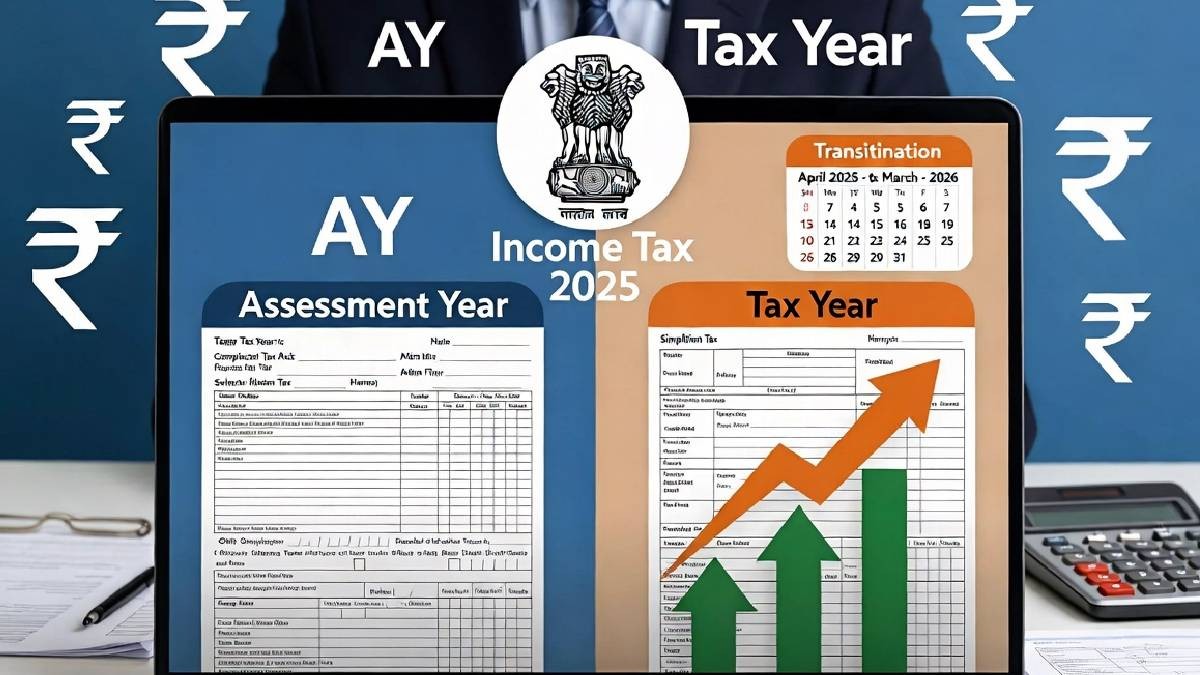
For decades, Indian taxpayers have had to cope with two different terms: Financial Year (FY) and Assessment Year (AY). Tax professionals understood that distinction, but many people were confused. This new Act seeks to eliminate the confusion and introduce one reference period (Tax Year).
What was the Assessment Year?
Under the earlier Income Tax Act, 1961, income earned during a Financial Year (FY) was assessed and taxed in the following Assessment Year (AY).
For example:
In AY 2025-26, income earned between April 1, 2024, and March 31, 2025 (FY 2024-25) was assessed.
This two-year reference would often be confusing for first-time taxpayers filing ITRs, especially for income tax return (ITR) filers.
What is a tax year?
The Income Tax Act 2025 sets up a Tax Year that is the 12 months starting on 1st April and ending on 31st March.
Instead of using separate terms like Financial Year and Assessment Year, taxpayers will generally refer to the Tax Year in which the income is earned.
For example:
The income earned from April 1, 2026, to March 31, 2027, is Tax Year 2026–27.
So this will help taxpayers to know the period of income, tax, and return filing in advance.
Tax Year and Assessment Year. Feature Assessment Year (Old System) Tax Year (Income Tax Act 2025). Definition: Year in which the previous year's income was assessed. Year during which the income is earned. Terminology AY was inspired by the Financial Year Single Tax Year. Purpose: Assessment and tax filing, income reporting, and tax compliance. Simplicity. Often confusing for taxpayers, easier to understand and remember. Why has the government made this change?
The government reasons that the tax administration is simplified, and compliance is simpler
Using FY and AY both led to errors when filing returns, understanding notices, and interpreting tax documents. With a single Tax Year, the law is more intuitive and the law is more consistent with international tax practices.
Will it affect your tax liability?
No.
The Tax Year does not change tax rates, income tax slabs, deductions, exemptions, rebates, or filing deadlines. It is primarily a change in terminology and legislative structure for the tax law to be easier to read and understand.
Taxpayers will still calculate their taxable income and pay taxes according to the applicable provisions notified by the government.
Tax Year concept benefits
The new system has several advantages:
- Simplifies the nature of tax terminology.
- Eliminates confusion between FY and AY.
- It makes income tax return (ITR) filing simpler.
- More transparent, easy for a beginner to learn tax filing, and helps explain tax compliance for taxpayers.
- For the first time, India's tax system is more in line with international language in terms of tax terminology.
- What should taxpayers do?
For most taxpayers, no immediate action is needed other than understanding the new terminology. As the Income Tax Act 2025 gets implemented, official forms, notices, and tax-related communications will increasingly use the term Tax Year instead of Assessment Year.
Taxpayers should continue to keep good financial records, report their returns promptly, and follow up on information given by the Income Tax Department.
The results are shown in Fig
The Tax Year is one step towards simplifying India’s tax system under the Income Tax Act 2025. It does not change the amount of tax paid and how taxes are calculated; it just removes one of the most common confusions among taxpayers.
With a simple Tax Year in place of Assessment Year, the government hopes to make compliance with taxes easier for people and businesses.