India is seeing a huge increase in e-waste due to the rapid technological advancements, the increasing consumer demand and shorter life cycles of gadgets.
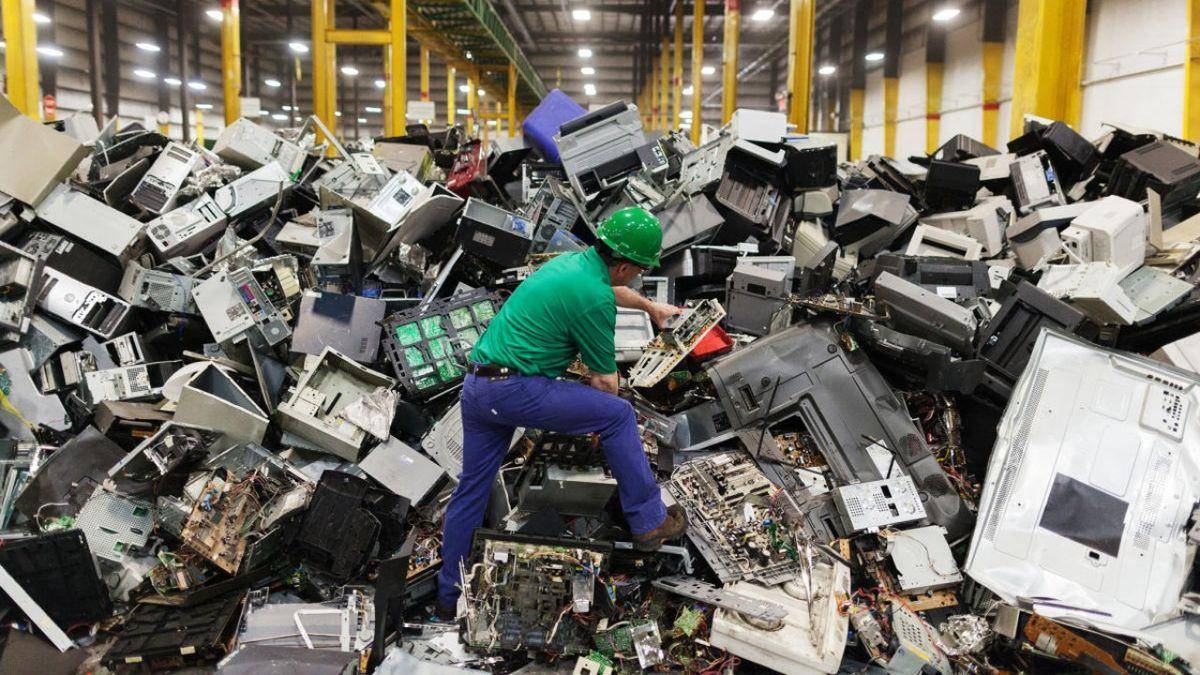
And the growing amount of discarded electronics can be a very environmental concern but Delhi, as a city that is a major player in this, is transforming it into an economic opportunity and recycling to recover the resources.
According to recent estimates, India is one of the world's largest producers of e-waste and generates millions of tonnes per year. Smartphones, laptops, televisions, refrigerators, batteries, and household appliances are responsible for a lot of the increasing volume of electronic waste.
Most of this waste is toxic in its handling or production and contains heavy metals like lead, mercury, and cadmium that can be transferred to soil and water.
E-waste is also a rich source of valuable metals gold, silver, copper, aluminum, and rare earth elements. Recovering these materials through scientific recycling reduces dependence on mining and supports the circular economy.
Delhi, one of India’s biggest consumers of electronic goods, is now also a heart of the e-waste recycling industry in the country. Many recycling facilities in the National Capital Region are licensed by the government, collection centers, refurbishing units are in place, as are startups working to recycle discarded electronics.
An expansion of the Extended Producer Responsibility (EPR) and more strict environmental policies have also fueled the need for formal recycling.
The expanding network of recyclers in the city is allowing for the recovery of valuable materials and employment opportunities in the collection, dismantling, sorting, refurbishment, and recycling industry. Digital channels are also being put in place to simplify doorstep e-waste collection that can be done in a way that is convenient to the home as well as the business.
But problems remain. Much of India’s e-waste still remains in the informal sector in which unsafe dismantling practices expose workers to toxic materials and cause environmental pollution.
And the experts stress that formal recycling needs to take informal workers into the formal recycling ecosystem to be trained, certified, and rewarded.
Consumer awareness is still something that is very important. Many households still store old electronics or dispose of them with regular household garbage. Campaigns promoting proper disposal and manufacturer take-back programs can increase collection rates considerably.
The Indian government has introduced updated E-Waste Management Rules to strengthen recycling goals and improve producer accountability. Companies manufacturing or importing electronic products are increasingly required to ensure proper collection and recycling of discarded devices.
These measures are expected to boost investments in modern recycling infrastructure across the country.
India’s e-waste recycling industry has huge potential for growth, industry experts say, where digital technology is driving it. The demand for sustainable recycling solutions in India will be high while electronic consumption is increasing and digitalization will be supporting that growth.
Delhi’s growing recycling ecosystem also shows how environmental care can be economically profitable.
Turning electronic waste into reusable raw materials not only saves natural resources but also minimizes greenhouse gas emissions from mining and manufacturing.
If Delhi’s model is further enhanced by stronger enforcement, public involvement, and technological innovation, one of its biggest environmental problems can be turned into a sustainable economic opportunity for India.
India’s e-waste problem is growing but so is the opportunity. We can move to a cleaner, greener, and more resource-efficient world if we have good policies, good consumer behavior, and investment in formal recycling.