A disturbing claim circulating on social media has raised fresh concerns over food safety in India, after a woman alleged that she found insects inside a packet of milk from Amul. The incident, shared online, has quickly gone viral, triggering outrage and anxiety among consumers.
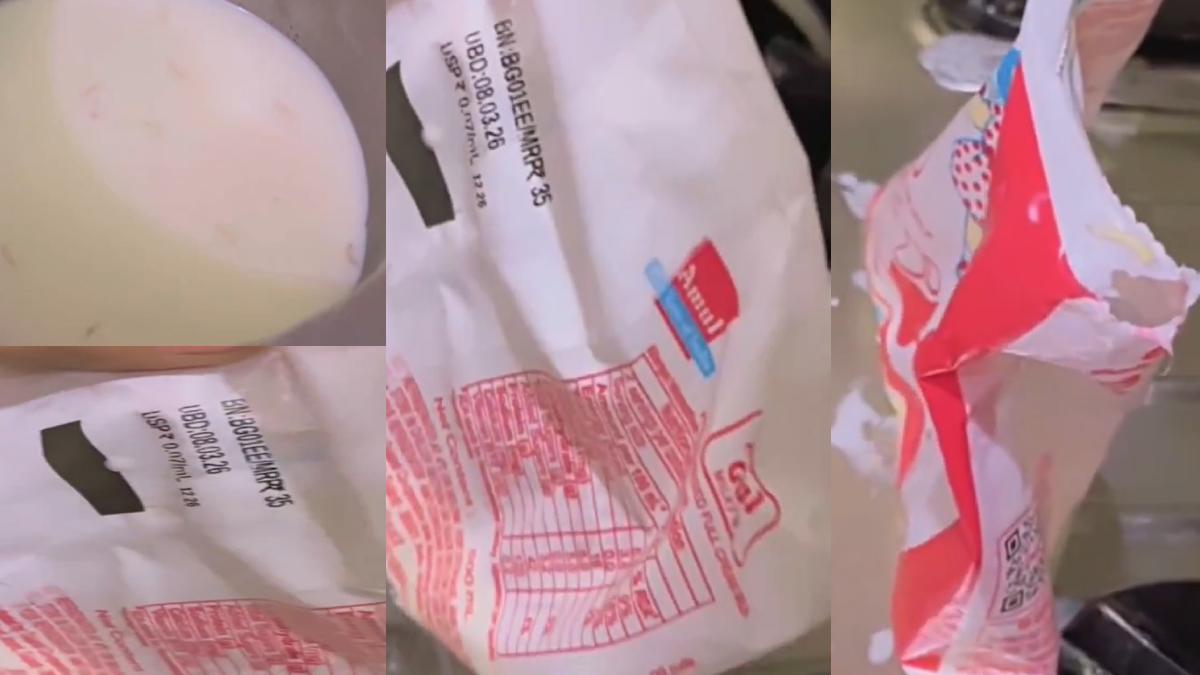
According to the post, the woman had purchased a packet of Amul milk for household consumption when she reportedly noticed insects inside the product. The claim has not yet been independently verified, but it has reignited debate over quality control standards in widely consumed food products.
Viral Claim Raises Questions
The allegation has struck a nerve, as milk is a daily essential consumed by millions of families, including children. Social media users have been questioning how such contamination could occur in a product distributed at such a massive scale.
Many users expressed concerns over whether existing food safety regulations are being strictly enforced and whether similar incidents might be underreported.
"Insects in Amul milk." 🚨
— Suraj Kumar Bauddh (@SurajKrBauddh) March 17, 2026
"Are any products truly safe in India?" 💔
A woman bought Amul milk and found
insects in it. This is the same milk consumed by children and families. What are people actually consuming? Any accountability? pic.twitter.com/5YRoSTfc0I
Company Response Awaited
As of now, there has been no official statement from Gujarat Cooperative Milk Marketing Federation regarding this specific claim. In such cases, companies typically conduct internal quality checks and may request the product batch details for investigation.
Food Safety in Focus
India has established food safety standards regulated by authorities like the Food Safety and Standards Authority of India. However, incidents like these whether verified or not highlight the importance of strict monitoring, quality assurance, and swift grievance redressal systems.
Experts advise consumers to always:
- Check packaging integrity before purchase
- Verify expiry dates
- Report any suspicious findings to authorities
Consumer Awareness and Responsibility
While the authenticity of the viral claim is still unclear, it underscores the need for both corporate accountability and consumer vigilance. If proven true, such incidents demand immediate corrective action to ensure public health is not compromised.
Authorities may step in to investigate if a formal complaint is lodged, and consumers are encouraged to report such cases through official channels rather than relying solely on social media posts.