The former Tamil Nadu BJP president K. Annamalai participated in a clean-up drive on the Vaigai River in Madurai to make sure that the public will be involved to keep the city’s most important natural and cultural heritage preserved.
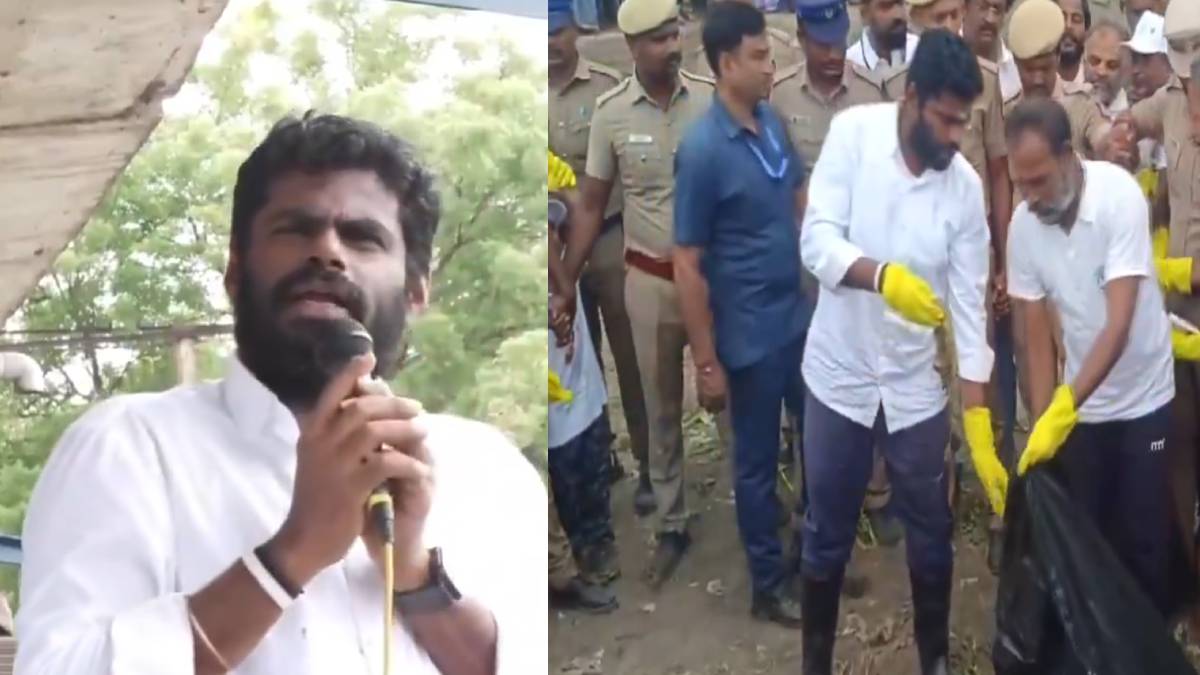
Annamalai joined volunteers in cleaning a stretch of the river and removing waste from the riverbed and nearby areas. The project made clear that pollution, garbage accumulation and the long-standing desire for a comprehensive restoration plan for Vaigai were no longer far from the front lines.
Annamalai cleans Vaigai river in Madurai. pic.twitter.com/mX6teUP8Qi
— News Algebra (@NewsAlgebraIND) August 3, 2026
The Vaigai River is a part of Madurai’s history, culture and identity. It flows through the heart of the city and has been a part of the development of the region. But sewage discharge, solid waste, pollution, as well as deterioration of some parts of the river, have not gone away.
The move to clean up the Vaigai has come at a time when the Vaigai is at the forefront of public debate and political discussion in Madurai. Thanks to pollution problems, restoration efforts are not on the way at present, and the authorities need to act more efficiently.
Annamalai’s participation in the drive was seen as an attempt to encourage citizens, volunteers and local organisations to take responsibility for maintaining public spaces and protecting water bodies.
The clean-up effort also underscored the need to move beyond one-day campaigns. Environmental activists have long contended that river restoration needs to be continuous work, that waste needs to be removed and sewage disposed of away from the riverbank, and that monitoring can be done in the long term.
As volunteers can help remove visible garbage, however, experts have pointed out that long-term restoration is dependent on addressing the sources of pollution. Waste-cleaning drives may help to improve the immediate state of the affected areas, but there are larger infrastructure improvements that are needed to prevent sewage and solid waste from entering the river again.
The Vaigai’s condition has been discussed during political campaigns and public meetings, with different leaders promising measures to improve water quality and restore the river. Residents have also demanded concrete action to stop sewage inflow, maintain riverbanks and develop effective waste management systems.
Annamalai’s participation in the clean-up campaign is part of a wider emphasis on environmental action and community involvement. “We the Leaders” has also announced environmental programmes in Tamil Nadu, e.g., cleaning of water bodies and planting trees.
The Vaigai River clean-up campaign will also raise further discussion of what political leaders, government agencies, civic agencies and citizens need to do to protect public resources.
Annamalai supporters praised him for participating in the cleaning and not only being the spokesperson. They said visible public involvement could make more volunteers join environmental projects.
But long-term restoration will require coordinated action from Madurai Corporation, state government departments, environmental agencies and local communities. It will be critical to the river not returning to its current condition if sewage infrastructure is improved, illegal dumping is stopped, and clean sections of land are maintained.
The clean-up drive has also galvanized public calls to avoid throwing plastic, household waste and other materials into rivers and public water bodies. Public participation is therefore necessary as environmental protection can no longer be achieved without government action.
As the campaign goes on, it will be seen if the initiative becomes a sustained effort and leads to a wider improvement in the condition of the Vaigai River.
Madurai’s Vaigai is more than a waterway to Madurai. This is a part of the city’s history, identity and heritage. The recent clean-up has once more stressed the need for the river to be maintained through regular maintenance, better pollution-control measures and collective public responsibility.