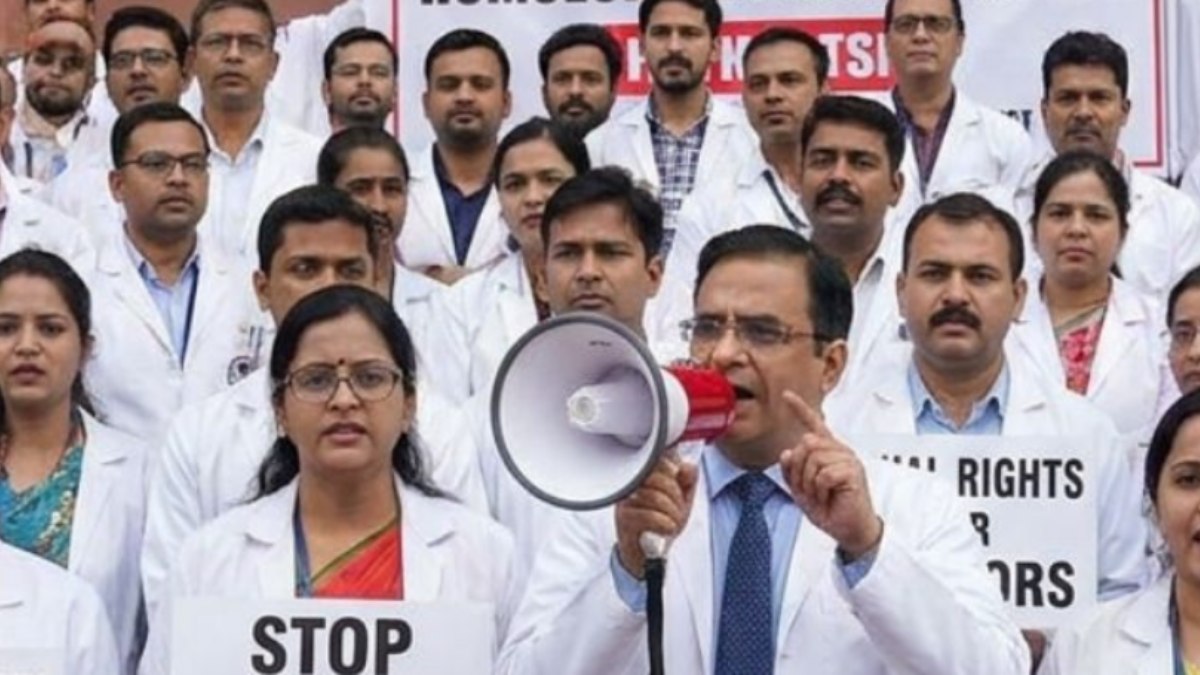
In the wake of the decision by the Maharashtra government that BHMS graduates with a one-year Certificate Course in Modern Pharmacology (CCMP) can be registered with the Maharashtra Medical Council (MMC), protests have erupted from all over the state. Doctors and medical associations are fighting to keep the doors open for allopathic medicines and so are the doctors who don’t have a basic MBBS degree. The issue is now due to be heard in the Bombay High Court for judicial hearing and the protests continue.
Dr. Rajat Agrawal, an MD in Radiodiagnosis at Shah Diagnostics and Dental Care in Gondia, is one of the most vocal opponents of the policy. The medical fraternity believes the policy needs to be reviewed quickly, Dr. Agrawal said in a recent interview, and he said that the debate goes way beyond prescribing medication. Modern medicine is a product of years of scientific education, clinical training and experience, but clinical experience is not without hard work. An MBBS curriculum requires years of extensive study before independent practice is permitted, and this is the kind of clinical training that is not possible with a short-duration certificate course.
Dr. Agrawal said that an incorrect or delayed diagnosis makes even the right medicine ineffective. The primary anxiety is not prescribing the wrong drugs, but not identifying critical illnesses and not detecting medical emergencies that need expert assistance. Modern drugs have a multitude of adverse effects, contraindications, and complex drug interactions that require clinical judgment, which develops over a long period of clinical experience and training under supervision at the bedside.
Dr. Agrawal compared the training pathways and said that an MBBS degree is a clinical course that involves anatomy, physiology, pathology, pharmacology, surgery, pediatrics, and emergency medicine reinforced through a rotating internship. It is a real-life experience that helps students develop the ability to manage clinical uncertainty and make evidence-based decisions under senior guidance.
Although rural Maharashtra continues to have a medical shortage, in Agrawal’s opinion, reducing professional qualifications is not a viable solution as rural communities need the same high level of treatment as urban communities do. Long-term solutions would be to establish public hospitals, to better incentivize doctors to see patients in the poor areas, to enhance medical education and to use telemedicine, he said. The medical community is still petitioning in court for better access to care for patients and not to destroy the standards of professional quality.