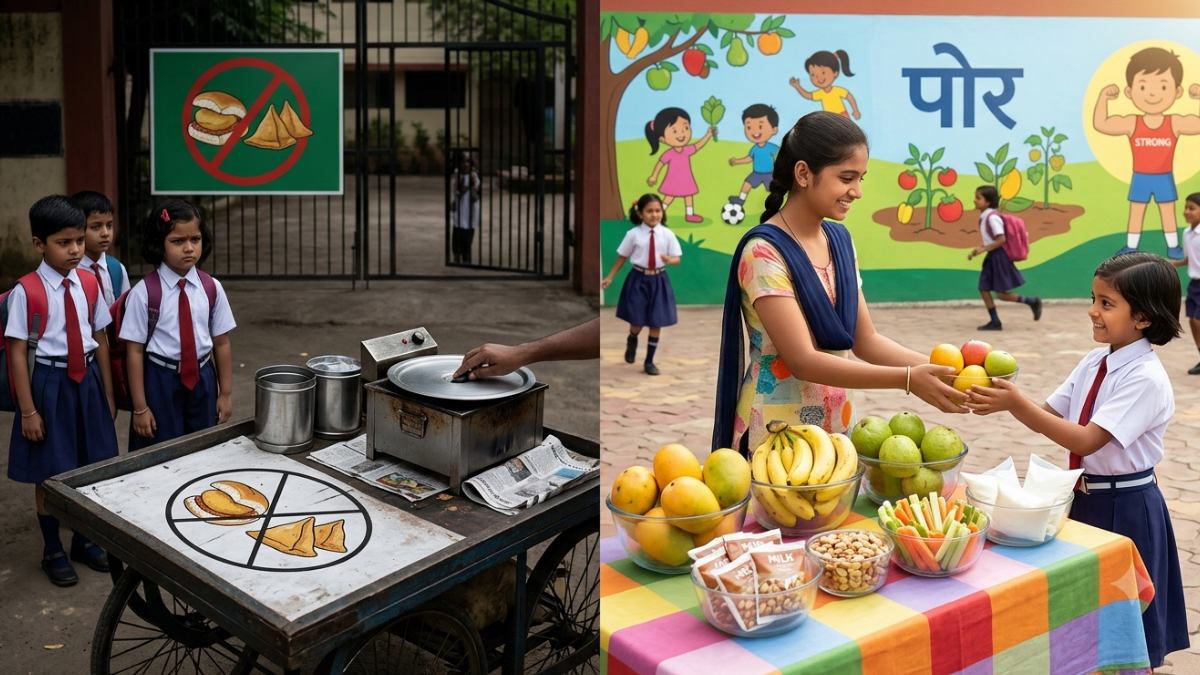
The Maharashtra Food and Drug Administration (FDA) is banning vada pav, samosas, deep-fried snacks, sugary beverages and other unhealthy foods in and around schools across the state in order to promote healthier eating habits among schoolchildren. The policy will help children’s nutrition, reduce the consumption of junk food and encourage healthier eating habits during school hours.
The initiative is coming as health concerns about childhood obesity, diabetes, hypertension and other lifestyle-related issues are spreading at a higher rate among the younger generations. Health experts have long contended that over-consumption of unhealthy fats, salt, sugar and refined carbohydrates can adversely impact a child’s physical growth, concentration and overall health.
Under the new guidelines, vendors in the vicinity of schools are to avoid selling foods that are unhealthy for kids. Common foods such as vada pav, samosas, packaged chips, sugary soft drinks, deep-fried foods and highly processed snacks are among the products that could be restricted, and schools can promote healthy alternatives.
The FDA’s decision is in line with the national trend to create healthier school environments and nutrition at an education level. School campuses are now being viewed as a place where lifelong healthy eating habits are advocated in schools and children spend a significant fraction of their day on them.
Why has the ban been developed?
Health professionals say fast-food products are loaded with saturated fat, trans fat, sodium, and added sugars, and are typically eaten in excess. Regular consumption of such foods also makes you risk obesity, cardiovascular diseases, diabetes, insulin resistance, and dental problems.

Vada pav and samosas are popular and cheap snacks but deep-fried, often with high-sodium chutneys or sauces. While occasional consumption is unlikely to pose major health risks, frequent consumption as part of a child’s daily diet can lead to poor nutritional balance.
The Maharashtra FDA believes reducing easy access to these foods during school hours can encourage children to choose healthier options such as fruits, sprouts, milk, buttermilk, whole-grain snacks, roasted pulses, fresh sandwiches, and other nutritious alternatives.
Impact on Students
When it comes to students, the immediate impact of the regulation will likely be a change in the food choices available inside and around school premises. Schools might work with canteen operators to implement menus that are healthier and have the best nutritional value yet are still affordable and appealing to children.
Health professionals say healthy food with proteins, vitamins, minerals, healthy fats, and complex carbohydrates work for concentration, memory, academic performance and physical development. We can also become immune to bad food addiction and have better health outcomes when we cut back on junk food usage.
Impact on Vendors
The decision may force food vendors that sell close to schools to change their business model and use healthier products that comply with the new guidelines. Some vendors might initially struggle with changing consumer demand, but experts say the shift could create opportunities for businesses providing nutritious snacks and beverages.
Authorities are to conduct awareness exercises that will assist vendors in understanding the purpose of the regulation and identify food products that meet safety and nutritional criteria that are safe and suitable.
Parents are at the core of this
The success of the initiative will rely not only on regulatory enforcement but on parental participation, health experts stress. Parents must make balanced lunch boxes, teach children healthy eating habits and not simply provide kids with money for junk food purchases, they want to help them.
Healthy eating habits at home can also boost the positive change in schools. Nutritionists recommend fresh fruits, vegetables, whole grains, dairy products, nuts and protein-rich food in children’s daily diets.
A Healthy School
The Maharashtra FDA's action is part of a global push to improve nutritional standards in educational institutions. In a number of countries, unhealthy food sales in schools have been restricted and balanced diets and nutrition education promoted.
Experts say the purpose of the regulation is not to wipe out the traditional snacks from children’s diets but rather to keep them down to a minimum during school hours, when healthier eating is more beneficial to learning and development.
With the rise of childhood lifestyle diseases, public health agencies see schools as key partners in preventive healthcare. From a young age, nutritious eating habits can be developed, and the children are more likely to live healthier lives well into adulthood.
The FDA’s decision will result in a healthier school environment, where students can have access to healthier food options. If implemented in conjunction with nutrition education and parental support, it will help children’s health and healthier dietary habits throughout Maharashtra.