The National Testing Agency (NTA) followed suit by implementing the reforms as the paper leak of NEET-UG 2026 to the government of India has led to a complete redesign of NEET as they say in the Supreme Court. In a major step to restore faith in one of India’s largest competitive exams, the Centre said it plans to put together a security plan for the entire system of the examination in place. The government is also preparing for a phased transition from pen-and-paper to computer-based test (CBT) and will be one of the major reforms of medical entrance examination.
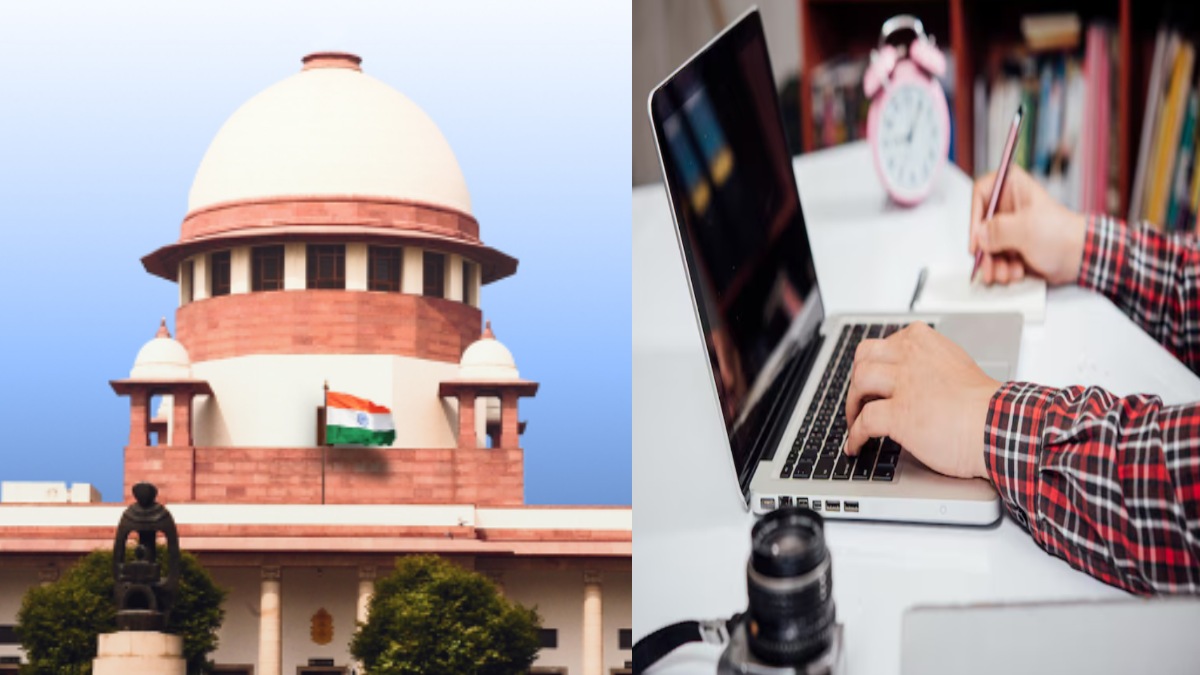
The developments were put before a Bench of Justices P.S. Narasimha and Alok Aradhe through an affidavit filed by the Centre during the hearing of petitions seeking institutional reforms in the functioning of the National Testing Agency. The examination ecosystem has been thoroughly reviewed in accordance with the Supreme Court's directions of May 2026 to increase transparency, accountability and security and to eliminate the risk of paper leaks and examination malpractice, said the Indian government.
There are different options for introducing computer-based examination, but NEET is currently offline due to its large scale and the need for equal access for candidates from urban and rural India. Some of that has been discussed in the form of a two-stage model (JEE, a step which could be done in multiple sessions), but the government said there is still no final decision, and that any change to CBT will only be made if all relevant stakeholders have been consulted and recommendations by the High-Level Task Force and students have been provided a sufficient advance notice.
One of the key legislative reforms mentioned by the Centre is the Public Examination (Prevention of Unfair Means) Amendment Act, 2026. It makes criminalisation of question paper leaks, candidate impersonation and tampering with computer systems and other examination-related crimes mandatory. It also requires fast-track courts to catch offenders and acts as a deterrent against organised examination fraud.
The government also informed the Court about the formation of a High-Level Task Force headed by Infosys co-founder and former UIDAI Chairperson Nandan Nilekani. The committee comprises some of the foremost personalities such as former ISRO Chairman S. Somanath, former Intelligence Bureau Director Tapan Deka, IIT Madras Director V. Kamakoti, former School Education Secretary Anita Karwal, and former Bihar Chief Secretary Amit Lal Meena. The panel will review the NTA's overall examination framework and recommend long-term structural reforms in three months.
An important aspect of the affidavit is the government’s elaborate multi-layered security architecture that covers every stage of the exam process. It is now that question papers are only prepared at very secure facilities where electronic devices are completely prohibited. These are protected by the Central Armed Police Forces (CAPF), who are in charge of the paper-setting process.
To reduce the risk of leaks, the NTA now has a question bank full of at least five times the number of questions actually needed for the examination. The final question paper is selected on the basis of a confidential process in the sense that no individual has complete knowledge of the final paper before it is officially released. Once selected the question papers are translated into 13 Indian languages with Artificial Intelligence (AI), making multilingual examinations more efficient and consistent.
The affidavit also states that multiple versions of the question paper are printed, securely packed, transported, and stored to have an alternative set to replace any compromised version if necessary. Each packet is issued a QR code and stored inside GPS-enabled steel trunks with one-time electronic locks. On the day of the examination, the final paper set is chosen by authorised officials and transported under the supervision of CAPF staff, Executive Magistrates and State Police officials.
There has also been a huge improvement in candidate verification procedures. Now students who appear for NEET will have an opportunity to be biometric verified by fingerprint testing, facial recognition and identity verification before entering examination centres. Frisking with handheld metal detectors to prevent the entry of forbidden electronic devices or other unfair means will be mandatory as well.
To enhance post-examination security, the NTA has introduced a system under which two separate copies of every candidate's OMR response sheet will be prepared and independently sealed at the examination centre. This is to reduce any possibility of tampering after the examination ends.
The Supreme Court is continuing to hear more general institutional reforms in the functioning of the NTA. Transparency, accountability and a secure examination process are fundamental to the credibility of the public examination system in India and the interest of millions of students aspiring to pursue higher education that should be safeguarded, the Court has maintained.
With the broadening of legislation, technological controls, AI systems and biometric verification and the possibility of moving to a computer-based examination, the Centre’s reforms are one of the most comprehensive efforts to modernise India’s entrance examination system. If implemented well, such reforms will further enhance NEET’s credibility and legitimacy to the public and will not only restore the national medical entrance examination’s accuracy but also the confidence of the general public.