In a heartbreaking incident from Bidarkkad, a routine day at a petrol pump turned into a moment of tragedy that has sparked widespread concern about the safety of workers who operate near moving vehicles. The victim, a female employee simply carrying out her daily responsibilities, became an unintended casualty of what appears to be a driver’s momentary mistake.
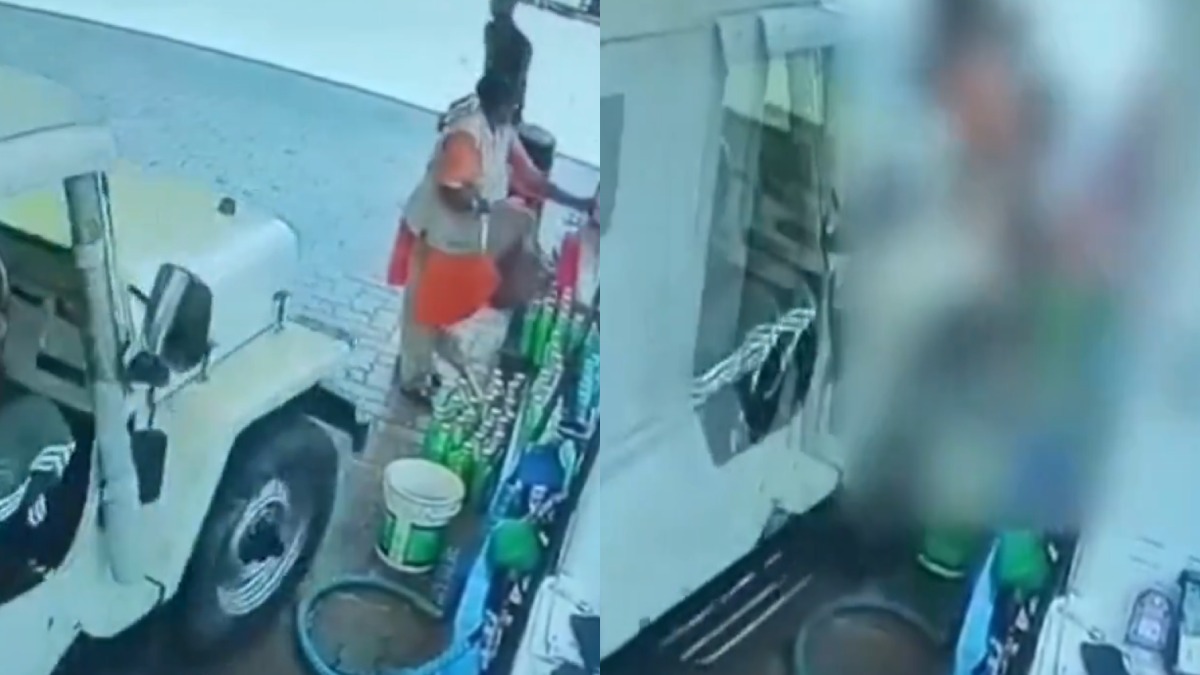
According to initial reports, the incident occurred at a petrol station where several female employees were working in the fueling bay during their shift. Like countless others across the country, they were performing routine duties guiding vehicles, managing fuel lines, and ensuring smooth operations. It was a normal day, and nothing indicated the danger that was about to unfold.
A jeep entered the premises, and in what is believed to be a case of driver error, the accelerator was pressed instead of the brake. In a matter of seconds, the situation escalated beyond control. The worker, standing in the vehicle’s path, had no time to react. There was no warning, no opportunity to step aside just a sudden, devastating impact.
वो सिर्फ अपना काम कर रही थी।
— Rajneeti Tadka 🌶️ (@RajneetiTadka) April 9, 2026
Bidarkkad, Tamil Nadu। एक petrol pump।
→ कुछ female employees - fueling bay में, अपनी shift पर।
→ एक jeep - जिसके driver ने शायद brake की जगह accelerator दबाया।
▸ उसे पता नहीं था कि आज यही उसकी सबसे खतरनाक जगह होगी
▸ उसके पास हटने का एक second… pic.twitter.com/aDb6GwW9jP
What makes this incident particularly tragic is its randomness. The worker was not at fault. She was not negligent. She was simply doing her job standing where she was expected to stand, performing the duties assigned to her. Yet, one mistake by someone else proved fatal.
This incident is not an isolated case but a reflection of a larger, often overlooked reality. Across India, millions of workers petrol pump attendants, parking assistants, roadside vendors, delivery personnel spend hours each day in close proximity to moving vehicles. Their livelihoods depend on it. But so does their exposure to constant risk.
These workers operate in environments where even a minor lapse in attention by a driver can lead to serious consequences. Unlike drivers inside vehicles, they have no protective barriers no seat belts, no airbags, no steel frames. They rely entirely on the awareness and responsibility of others.
The tragedy in Bidarkkad raises urgent questions about workplace safety measures. Are petrol pumps and similar workplaces equipped with adequate safeguards? Are there clear protocols to manage vehicle movement within such areas Is there sufficient training for both employees and customers to minimize risks?
Experts emphasize that simple precautions can make a significant difference. Installing speed breakers within petrol pump premises, marking clear pedestrian zones, and ensuring strict speed limits can help reduce the likelihood of such accidents. Additionally, awareness campaigns targeting drivers can reinforce the importance of cautious driving, especially in areas where people are working in close quarters.
Employers also have a responsibility to ensure the safety of their staff. Providing proper training, safety gear, and emergency response systems can help mitigate risks. Surveillance systems and better layout planning can further enhance safety standards.
However, beyond policies and infrastructure, there is a deeper human element to consider. Incidents like these serve as a reminder of how interconnected our actions are. A single moment of carelessness can alter lives forever not just for the victim, but for their families and communities.
It also prompts a more personal reflection. Many of us have family members or acquaintances who work in similar conditions. Have we ever paused to think about the risks they face daily? Have we considered how something as simple as careful driving could protect someone’s life
The story of this worker is not just about an accident it is about awareness, responsibility, and empathy. It is about recognizing the invisible risks that many people endure in order to earn a living. And it is about ensuring that no one pays the ultimate price for simply being in the wrong place at the wrong time.
As discussions around the incident continue, one message stands clear: safety must be a shared responsibility. Whether as drivers, employers, or citizens, every individual has a role to play in preventing such tragedies. Because for workers on the frontlines of traffic and movement, every second matters and every mistake can be irreversible..