A painted red cycling lane on Visakhapatnam’s popular Beach Road has been met with mixed response from residents, cyclists and motorists. Introduced by GVMC (Greater Visakhapatnam Municipal Corporation), the idea is to encourage cycling, healthy lifestyle and pollution-free coastal stretch of the city.
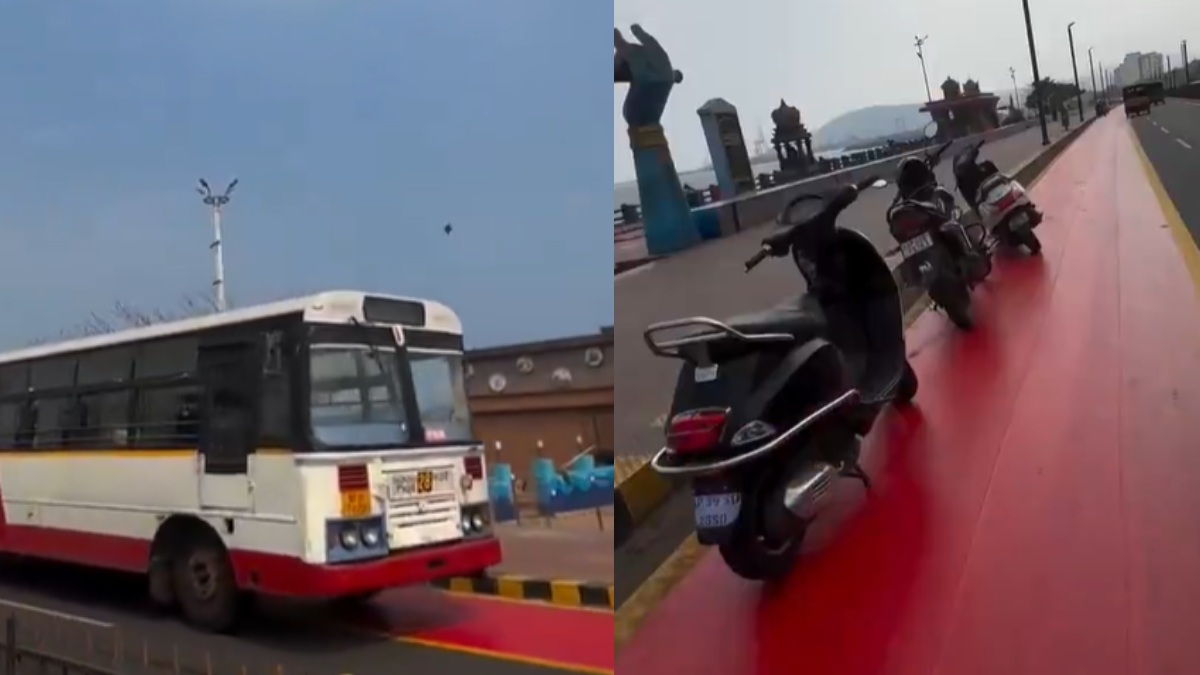
The red painted lane runs from Naval Coastal Battery to Sagar Nagar and is meant to encourage cyclists to use the busy beachfront road. The project is part of wider efforts to make urban mobility more sustainable as well as encouraging residents to use cycling as an alternative mode of transport.
Scenic Location Attracts Cycling Enthusiasts
Supporters of the initiative say Beach Road is an ideal place to promote cycling: long coastal stretch with attractive sea views and relatively pleasant environment (early morning especially)
There are also times when the road is no-vehicle or limited traffic. So cyclists can ride safely without having to compete with heavy traffic (at least for a while).
Cycling advocates say a dedicated-looking lane would encourage more people to cycle recreationally, for fitness and short trips. Cycling activity could also lead to healthier lifestyles and less dependence on motor vehicles.
For a coastal city like Visakhapatnam, advocates say cycling infrastructure can also increase the attractiveness of Beach Road as a recreational destination.
Questions Over Safety and Practicality
However, it has also been criticised too: some residents have said that painted lanes alone are not enough to create a safe cycling corridor.
One of the first concerns is vehicle parking. Critics say motorists have already parked on or near the red-painted section and reduced the space for cyclists to ride in; if parking and other obstructions aren’t controlled then the lane might not work as intended.
Another problem is that there is no physically separated cycling track. Beach Road is still a busy traffic corridor and some residents feel cyclists need more protection from moving vehicles than just a painted line on the road.
The issue has brought back memories of cycling initiatives in Visakhapatnam earlier when maintenance, enforcement and use of designated cycling spaces were questioned.
This is why bureaucrats hesitate to build world-class infrastructure.
— INDICIST (@Indicfederr0d) September 9, 2026
We often don't even know how to use what we already have.
Look at Vizag Beach — a new cycle lane has apparently turned into a parking lane.pic.twitter.com/piAYlDYUS5
Enforcement Could Determine Success
How effective the new lane is will ultimately depend on how consistently it is protected from encroachment and misuse. Supporters say enforcement of illegal parking and other obstructions will be needed if the project is to encourage more people to cycle.
Clear road markings, signage and public awareness could also tell motorists that the red painted section is for cyclists only.
At the same time planners may need to consider whether future improvements should include physical barriers or completely segregated cycling infrastructure (e.g. on stretches with heavy traffic).
Balancing Mobility and Recreation
The debate around the Beach Road cycling lane is symptomatic of a larger problem faced by Indian cities — how to build infrastructure for sustainable transport but also meet existing traffic demands.
Visakhapatnam has the advantage of a prominent coastal road which can naturally support cycling and outdoor recreation. But turning that potential into a successful long-term cycling network will require more than pretty road markings.
For now, the red lane has succeeded in getting people talking about cycling, fitness and sustainable transport — but whether it will remain a part of Visakhapatnam’s urban fabric depends on maintenance, enforcement and how authorities deal with concerns raised by cyclists as well as other road users.