In the history of higher education in India, Visvesvaraya Technological University (VTU) has opened a new era of digital exams by announcing examination results in less than 5 minutes after the end of an exam. The accomplishment is a victory in the field of evaluation based on technology and solidifies VTU’s strategy of innovation in education.
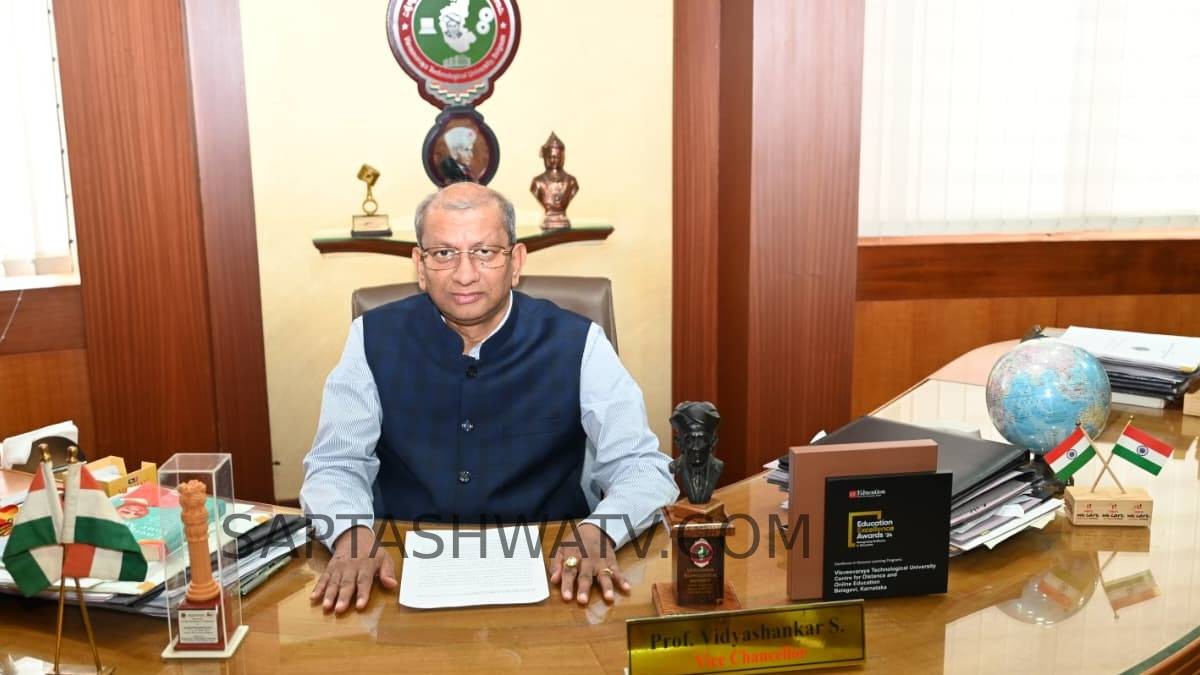
The remarkable achievement has been appreciated by students, educators, and academic administrators who see it as a major step in improving transparency, efficiency, and speed in the examination system.
A New Benchmark in Digital Education
Until recently, students had to wait days or weeks for the results of their exams. The latest digital innovation of VTU has eliminated this waiting time and produced results almost immediately after the exams are concluded.
The university’s success demonstrates how digital transformation can streamline academic processes while maintaining accuracy and efficiency.
Officials described the initiative as an important milestone in modernizing higher education and providing students with faster access to their academic performance.
How Was It Possible?
The rapid declaration of results was made possible through a fully digital examination and evaluation ecosystem.
The process reportedly involved:
- Computer-based examinations.
- Automated answer evaluation for objective-type questions.
- Real-time data processing.
- Integrated digital examination management systems.
- Instant result generation through secure software platforms.
Since responses are captured digitally, the system was able to evaluate eligible answers immediately after the examination ended, avoiding the long manual correction process of conventional examinations.
Benefits for Students
The new system has several advantages for students.
These include:
- Immediate access to the examination results.
- Less anxiety associated with long waiting times.
- Fast admission and placement processes. Better criteria for higher studies.
- More transparency in evaluation. Improved confidence in digital assessment systems.
Students can make their academic and career decisions promptly now, rather than waiting for a much longer evaluation process.
Boost to Academic Administration
The innovation is expected to greatly enhance administrative efficiency at the university.
Instant result processing reduces the workload associated with manual evaluation, result compilation, verification, and publication.
It also minimizes human error while ensuring greater consistency in the assessment.
The university administrators believe these technologies could help improve governance and resource management in general at the university level and across educational institutions.
A Step Toward Digital India
VTU’s success is in line with India’s larger vision of promoting digital governance and technology-based education.
The modernization of educational institutions across the country with online learning platforms, digital classrooms, artificial intelligence, and computer-based examinations is accelerating.
With the implementation of near-instant result declaration, VTU has demonstrated how technology can greatly improve the student experience and enhance the institution's efficiency as well.
Future Possibilities
Education experts say innovations like this are just starting to be implemented in the wider education system in India and could enable the adoption of digital exams in all universities.
Potential future developments include:
- Artificial intelligence-assisted evaluation.
- Adaptive online testing. Secure remote examinations.
- Blockchain-based academic records.
- Digital degree verification.
- Higher levels of academic credential processing.
These advancements can make higher education more accessible, transparent, and efficient.
Maintaining Accuracy and Security
Even if speed is a big result, experts say that the quality of digital examination systems must also have fairness, reliability, and data security in place.
The cybersecurity measures, encrypted databases, secure authentication systems, and continuous monitoring are important to protect student information and the integrity of examinations.
The universities that employ similar technology are going to be expected to focus on technological innovation while maintaining academic credibility.
Positive Response from Students and Faculty
It has been well-received by many students who have appreciated the elimination of long result waiting periods.
Faculty members also noted that digital systems can enhance efficiency by making educators more focused on teaching, mentoring, and academic development rather than administrative work.
Education experts say that such innovations will bring about the development of universities’ examination infrastructure.
Conclusion
VTU's ability to publish examination results in 5 minutes is an example of the digital education and learning progress in India. They have demonstrated that there are ways in which academic processes can be faster, more transparent, and more student-centered in adopting technology for examination.
As the education system increasingly adopts digital transformation, VTU’s initiative could be a model for universities all across the country to modernize their examination and evaluation systems to take advantage of the digital transformation and enhance the learning experience.