Lisbon has been named the happiest travel destination in the latest Holiday Happiness Index, and 47 destinations have been ranked as having the best level of wellbeing in the holiday travel calendar.
The Portuguese capital scored top on the index and scored highly on sunlight, healthy food, green spaces, physical activity, sleep quality, and access to nature. BookRetreats conducted the study with clinical psychologist Natalie Dattilo-Ryan (a Harvard Medical School-based graduate).
The ranking is not an empirical measure of whether residents or tourists live a happier life in Lisbon than in other parts of the world. Instead, it is based on a set of environmental and lifestyle factors that the researchers associate with a happy holiday experience and well-being.
Lisbon’s sunny weather, walkable streets, viewpoints, parks, food and easy access to beaches helped it finish ahead of Helsinki and Orlando.
Sunshine and Walkable Streets make Lisbon’s Appeal.
One of the most striking things the index captures is Lisbon’s sunshine. In fact, with around 2,828 hours of sunshine a year, visitors can enjoy the city outdoors.
Lisbon is also compact enough to travel around on foot, but its famous hills can make walking physically challenging. The city’s elevated neighbourhoods can be visited from a lot of viewpoints, locally known as miradouros, where travellers can take a look at all the sights around the city and the Tagus River.
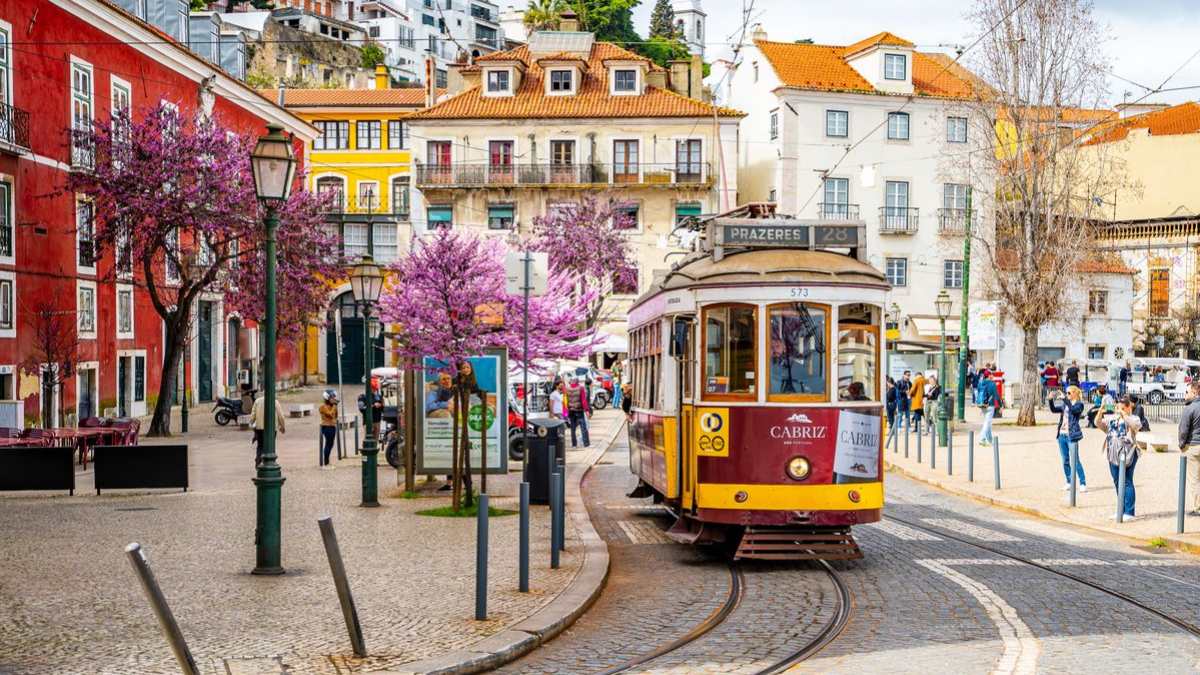
The city’s historic streets, tiled buildings and distinctive yellow trams add to its visual character. Alfama, Baixa and Chiado offer very different experiences in a relatively compact area.
Walking is also one of the best ways to see Lisbon because it allows people to travel between historic neighbourhoods, viewpoints, restaurants and cultural places more slowly, according to travel guides.
The city’s official tourism website also highlights its mild climate, food culture, historic character and proximity to the coast as some of Lisbon’s major attractions.
Green spaces and easy access to nature.
Lisbon also scored well for access to green spaces.
According to the Holiday Happiness Index, the Portuguese capital has 49 square metres of green space per resident. The study also examined the town’s proximity to natural areas and beaches as part of its assessment.
But travelling from far away from the city for a city break to the city is still in the hands of those who can take in outdoor activities and stay outside.
The beaches of Cascais and Costa da Caparica are accessible from Lisbon by public transport and can be reached in less than an hour, according to the index.
At this point in the day, visitors can spend the morning out exploring historical streets and museums before heading to the coast later in the day.
Lisbon also has a relationship with the Tagus River. Riverside areas allow for walking and relaxing; the city’s viewpoints offer a view over the water and surrounding neighborhoods.
Food is another major part of the experience.
Food was another important factor in Lisbon's ranking.
The Holiday Happiness Index found that almost 10% of Lisbon’s restaurants are healthy, making the city the second-most so among destinations that were evaluated in the study. The index also highlighted the variety and affordability of food in the Portuguese capital.
Lisbon's food culture ranges from Portuguese restaurants and seafood restaurants to modern restaurants and international cuisine.
Traditional dishes are a big part of the experience. Bacalhau, or salted cod, is one of the country’s most familiar foods, while pastel de nata, the Portuguese custard tart, is one of the city’s most popular flavours.
Local travel guides also suggest visiting Lisbon’s food markets, traditional taverns and pastry shops as part of a visit.
A City designed for slow exploration.
The idea of slowing down is another recurring theme in descriptions of Lisbon.
Instead of visitors having to move from one place to another throughout the day, the city’s experiences can be pooled by walking. A visitor can explore Alfama’s narrow streets, stop off at a viewpoint, visit a historic landmark, and then head off to a restaurant or riverside place.
Lisbon's hills also create a series of natural viewpoints throughout the city. Places like Miradouro das Portas do Sol offer views over Alfama and the Tagus, while other points (the rooftops and historic districts) offer different perspectives.
The city’s historic tram network also adds to the experience of making your way around, but the crowded services on the most popular routes are expected.
Lisbon is on top of this ranking, dominated by European cities.
Lisbon had the first-place position in a ranking dominated by European destinations.
Helsinki was second in the ranking, the Finnish capital in terms of green spaces, noise and light pollution, and access to nature and its proximity to nature. Orlando ranked third in the United States, thanks to its green space, lakes and abundant sunshine.
Athens and Edinburgh completed the top five. Madrid, Vienna, Budapest, Oslo and Vilnius were all in the top 10. Except Orlando, the top 10 were all European cities.
The index therefore reflects a particular definition of a “happy” holiday destination and the environmental and lifestyle conditions rather than the usual tourism measures of international visitors or the number of major attractions.
Why Lisbon Stands Out For Travellers (as a city that is always in the way of travel)
Lisbon’s attraction is ultimately about the combination of several experiences rather than one.
Travellers can visit historic neighbourhoods, enjoy Portuguese food, spend time outdoors, walk through green spaces, visit viewpoints, and go to nearby beaches without feeling that the city is a collection of disconnected tourist attractions.
Another factor is its sunny climate, with more than 2,800 hours of sunshine per year according to the Holiday Happiness Index. The city also has nature and a good food culture, which are two factors that were included in the ranking.
The “world's happiest travel destination” title should therefore be understood within the context of this index. It is not the case that every traveller will be happy or Lisbon will be happier than any other place.
But the combination identified in the study explains why the Portuguese capital continues to attract travellers looking for a holiday that mixes culture, food, sunshine, outdoor activities and a slower pace of exploration.