Kawasaki Ninja 650 2027 has received a major update on its chassis, braking hardware and rider technology. Kawasaki has added a new inverted Showa front fork, radial-mounted four-piston brake calipers and a 4.3-inch colour TFT display to the middleweight sports bike.
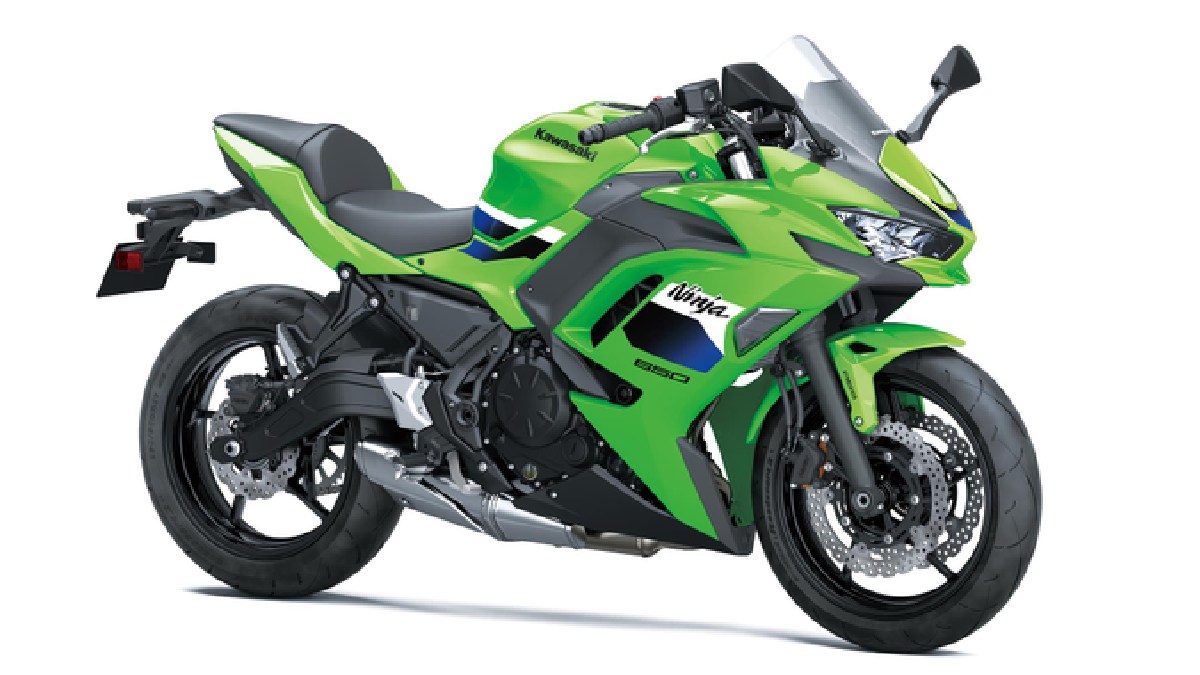
Some of the Ninja 650 hardware had started to look less contemporary compared to the new machines in the middleweight category.
The new bike is not completely rebuilt with the engine in mind for the most part. Kawasaki has spent only a little more time on the front end performance and braking feels for the bike and the electronic interface. It may give a lot of value for Ninja 650 owners in the next year and especially the long winding roads and more performance-oriented setting.
Kawasaki Ninja 650 has new USD Fork.
One of the biggest changes for the Kawasaki Ninja 650 in 2027 is the switch from the conventional telescopic front fork to an inverted Showa SFF-BP. The new 37mm Separate Function Fork-Big Piston setup is as opposed to the 41mm conventional telescopic fork used on the current India-spec motorcycle.
The Showa SFF-BP technology is intended to improve damping performance and reduce the pressure on the fork. Such control can facilitate a more controlled suspension response in case of braking a motorcycle hard or entering those corners. The difference may not necessarily be noticeable to the average rider but more experienced riders may like that extra front-end control.
Kawasaki has also revised the rear suspension setup. The rear shock has a higher spring rate in line with the front end changes. The revised suspension package aims to give us better balance in terms of chassis response than simply upgrading one component.
Radial-Mounted Four-Piston Brakes
The braking system is another major improvement on the 2027 Ninja 650. Kawasaki retains the twin 300mm front discs but replaces the existing two-piston calipers with four-piston radial-mounted calipers.
On performance motorcycles, brake calipers with a radial mount also are commonly used to build a higher rigidity. When used together with four-piston calipers, the new setup should have a better braking force and greater stability under harder use.
The upgrade can be of particular use to riders who ride the Ninja 650 for spirited riding. The disc diameter remains the same but the new calipers would offer a more progressive response at the lever and better control when braking.
Redesigned TFT Display And Connectivity
Inside the cockpit, the Ninja 650 from 2027 is also updated. The motorcycle still has a 4.3-inch colour TFT display but Kawasaki has redesigned the layout to provide a fresh interface.
Kawasaki has also extended the connectivity features of the Rideology smartphone app. This new system supports navigation functions and voice command. But voice control requires a different license and features are available to the markets as well. So Indian customers will have to wait for market specific details before assuming every connected feature will be available on the India-spec motorcycle.
A new addition is Kawasaki’s Quick Shifter that can be used as an accessory. The clutchless upshifts and gear changes can be made much more rapid and simpler during enthusiastic riding. The quick shifter is not a standard feature, though.
Engine Remains Unchanged
Despite the chassis and electronics upgrades, Kawasaki has retained the 649cc parallel-twin engine. The Ninja 650 has a very compact and easy-driving nature so it is just to be used for the daily rider as well as long highway trips.
That means buyers won’t be getting a big jump in outright performance of the engine for the 2027 model. Kawasaki’s approach has been to improve the riding experience of Kawasaki’s motorcycle overall by adding suspension, stronger braking hardware and new electronics.
European-market specifications indicate a seat height of around 785mm and a kerb weight of 194kg. But specifications can vary depending on the market, so India-specific figures will need to be confirmed when Kawasaki introduces the updated motorcycle locally.
2027 Kawasaki Ninja 650 India Launch
The updated Ninja 650 is expected to reach India around late 2026 or early 2027, although an exact launch date and India-specific specifications will need confirmation from Kawasaki. The current Ninja 650 is around Rs 7.91 lakh ex-showroom in India so the new one may be a bit more expensive if the new bike is available.
For buyers planning to purchase a Ninja 650 soon, the 2027 model could be worth considering if suspension performance, braking hardware and updated technology are important factors. The current bike retains the same 649cc engine and familiar Ninja 650 character, making the outgoing version a relevant option for riders primarily focused on everyday commuting and relaxed touring.
And so the 2027 update is an evolution rather than a complete redesign. With the USD fork, four-piston radial brakes, revised rear suspension and improved TFT connectivity, Kawasaki has focused on areas that directly affect the riding experience while keeping the proven parallel-twin engine unchanged.