In July 2026, India’s passenger vehicle market is showing strong momentum, and major automobile manufacturers reported healthy sales and continued demand in both the SUV, compact car, and electric vehicle sectors.
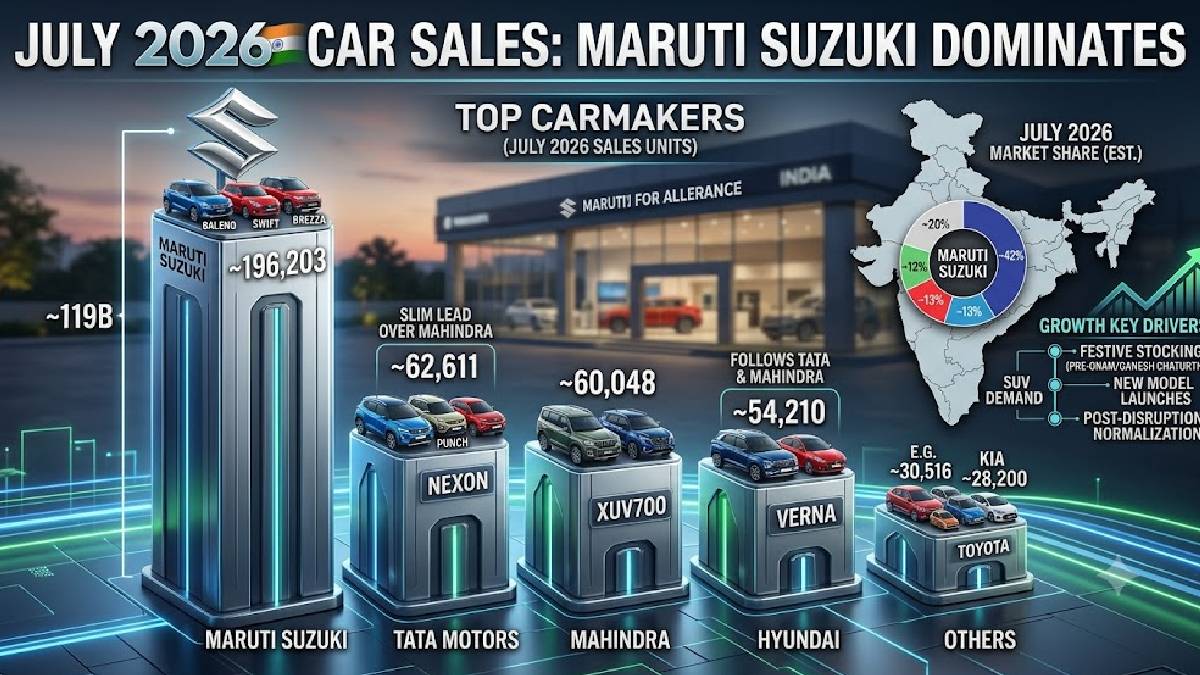
Maruti Suzuki remained India’s largest carmaker with sales of 1,96,203 units in the month. Tata Motors achieved 62,611 units and just beat Mahindra’s sales of 60,048 units.
Hyundai Motor India ranked fourth with 54,210 units, followed by Toyota with 30,516 units and Kia with 28,200 units.
JSW MG Motor India had 8,158 units and Nissan 4,518 units, according to the results.
July sales showed that India’s automobile market is still strong and demand is high, with new vehicle launches, growing demand for SUVs, and rising consumer interest in them, along with good momentum before the festive season ahead of the holiday season.
India’s Top Carmakers by July 2026 Sales:
- Maruti Suzuki — 1,96,203 units;
- Tata Motors — 62,611 units;
- Mahindra — 60,048 units;
- Hyundai — 54,210 units;
- Toyota — 30,516 units;
- Kia — 28,200 units;
- JSW MG Motor — 8,158 units;
- Nissan — 4,518 units.
Maruti Suzuki’s sales performance once again demonstrated its dominant position in the Indian passenger-car market. The market has many entry-level hatchbacks, premium hatchbacks, sedans, utility vehicles, and multi-purpose vehicles to offer as well, and it is a strong advantage over its competition.
The strong July result also reflected growing demand for popular models in all price categories. The huge dealership network of Maruti Suzuki and its presence in both urban and rural markets, however, will help to maintain the company’s superiority.
Tata Motors stayed second, but the gap between Tata and Mahindra remained relatively small. Tata scored 62,611 units, which is only 2,563 units ahead of Mahindra's 60,048 units.
Tata Motors is still the main player in the passenger car market in India, and Mahindra is the second-largest player in the market. Both have formidable SUV portfolios and are growing in electric mobility.
Tata’s performance has been made up of the demand for its SUVs and electric vehicles. Tata has been able to maintain its position by introducing conventional, electric, and emerging mobility products. Tata’s year-on-year growth in July has also been reported according to industry reports.
Mahindra was still close behind Tata and continued to see demand for its SUV lineup. The company is especially focused on utility vehicles, and several of its models have sustained demand from consumers.
Hyundai remained fourth in sales with 54,210 units. The South Korean carmaker is still one of India’s largest passenger-vehicle manufacturers with its range of hatchbacks, sedans, and SUVs.
Toyota reported sales of 30,516 units while Kia had 28,200 units. Both companies remained strong in the Indian market, especially in the premium and utility-vehicle categories.
Toyota’s sales performance showed demand for its SUVs, multi-purpose vehicles, and hybrid offerings. Kia also had a lot of SUV sales and family-focused vehicles going on.
JSW MG Motor India registered 8,158 units, an important performance for the company. Its increasing focus on electric and new-energy vehicles has helped strengthen its presence in the Indian market.
Nissan recorded 4,518 units in the sales figures listed. The company is working to expand its product range and strengthen its position in India’s very competitive passenger-vehicle market.
The July 2026 rankings show that Maruti Suzuki is still leading the pack, while Tata Motors and Mahindra are in a close battle for second place. Hyundai is still a strong fourth-place vehicle, and Toyota and Kia still have strong competition in the rapidly growing SUV market.
The large sales figures also imply that consumer demand is not getting affected by increased competition. SUVs, electric vehicles, hybrid models, and feature-rich cars should continue to be big growth drivers in the coming months.
The car manufacturers will also introduce new models, special offers, and customer-focused schemes to maintain sales momentum, and with the festive season in mind, automobile companies will compete for the lead. Competition among India’s top car makers will be as intense as ever as they look to capture a share of the market.