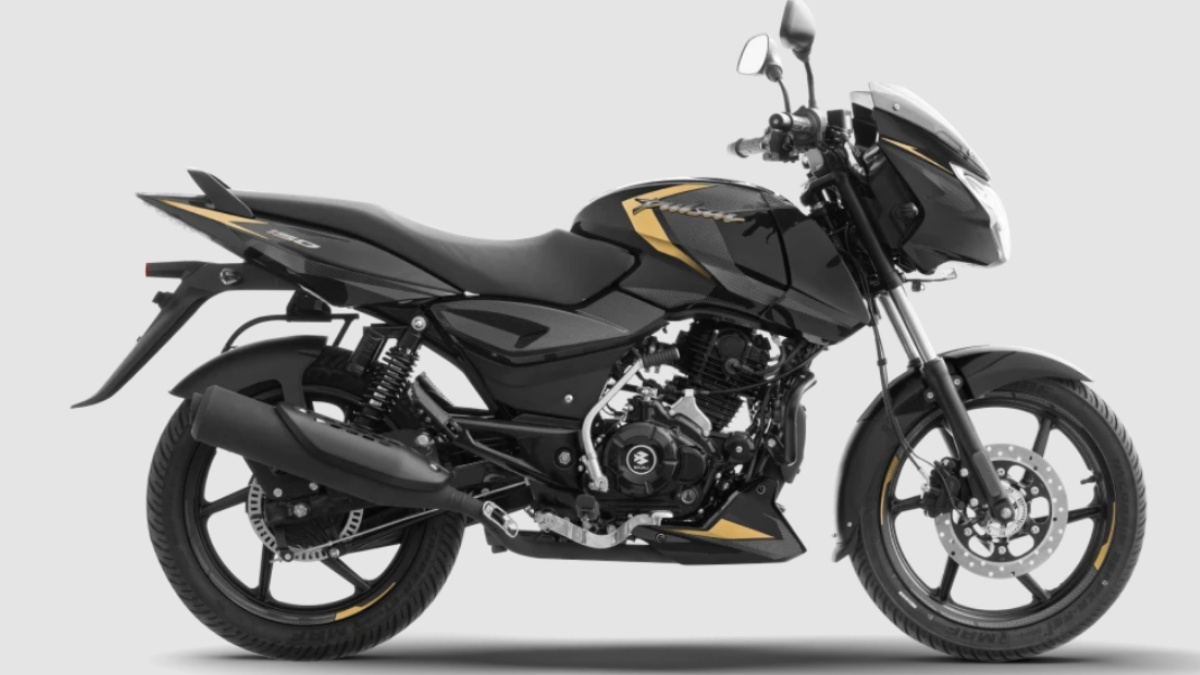
Bajaj Auto has expanded its popular Pulsar motorcycle range in India with the launch of the new Bajaj Pulsar 150, bringing a major technology and equipment upgrade to one of the country’s most familiar 150cc motorcycle names. The new model is a more modern version of the Pulsar 150, with highlights such as a new engine, three ride modes and a TFT instrument console.
The Pulsar 150 arrives at a time when people buying commuter and premium-commuter motorcycles in India are coming to expect more from the new bike as it is usually associated with bigger and more expensive motorcycles. As such, Bajaj's decision to introduce multiple riding modes and a full-colour TFT display to the Pulsar 150 is really great news for the bike and for the whole segment.
The biggest mechanical change is the new engine. The modern motorcycle powertrain has been optimized for daily use and performance and efficiency. The Pulsar name has long been used to represent practical commuting, sporty look and that is an aspiration that the latest generation is taking on with modern technology.
One of the headline additions is the three ride modes. Different riding modes help the rider to change how the motorcycle reacts to road conditions and to riding requirements. The exact nature of each mode is determined by the final calibration of Bajaj's motor, but such systems are usually designed to have different throttle response, performance and efficiency.
For urban riding in cities, a softer or more economical mode might make the motorcycle easier to manoeuvre in congested traffic. A more responsive mode can be used when riders want faster speed, and yet another mode can be adapted for different road conditions. The three-mode nature of the motorcycle provides more flexibility than with commuter motorcycles.
The TFT console is another very important upgrade. Unlike the usual analogue or basic digital instrument clusters found on many motorcycles in this category, a TFT display can provide a richer interface and accommodate more information. Depending on the final specification, riders could see details such as speed, engine information, fuel data, ride mode and connectivity-related information on the screen.
The new instrument panel also improves the Pulsar 150's premium look. Digital displays are becoming more common in India’s two-wheelers, and customers are paying more attention to technology and convenience features in order to buy motorcycles.
Bajaj’s Pulsar range has a long history in the Indian market and was instrumental in popularising sporty motorcycles among everyday riders. The Pulsar 150 is still relevant because it strikes that perfect balance between performance, practicality and relatively easy ownership. The new version is aimed at keeping it up to date with the current customer trends.
The new Pulsar 150 is also expected to retain the sporty characteristic of the original. Bajaj has previously shown muscular bodywork along with a sculpted fuel tank and sharp styling elements to differentiate the Pulsar family from the usual commuter motorcycles. The new version continues that approach but with the latest tools.
This is especially significant since the 150cc motorcycle category remains one of India’s most competitive two-wheeler segments. And it’s the bike that people shop for on a daily basis and also perform well on the highway and during weekends. So manufacturers need to make up their mind between fuel economy, performance, comfort and equipment.
The new Pulsar 150's technology package could help Bajaj appeal to younger riders who increasingly expect motorcycles to offer features beyond basic transportation. Ride modes and a TFT display can make the motorcycle feel more sophisticated without moving it into the much more expensive performance-bike category.
Safety and rider assistance are also becoming more vital in India's motorcycle market. Recently developed electronic systems can assist riders to navigate different conditions, but how the technology is implemented and used is the key. Buyers should therefore consider the braking system, tyres, suspension and overall dynamics alongside its electronic features.
The new Pulsar will also compete with several established 150cc and 160cc motorcycles from companies like Hero MotoCorp, Honda, TVS Motor and Yamaha. This segment has been more towards feature-rich models with manufacturers adding Bluetooth connectivity, digital displays, LED lighting and other technologies.
In fact, it is something that Bajaj needs to keep in mind because the Pulsar 150 is so popular with Indian consumers. The company is not entirely changing its identity, but rather it is marrying the Pulsar model to modern machines.
Pricing and variant details will be important for customers considering the new motorcycle. The added engine, three riding modes and a TFT console could push the motorcycle's price higher than earlier versions. But the final value proposition will depend on the exact specifications and equipment offered across variants.
The new Bajaj Pulsar 150 thus represents a major evolution of a long-standing motorcycle. The new engine, three riding modes and a TFT console are indicative of customers’ new expectations for two-wheelers in India.
When the motorcycle hits dealerships, the real-world performance, ride quality, fuel efficiency and practicality of the motorcycle will be examined. The success of the new iteration will be determined by whether Bajaj will be able to offer the new technology but without sacrificing the affordability and everyday usability of the Pulsar 150.
With its latest technology package and updated mechanicals, the new Bajaj Pulsar 150 is set to enter an increasingly competitive Indian motorcycle market. The new Pulsar could also be an interesting option for those looking for a familiar 150cc platform with a more modern feature set.