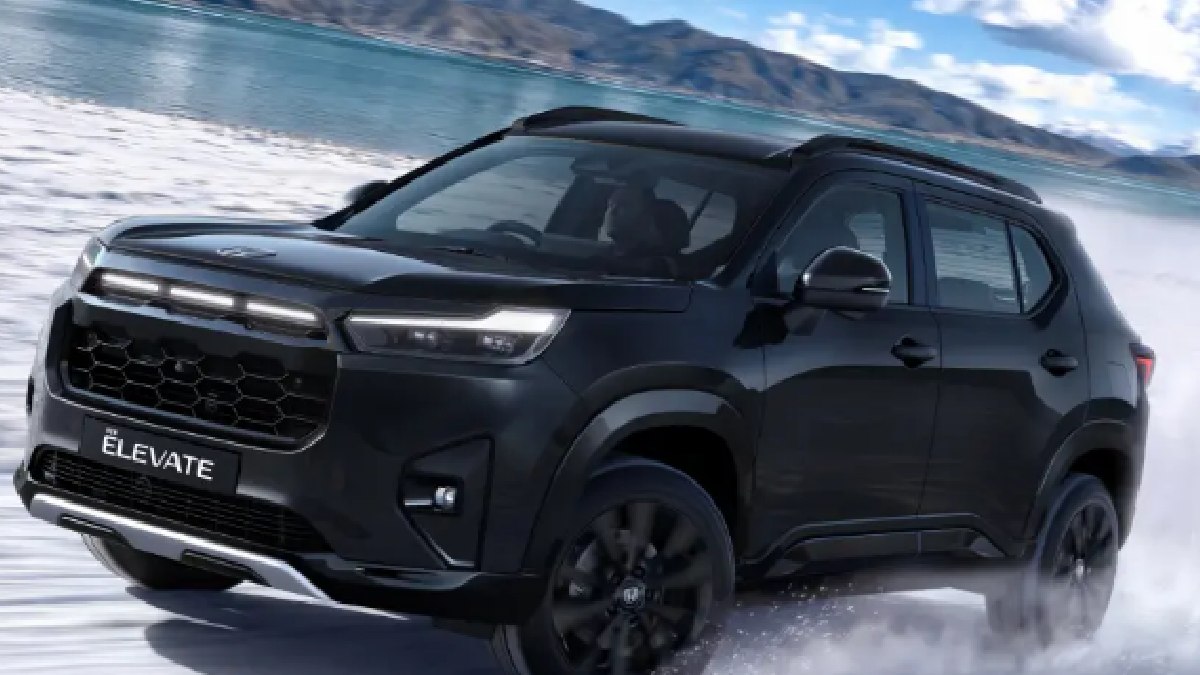
Honda unveiled the facelifted Elevate with a number of exterior, interior and safety upgrades but the same 1.5-litre petrol engine powering the previous model. The 2026 Honda Elevate facelift keeps the same shape of the SUV and 17-inch wheels but has a sharper shape and comfort features and new safety features.
With prices rising on a number of like-for-like versions, the question for buyers is if the extra equipment is worth it.
The new Elevate starts at Rs 11.80 lakh ex-showroom for the SV manual model, same as before. The V manual is now priced at Rs 12.29 lakh with an increased Rs 2,000 and the CVT is more expensive at Rs 36,000. The VX manual is priced at Rs 13.93 lakh which is only Rs 1,000 higher than before while the VX CVT is priced at Rs 15.39 lakh.
The ZX manual now costs Rs 15.39 lakh, which is a Rs 21,000 increase from the last version. The ZX CVT is priced at Rs 16.89 lakh which is Rs 53,000 higher than the previous one. Honda has also made new ZX+ variants, which are priced at Rs 16.89 lakh and Rs 18.40 lakh ex-showroom. The new variants increase the equipment available at the highest end of the Elevate range.
Honda Elevate Facelift 2026: Exterior Design.
The most obvious changes come at the front and rear of the SUV. The LED headlamps are there, but the facelift has connected segmented daytime running lights, giving the Elevate a modern look. Honda has also switched to a single gloss-black honeycomb grille, instead of the two grille designs on the earlier model. The Honda badge is on the bonnet and adds to the new front end design.
The fog lamp housings are now body-coloured while the side body cladding has been finished in gloss black instead of the matte finish of the old model. Silver elements have also been added to the lower side sections. In profile, however, the Elevate retains much of its original design and still has 17-inch alloy wheels.
At the rear, the biggest visual change is connected LED taillamps. Honda also added a new pearl colour to the exterior palette, giving buyers another option compared to the previous model.
Cabin Gets More Features
Inside, the facelifted Elevate has been adjusted to make the cabin seem premium. Leatherette padding is now added to the dashboard, and ambient lighting is implemented in place of the faux-wood treatment that was used in the predecessor. The cabin colour options have also been updated. Instead of the two dual-tone themes that were previously available, the facelift features black and white options; black variants have all-black interior.
One of the major upgrades is the introduction of powered and ventilated front seats. Back-seat ventilation is also available for passengers, so passengers are comfortable in the heat. Also included are an air purifier, factory-fitted ambient lighting and, for the first time, a 360-degree camera.
The wireless charger, part-digital instrument cluster, lane-watch camera, wireless Apple CarPlay and Android Auto and eight-speaker audio system are still available. So the facelift builds upon the technology package of the old model rather than completely replacing it.
More Safety And Convenience Equipment.
Honda has also enhanced the Elevate’s safety and convenience. The facelift has rear disc brakes, an electronic parking brake with auto hold and front parking sensors. Adaptive cruise control with stop-and-go functionality is also available, so the SUV is a more advanced driver-assistance package.
These could be a big deal to anyone who travels a lot in cities and highways. Front parking sensors and a 360-degree camera can help manoeuvre better, and adaptive cruise control can reduce fatigue in long-haul trips.
Same Engine, Familiar Mechanical Package
Despite the huge updates in equipment and design, the core powertrain is the same. The new Elevate maintains the same 1.5-litre petrol engine. The customer will have either a manual gearbox or CVT automatic option.
The same engine means existing Elevate owners should not expect a major transformation in performance. Honda has focused the facelift on design, comfort, convenience and safety equipment.
Honda also noted improvements in noise, vibration and harshness. The additional sound-deadening material behind the dashboard and around the wheel wells is intended to make the cabin quieter than before. Since cabin noise was one area where the older Elevate was criticized, a test drive will be useful for buyers who want to judge the difference themselves.
Is The New Elevate Worth The Extra Cost?
The price changes vary significantly depending on the variant. While manual buyers on the lower and middle ends of the range see relatively small increases, CVT versions receive more noticeable price hikes. The ZX CVT, for example, costs Rs 53,000 more than the outgoing equivalent.
There are also interesting overlaps between variants. The VX CVT and ZX manual are priced at Rs 15.39 lakh and ZX CVT and ZX+ manual at Rs 16.89 lakh ex-showroom. That’s why buyers should look at the equipment list and not just pick one based on transmission or price.
Overall, the 2026 Honda Elevate facelift is an evolution and not a radical revolution. The same engine, platform and basic proportions are there but the much cleaner look and feel, better cabin and comfort equipment, 360-degree camera and safety features are a lot more features than the previous model.
For those interested in the Elevate in general, the new equipment in the facelift could justify the higher price at least at the upper levels.